Ancient Egyptians were renowned for their mastery of woodworking, crafting exquisite pieces of furniture that showcased both functionality and artistic sophistication.
The Throne of Tutankhamun, c. 1336–1327 BC, wood covered with sheets of gold, silver, semi-precious and other stones, faience, glass and bronze. Egyptian Museum, Cairo. (c) Walaa
While numerous examples of Egyptian furniture have endured the test of time, particularly those found in royal tombs, it is evident that these pieces would have been more elaborate and intricately adorned compared to the furniture of everyday Egyptians. Royal furniture, reserved for pharaohs and elite members of society, was often crafted from luxurious materials such as ebony, cedar, or imported woods, and embellished with precious metals, intricate carvings, and intricate inlays. These lavish furnishings not only served practical purposes but also reflected the wealth, status, and divine authority of their owners, underscoring the importance of furniture in ancient Egyptian culture and society.
Chairs
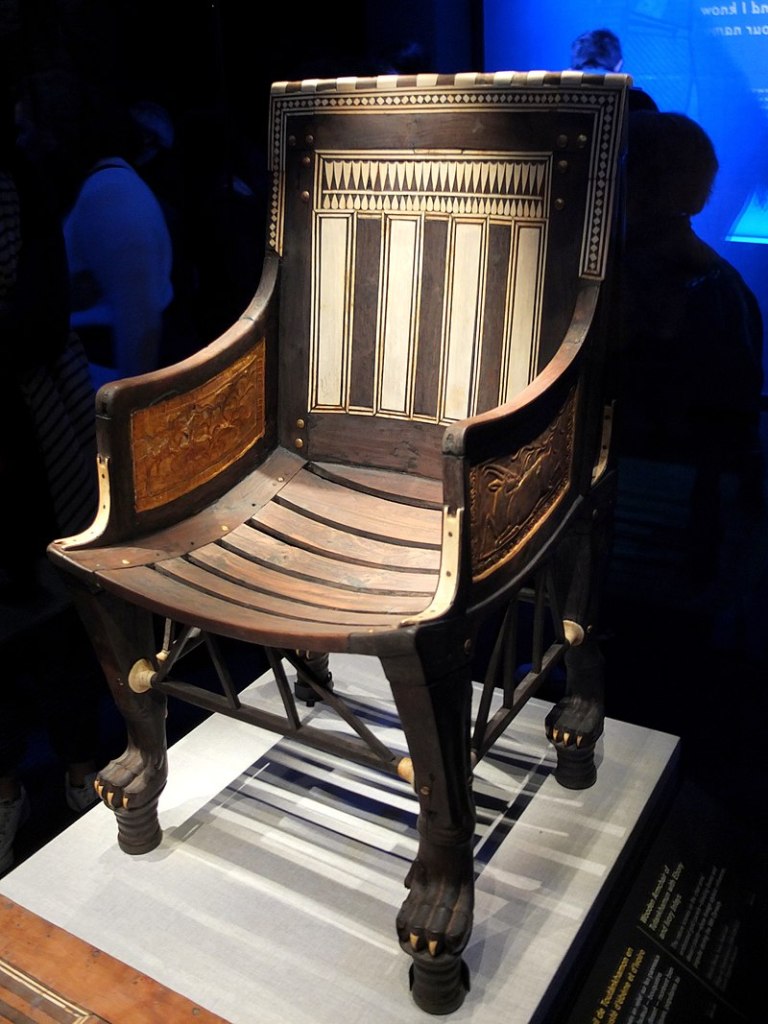
Ceremonial chair of Tutankhamun. Egyptian Museum, Cairo. (c) Matthias HarbersChair of Hatnefer, c. 1492–1473 BC, boxwood, cypress, ebony & linen cord. Metropolitan Museum of Art.Armchair of Tutankhamun, c. 1336–1326 BC, wood, ebony, ivory and gold leaf. Egyptian Museum, Cairo. (c) Siren-ComChair of Reniseneb, c. 1450 BC, wood, ebony & ivory. Metropolitan Museum of Art.
Boxes
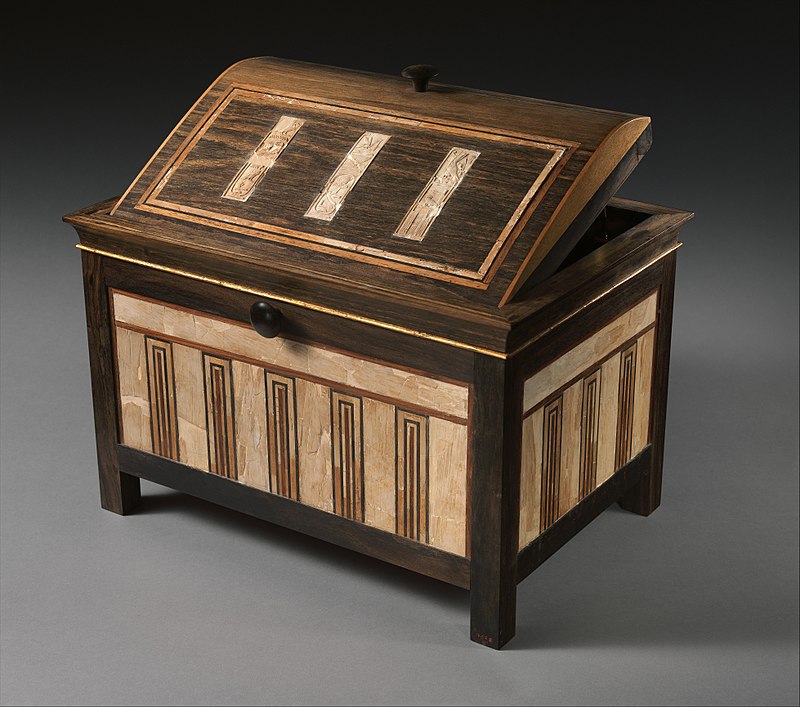
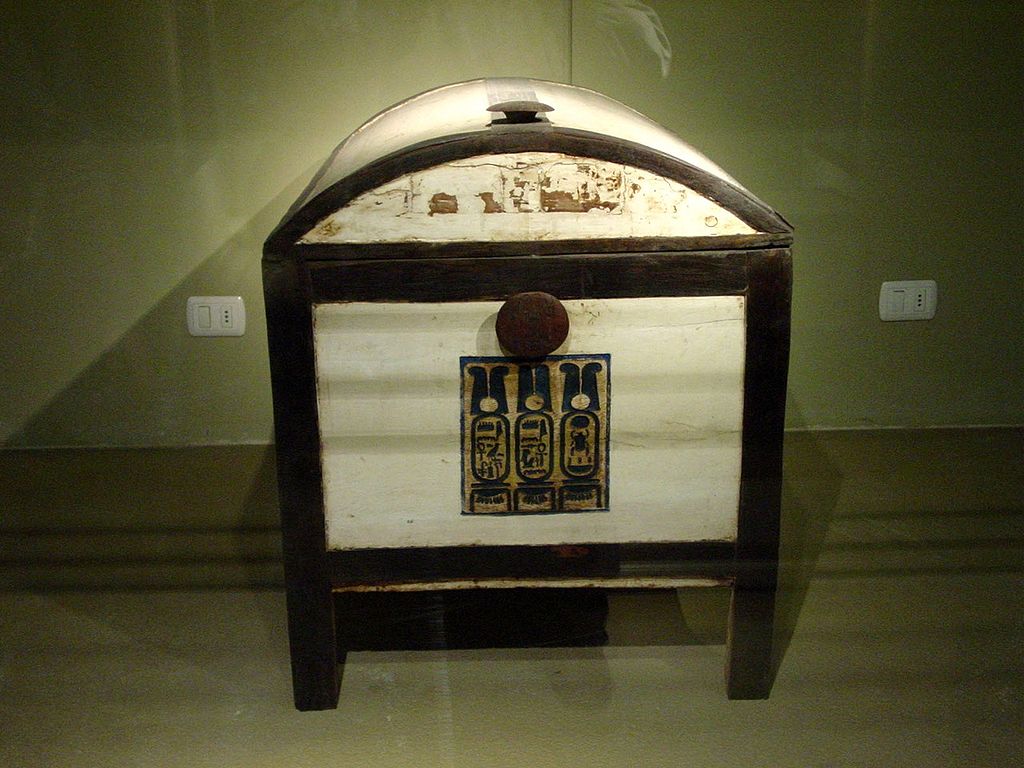
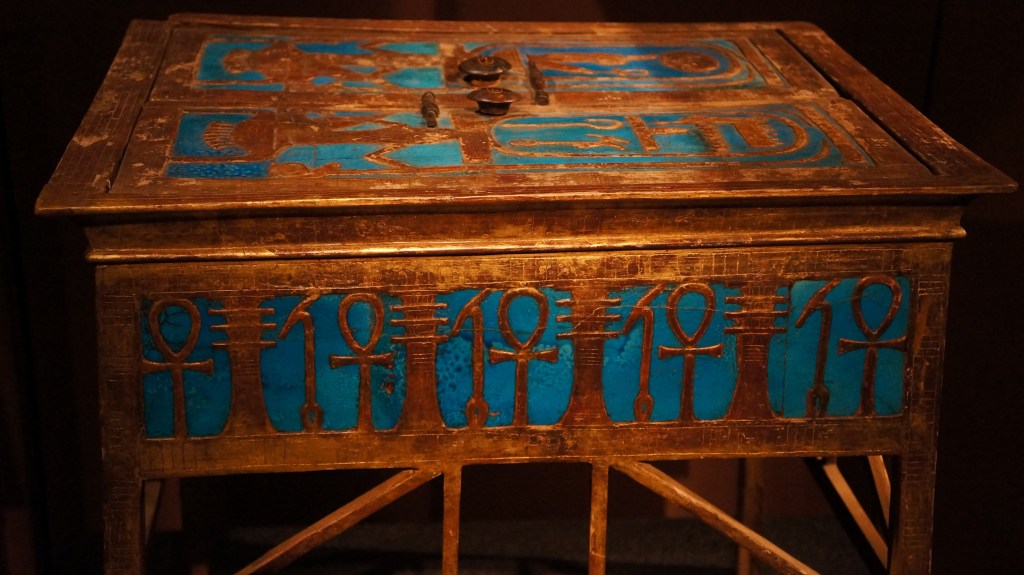
Guilded wooden box of Tutankhamun with rich faience inlay. Egyptian Museum, Cairo. (c) Hans OllermanInlaid box for cosmetic vessels of Sithathoryunet, c. 1887–1813 BC, ebony, inlaid with ivory and red wood (restored) and gold trim. Metropolitan Museum of Art.Wooden chest of Tutankhamun. Egyptian Museum, Cairo.
Tables
Tutankhamun’s wooden table with gold inlay. Egyptian Museum, Cairo.






 Digital Maps of the Ancient World