Greek Pottery
Ancient Greek pottery holds a prominent place in the archaeological legacy of the civilization due to its remarkable durability and abundance. The evolution of vase painting marked a significant development in Greek artistic expression, with distinctive styles emerging across different periods.

The early Archaic period witnessed the prevalence of geometric art, characterized by intricate patterns and motifs adorning pottery vessels. As Greek art advanced, new techniques such as black-figure pottery emerged, depicting figures and scenes in silhouette against a black background. This style eventually gave way to the red-figure pottery technique, where figures were painted in red against a black background, allowing for greater detail and realism. In the subsequent Hellenistic period, styles like West Slope Ware became prominent, though the popularity of vase painting began to wane. Despite this decline, ancient Greek pottery remains a testament to the artistic achievements and cultural significance of the civilization, providing invaluable insights into daily life, religious practices, and aesthetic sensibilities of the ancient Greeks.
Geometric
During the 9th-8th c. BC, Geometric art experienced a notable flourishing in Ancient Greece. The Early Geometrical style, spanning from c. 900-850 BC, is characterized by abstract motifs and a technique known as the ‘Black Dipylon’ style, distinguished by its extensive use of black varnish.

As the art form evolved into the Middle Geometrical period, c. 850-770 BC, figurative decoration emerged, featuring bands of animals such as horses, stags, goats, and geese alternating with geometric patterns. Over time, the decorative motifs became more intricate and ornate, reaching a peak of complexity by the middle of the century.
Human figures gradually made their appearance, and by the end of the period, depictions of mythology began to surface, possibly influenced by the codification of traditions in Homer’s epic poems, the Iliad and the Odyssey. This transition marked a significant development in Greek artistic expression, laying the groundwork for future advancements in visual representation and narrative storytelling.
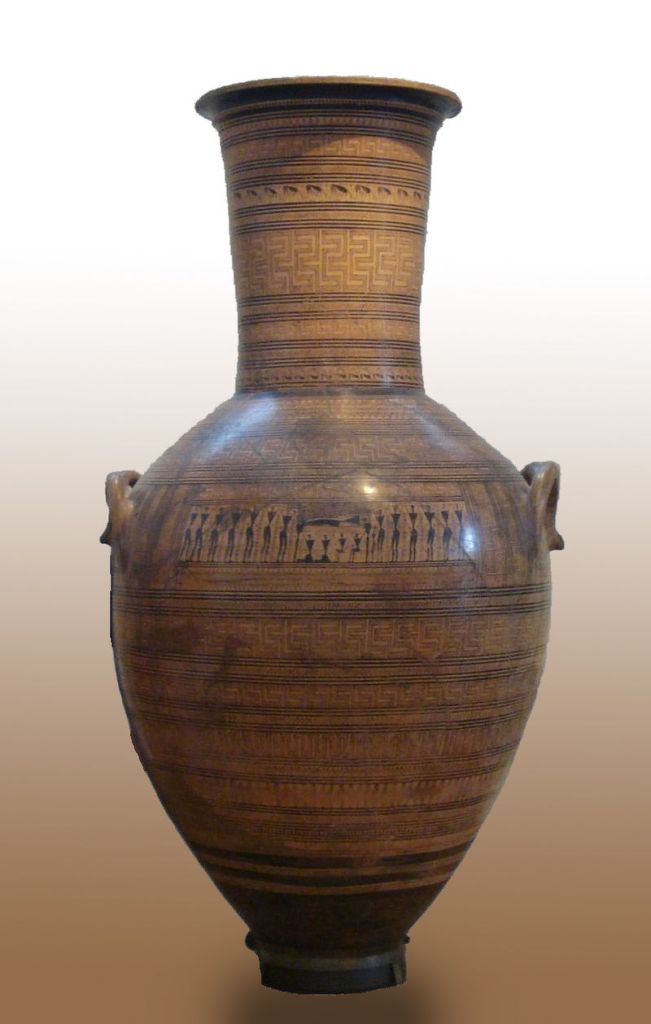
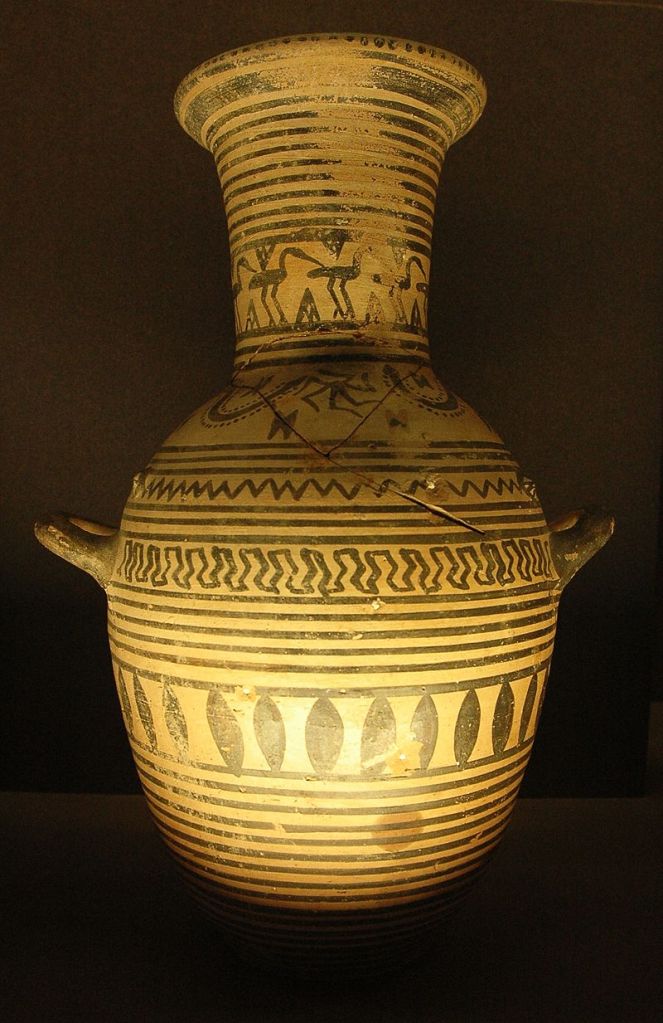
2. Boeotian Geometric Hydria. Louvre.
Orientalizing Style
The Orientalizing style emerged during a period of increased trade between Ancient Greece and cities in the East, notably in Corinth and later in Athens between 725-625 BC. Known as Proto-Corinthian and Proto-Attic respectively, this stylistic phase introduced a rich array of motifs such as sphinxes, griffins, and lions, reflecting the influence of Eastern cultures.
Non-mythological animals adorned vase friezes, often arranged in intricate patterns, with lotuses or palmettes adding decorative flourishes. Human figures were relatively scarce in these compositions, as the focus shifted towards the depiction of exotic creatures and symbolic elements imported from the East. This artistic exchange marked a significant shift in Greek pottery decoration, laying the groundwork for subsequent stylistic developments in the Archaic period.
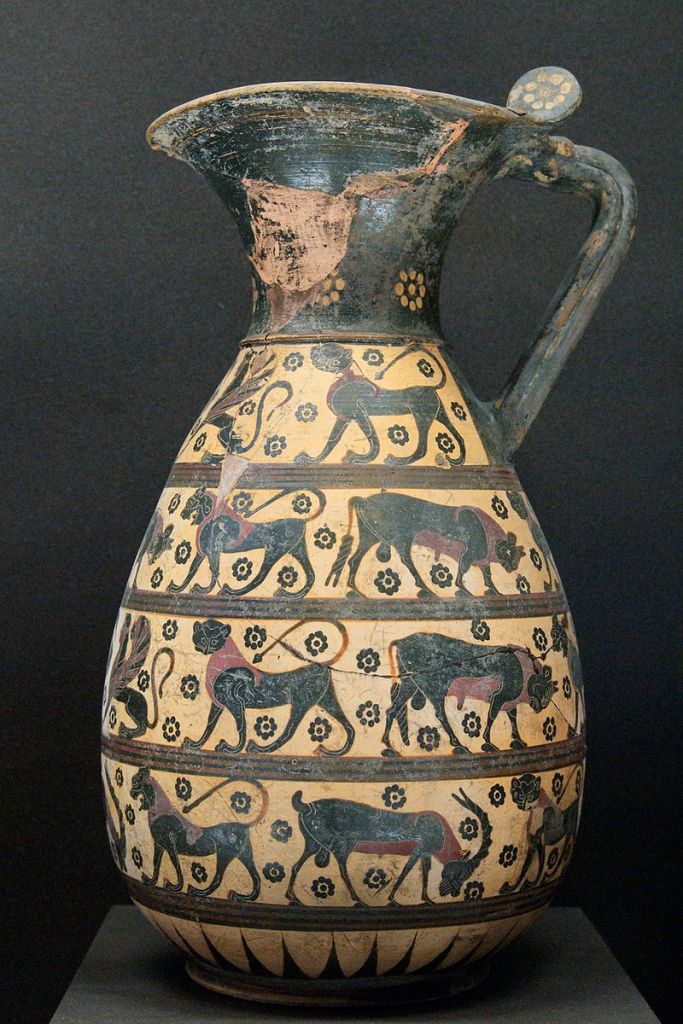
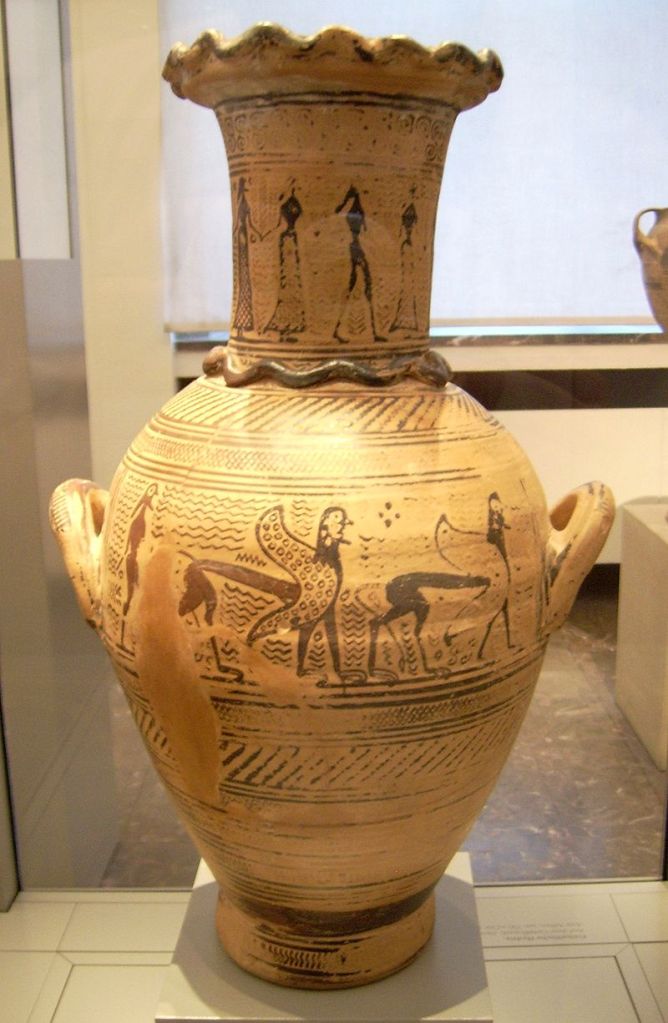
2. Proto-Attic hydria, the neck depicts women dancing with a youth, the belly, a man behind two sphinxes, c. 700 BC. Antikensammlung, Berlin. (c) Marcus Cyron
Black-Figure
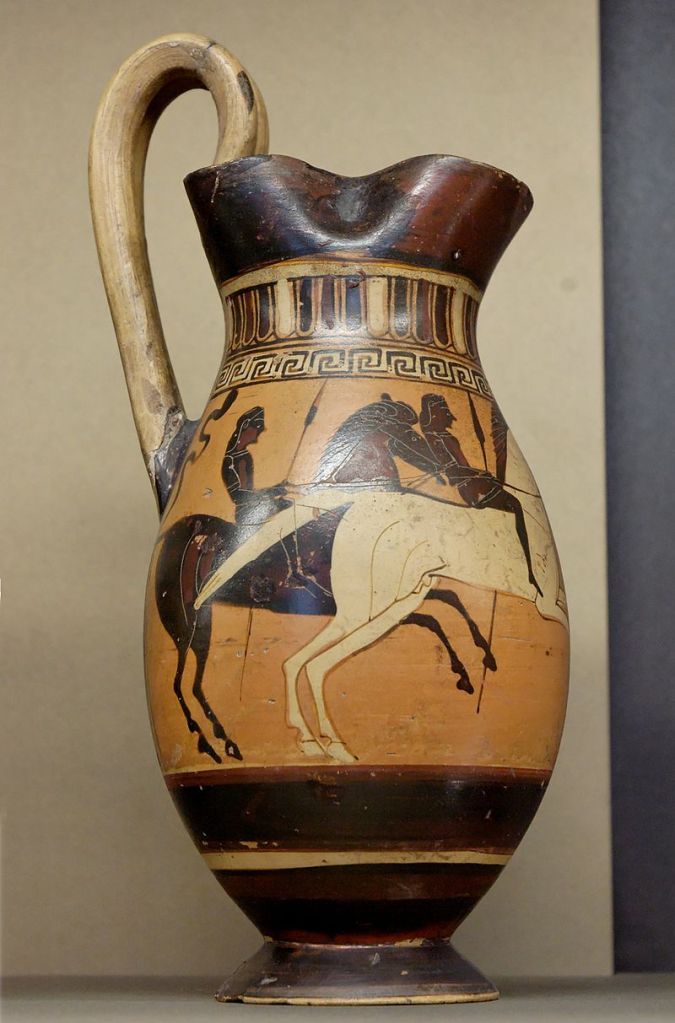
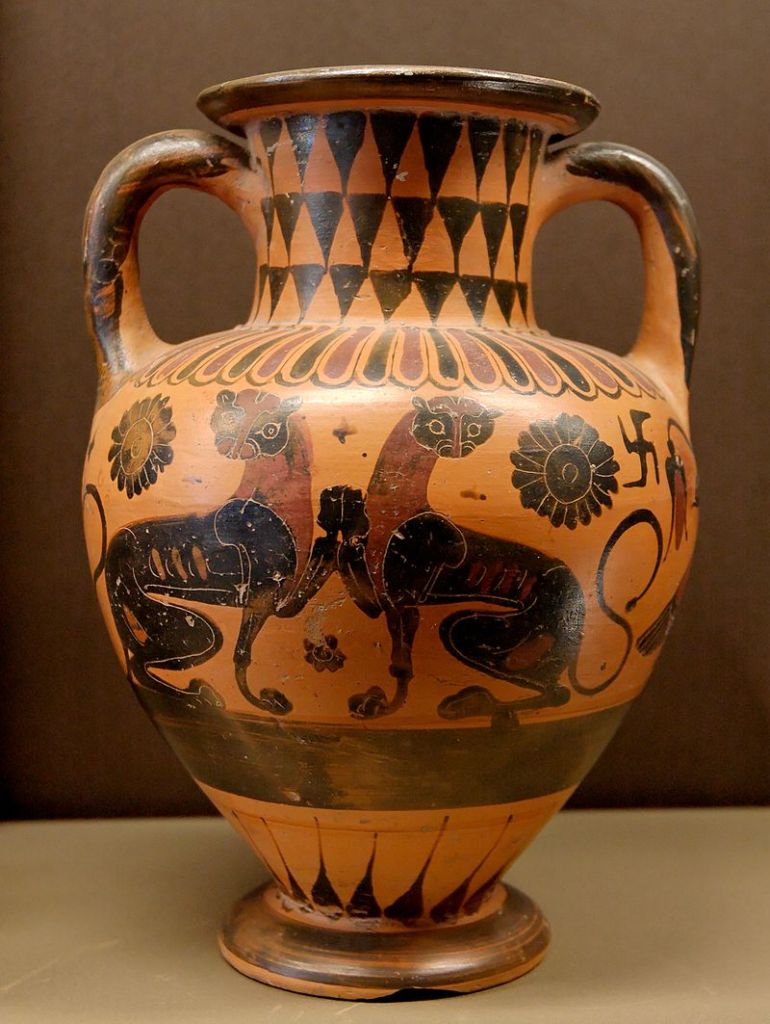
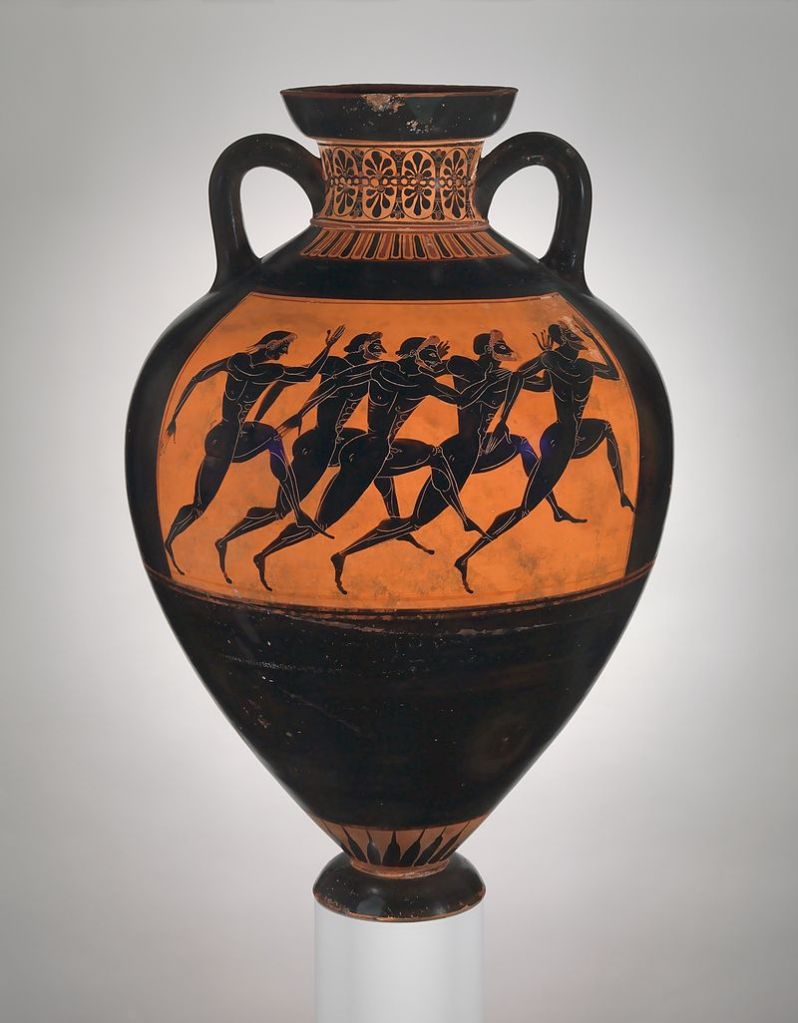
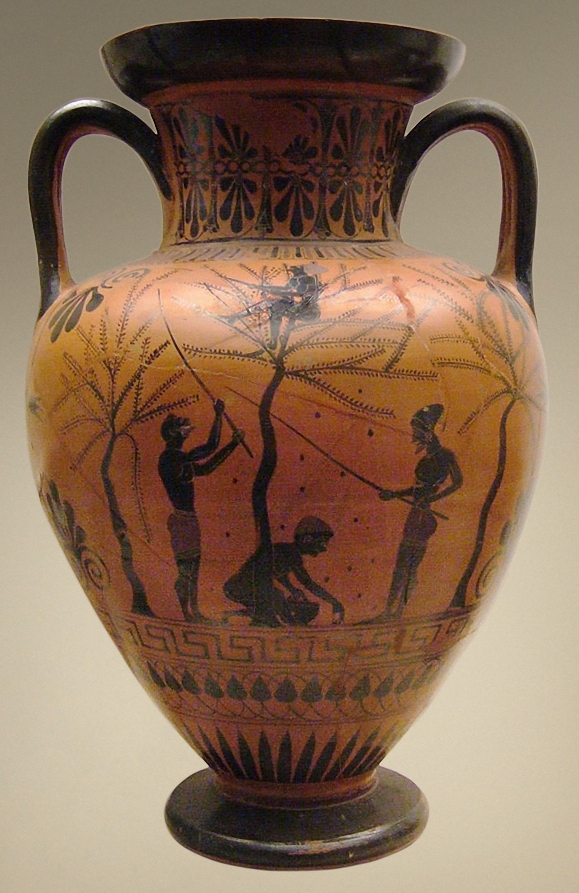
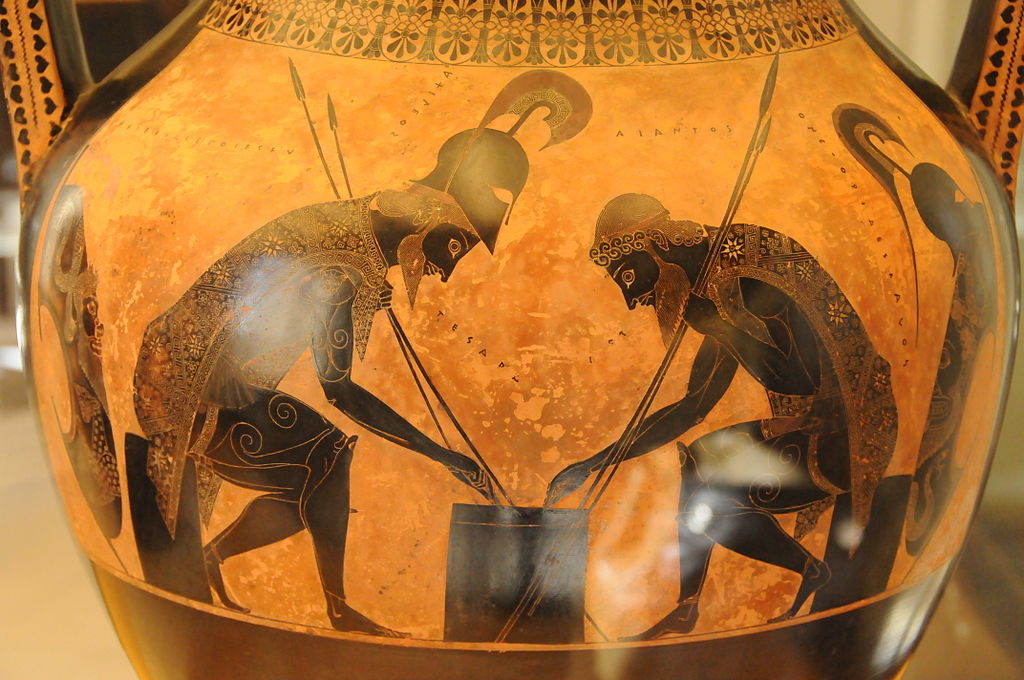
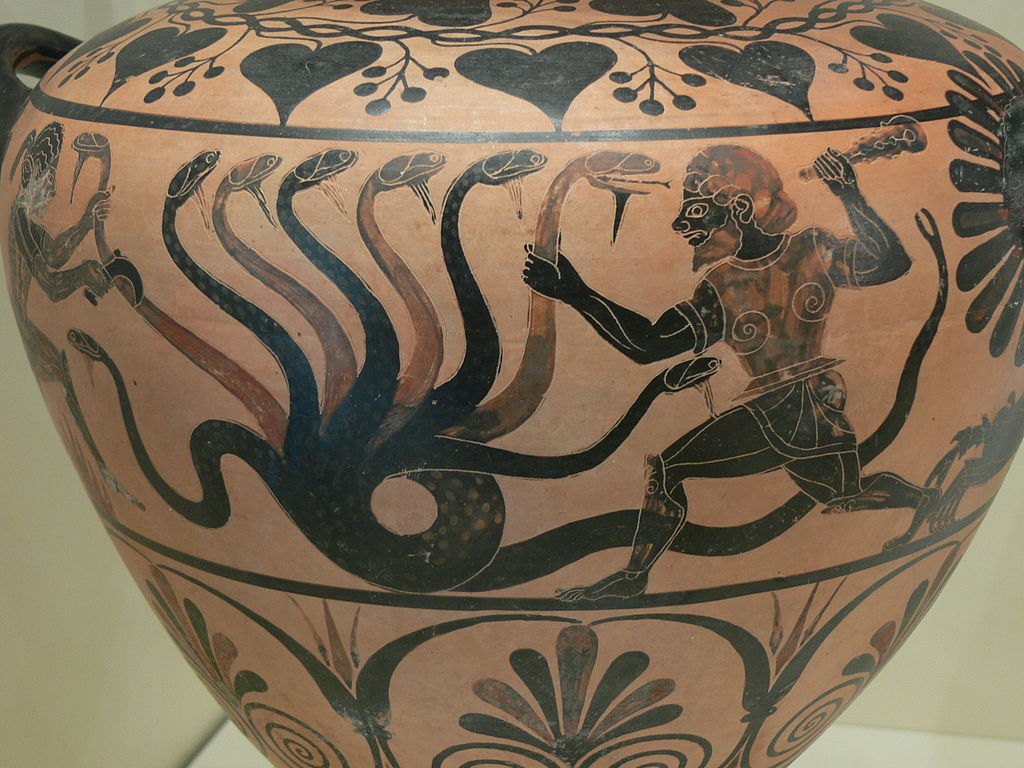
The Black-figure pottery technique flourished primarily between the 7th-5th c. BC, although examples have been found dating as late as the 2nd c. BC. Characterized by painted figures and ornaments against a black background, this style employed silhouettes and bold shapes to create striking compositions.

Artists delicately incised contours into the painted surface before firing, allowing for intricate detailing and the use of opaque colors, notably white and red, to enhance figures and motifs. Black-figure pottery marked a significant development in Greek ceramic art, fostering the emergence of individual artists with distinctive styles and contributing to the rich visual tapestry of ancient Greek culture.
Red-Figure
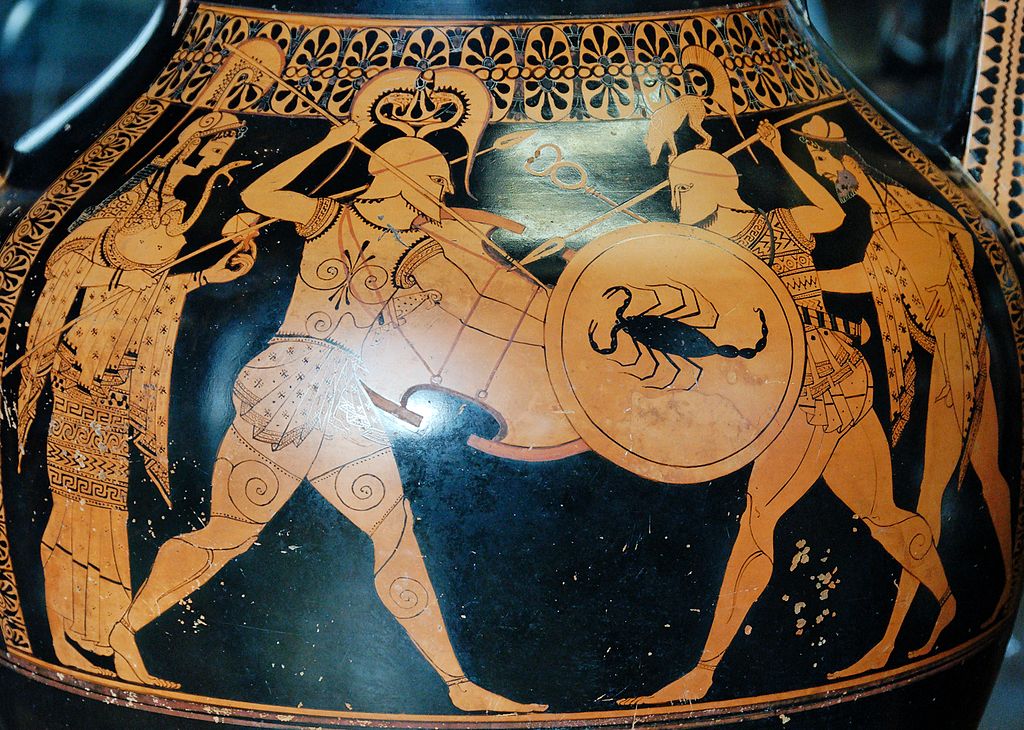
The Red-figure pottery technique emerged in Athens c. 520 BC and persisted until the late 3rd c. BC, supplanting the earlier dominance of black-figure pottery within a few decades. Named for its characteristic figural depictions in red against a black background, this style represented a significant departure from the previous black-figure technique, which featured black figures against a red background.

The advent of red-figure pottery revolutionized Greek ceramic art, allowing for greater detail, expressiveness, and nuance in figural representation. Artists mastered the technique of applying red slip to the surface of the clay vessel, then using incision and added color to highlight features and add depth to their compositions. Red-figure pottery became synonymous with the artistic vibrancy and cultural sophistication of ancient Athens, reflecting the city’s pivotal role in shaping the aesthetic and intellectual landscape of classical Greece.
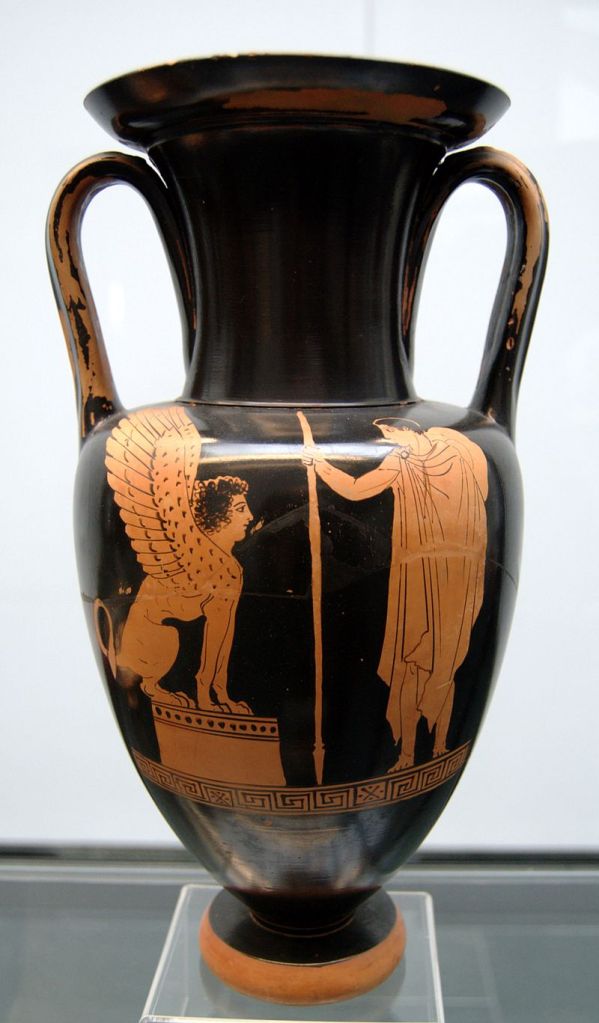
2. Oedipus and the sphinx, red-figure amphora, c. 440-430 BC. Staatliche Antikensammlungen, Munich.
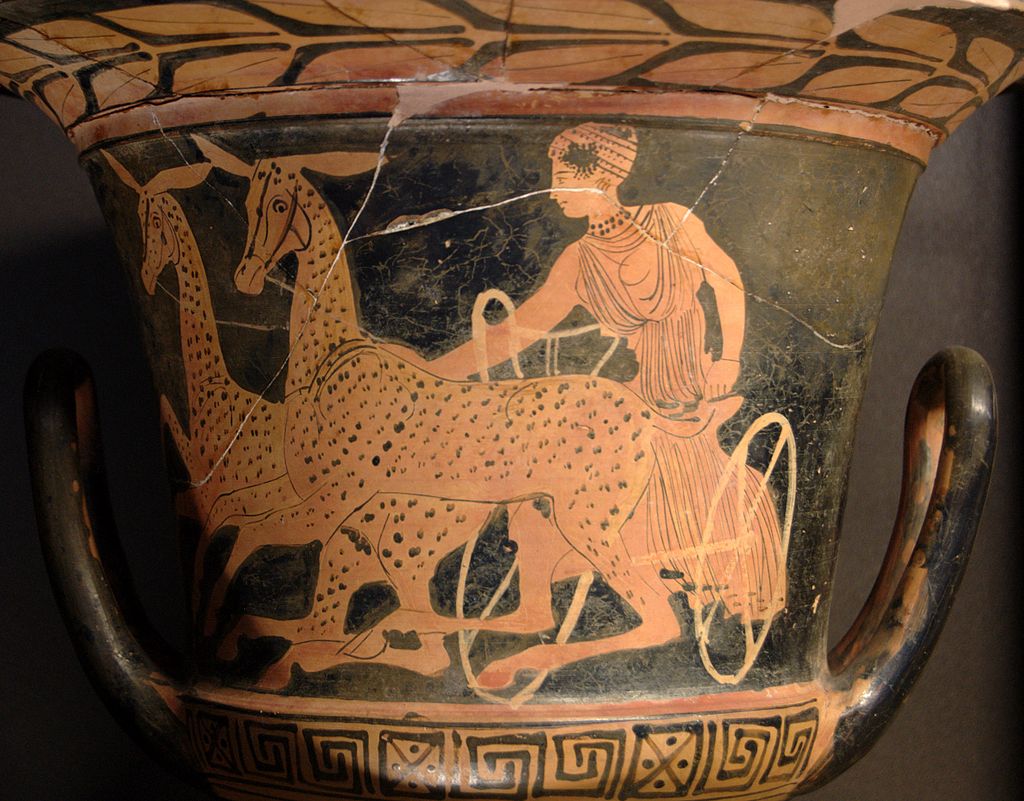
3. Artemis in a Chariot, red-figure kantharos, c. 450-425 BC. Louvre.
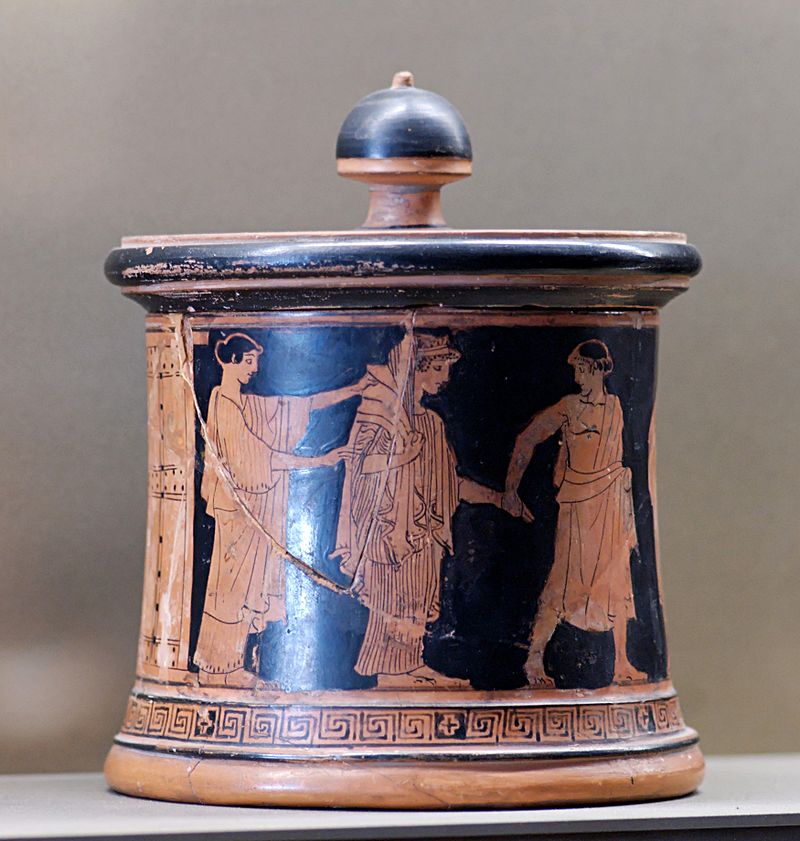
4. The wedding of Thetis, red-figure pyxis, c. 470-460 BC. Louvre.
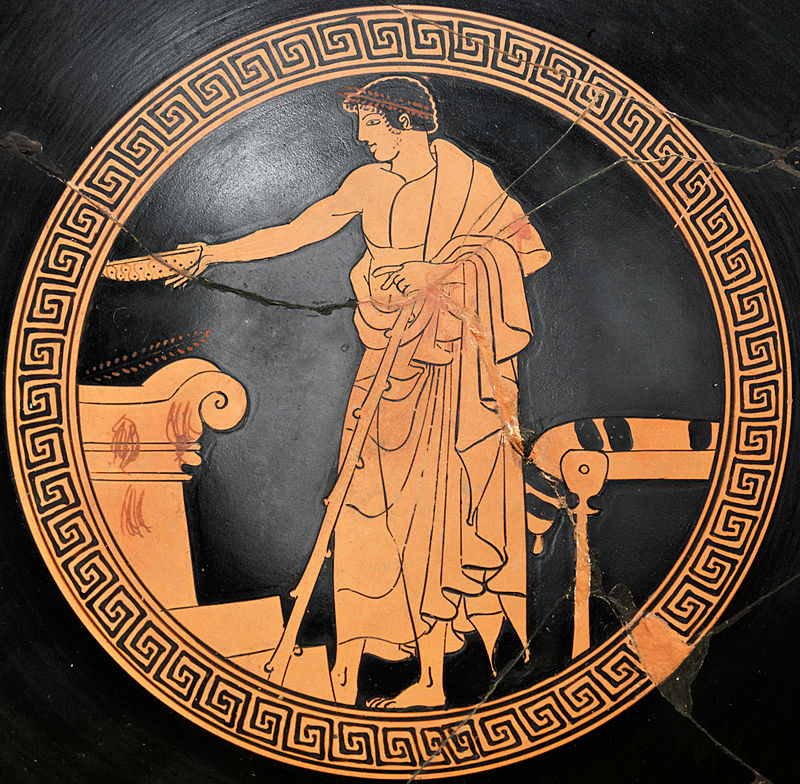
5. Youth performing a libation, interior of a red-figure bowl, c. 480 BC. Louvre.
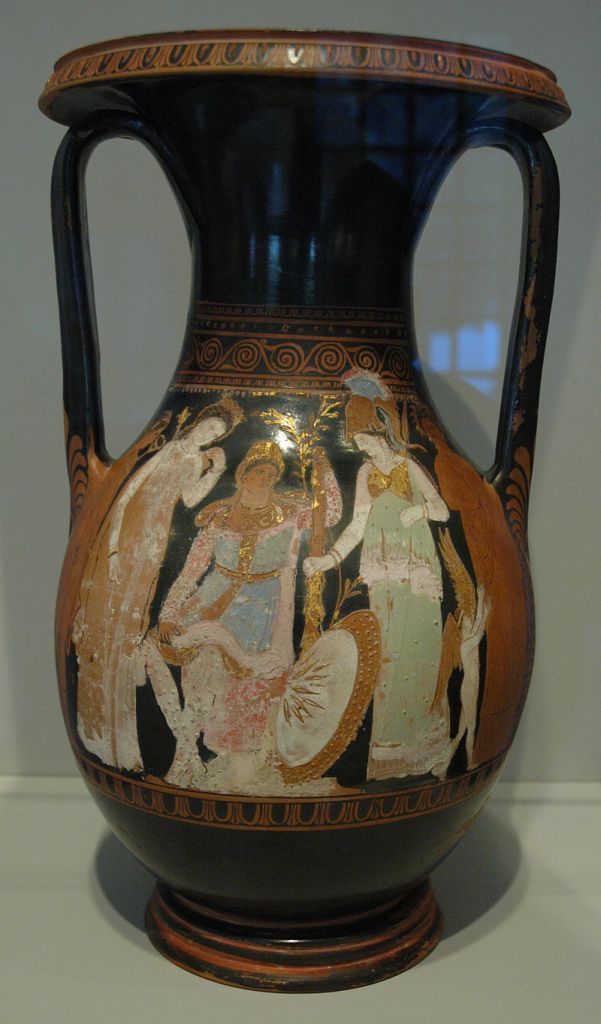
6. Judgement of Paris, c. 360 BC. Getty Villa. (c) Marshall Astor
White Ground
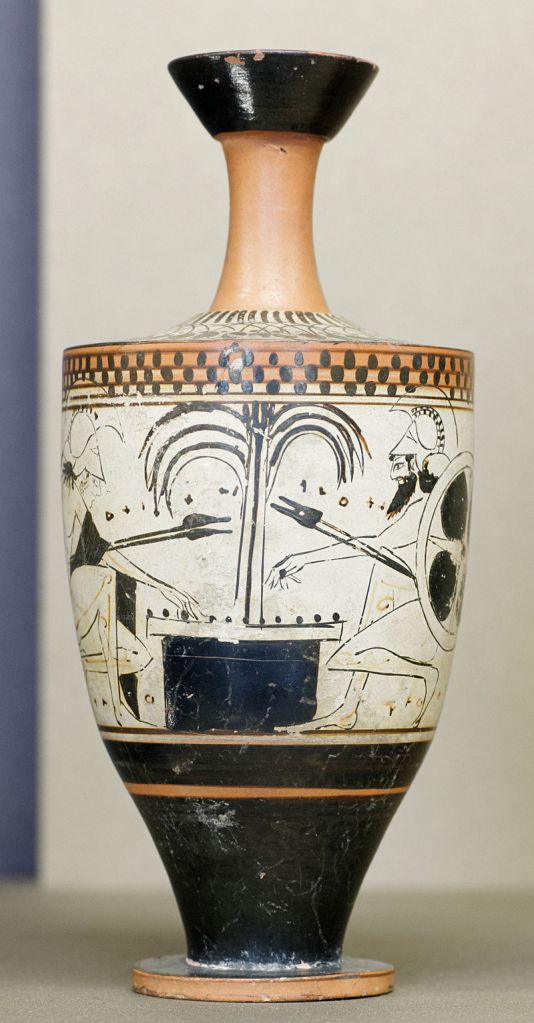
The White-ground pottery technique emerged in the region of Attica c. 500 BC, representing a distinctive departure from the prevailing black-figure and red-figure vase painting techniques. Characterized by its white background, this style was particularly associated with vases crafted for ritual and funerary purposes, owing to the delicacy of the painted surface compared to other methods.
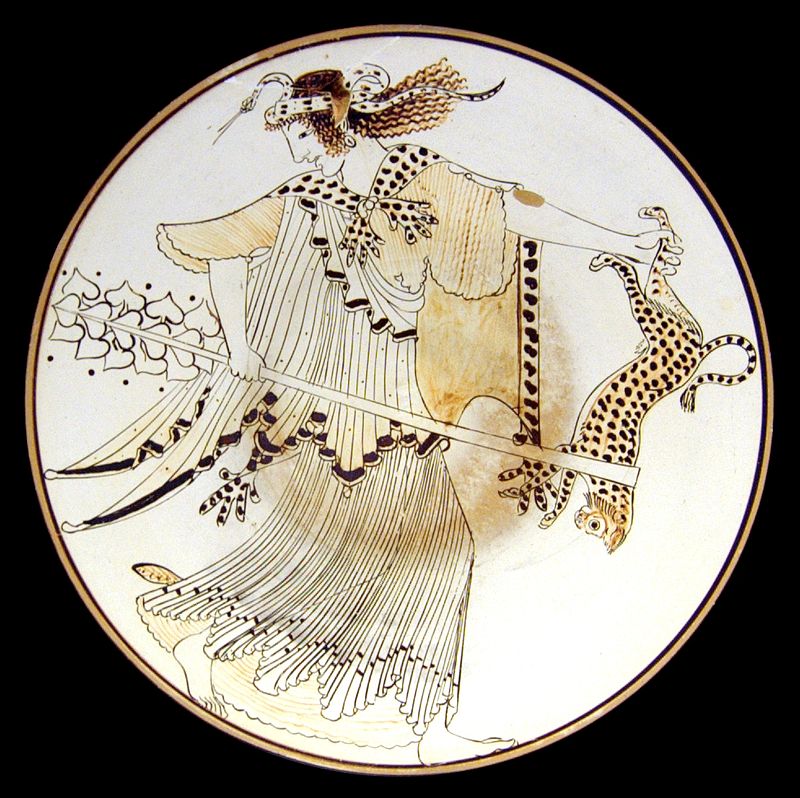
The white ground provided a pristine canvas for intricate figural and ornamental designs, often depicting scenes from mythology, religious rituals, or everyday life. Artists applied diluted clay slip to the surface of the vessel before firing, creating a smooth, matte background that allowed for detailed painting with additional colors. While white-ground pottery was less durable than its counterparts, its exquisite craftsmanship and aesthetic refinement made it highly prized among ancient Greek elites, serving as a testament to the cultural sophistication of Attic artisans and their enduring legacy in the annals of classical art.
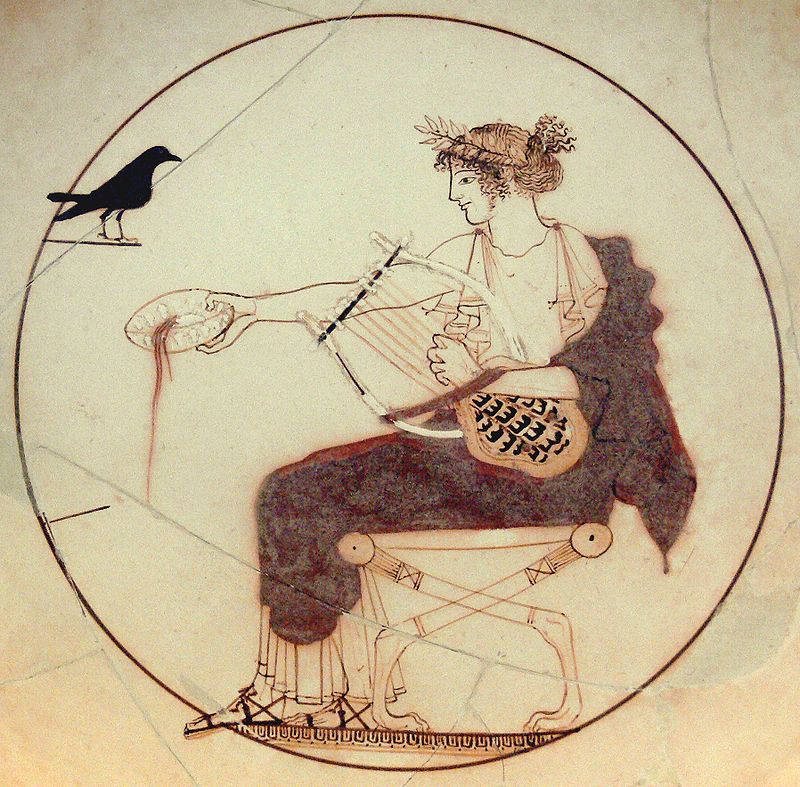
2. Apollo pours a libation, Attic kylix, c. 460 BC. (c) Fingalo
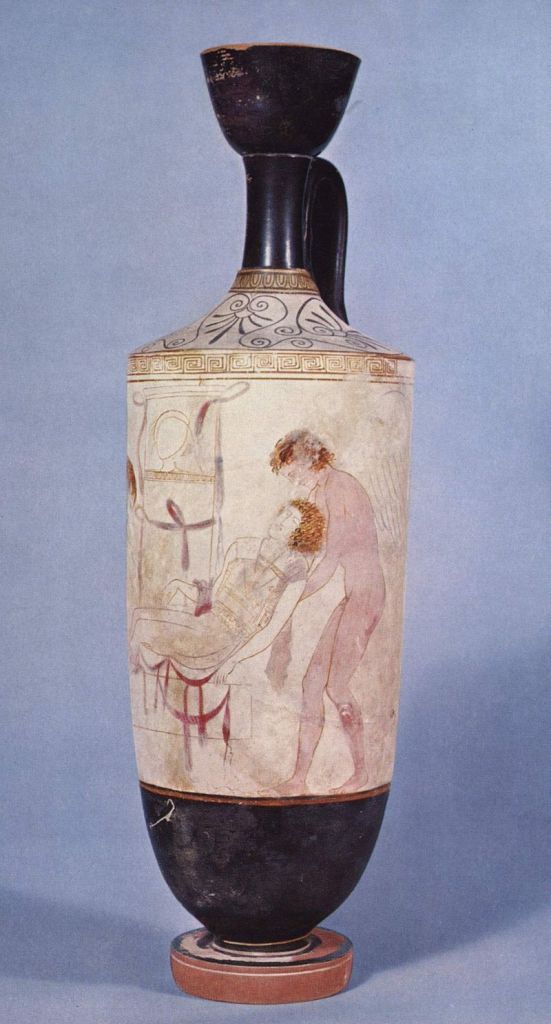
3. Hypnos and Thanatos removing the body of Sarpedon from the battlefield of Troy, lekythos, c. 440 BC. British Museum.

 Digital Maps of the Ancient World