Roman Glass
Roman glass production evolved significantly during the 1st c. AD, marked by a notable shift in technical innovation and manufacturing techniques. Initially rooted in Hellenistic traditions, Roman glassmakers focused on crafting intensely colored cast glass vessels, showcasing rich hues and intricate designs. However, this period witnessed a rapid expansion and refinement of glassmaking technology.

A pivotal development was the introduction of glass blowing, a groundbreaking technique that revolutionized the industry. This innovative method allowed for the creation of more intricate and varied glass forms with greater efficiency and precision. Concurrently, there was a notable transition towards the production of colorless glass, which soon became predominant in Roman glassware.
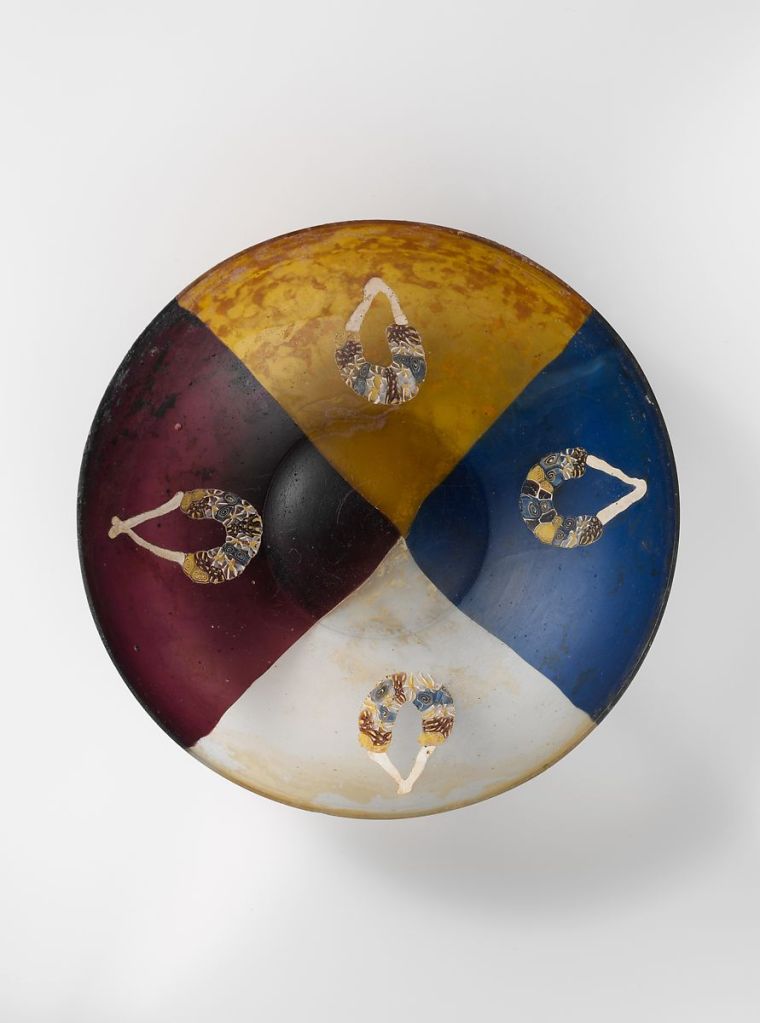
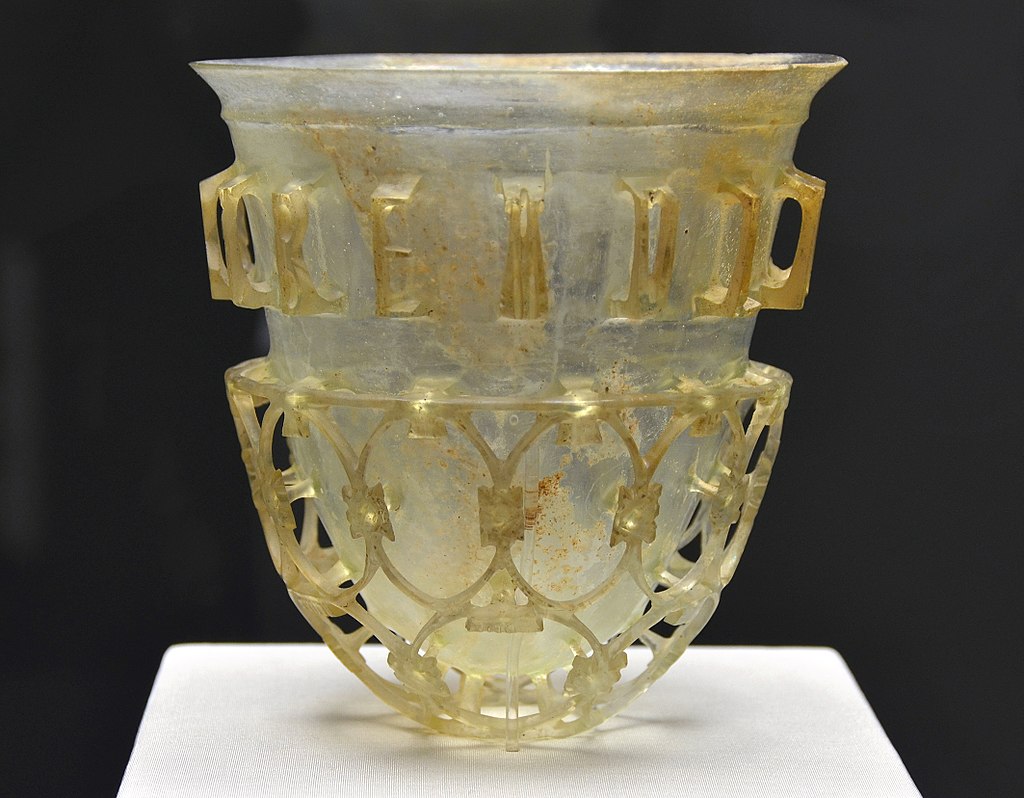
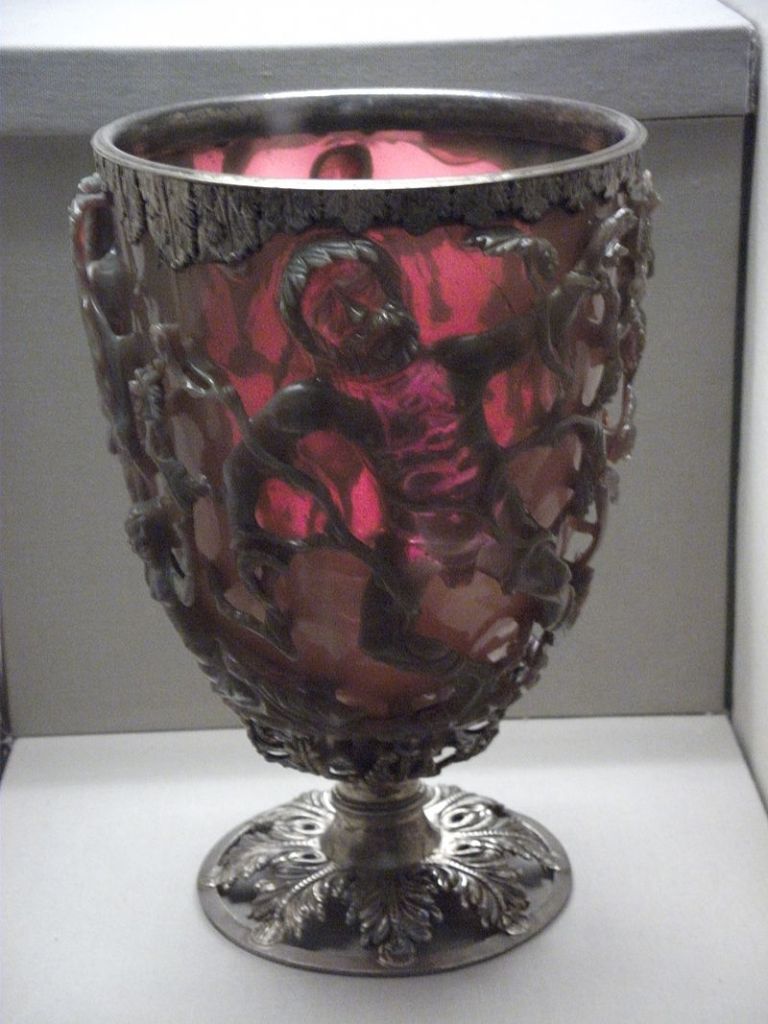
By the end of the 1st c. AD, Roman glass manufacturing had reached unprecedented levels of sophistication and scale. Glass production became standardized and widespread, making glass a readily available material across the Roman Empire. Moreover, advancements in glassmaking facilitated the production of specialized luxury glass varieties, showcasing remarkable technical skill and artistic craftsmanship.


Gold Glass
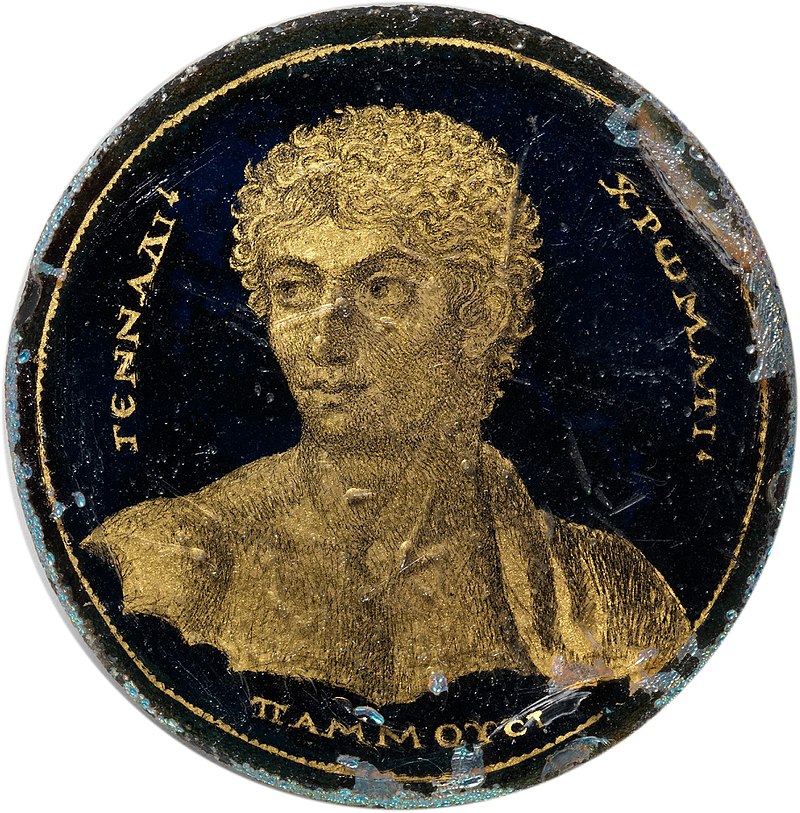
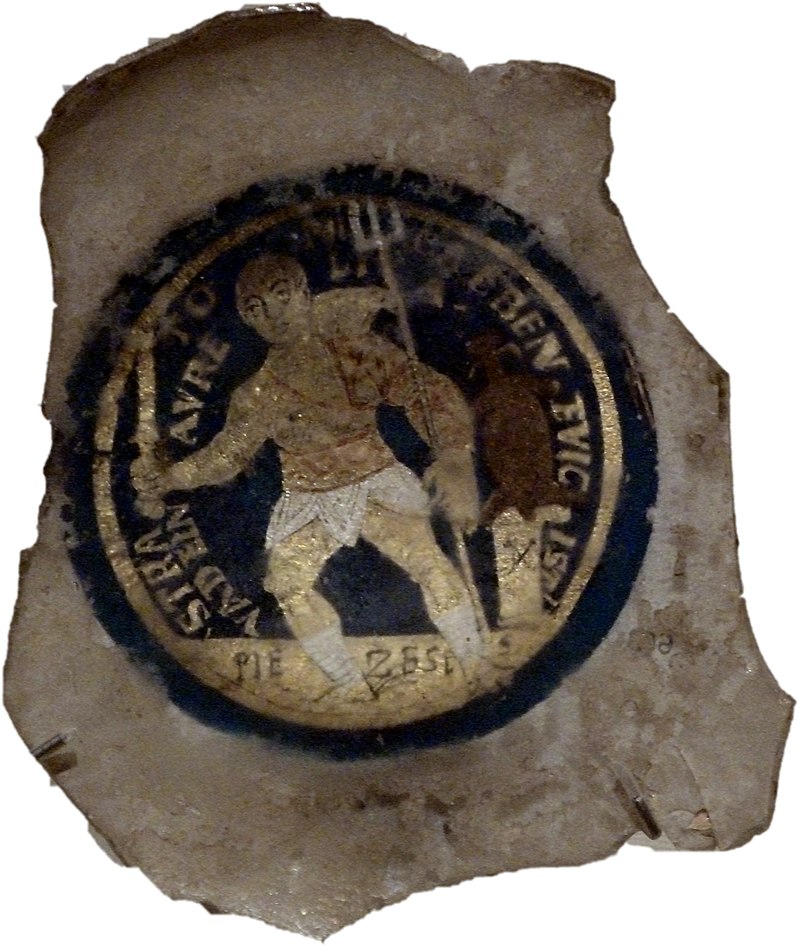
Gold glass is a remarkable luxury form of glass that epitomizes the opulence and refinement of ancient craftsmanship. Originating in Hellenistic Greece, gold glass reached its zenith during the Roman Empire, particularly flourishing in the 3rd-4th c. AD.

This exquisite art form entails the fusion of a decorative design crafted from delicate gold leaf between two layers of glass. The result is a stunning and luminous object that exudes an aura of wealth and sophistication. Gold glass objects were prized possessions, cherished for their beauty and elegance.
In Roman society, gold glass adorned the homes of the elite and adorned the tombs of the deceased, serving as a symbol of status and prestige. These precious artifacts often depicted scenes from mythology, religious motifs, or portraits of esteemed individuals, showcasing the artistic skill and cultural richness of the era.


 Digital Maps of the Ancient World