Timeline of the Carthaginians
c. 814 BC: Traditional founding date of Carthage by Tyre.

580-376 BC: Carthage and Greece engage in a prolonged struggle for dominance in Sicily, marked by numerous skirmishes and battles.
540 BC: A joint Carthaginian and Etruscan navy achieves a decisive victory over the Phocaeans at the Battle of the Sardinian Sea.
539 BC: The Etruscan-Carthaginian alliance successfully expels the Greeks from the island of Corsica.
535 BC: The Battle of Alalia witnesses another Carthaginian-Etruscan naval triumph over the Greeks off the coast of Corsica.
510-509 BC: A significant milestone in Carthage’s history is the establishment of the first treaty with Rome, marking an early diplomatic relationship between the two rising powers.
500 BC: Carthage expands its influence westward, venturing into southern Spain and establishing a presence on the Iberian Peninsula.

(c) Kelly Maquire/WorldHistory 480 BC: A series of devastating defeats at the battles of Himera and Agrigento temporarily halt Carthage’s expansion in Sicily.
406 BC: Carthage attacks and destroys the city of Agrigento.
405 BC: The strategically important city of Segesta comes under Carthaginian control.
396 BC: Carthage founds the city of Lilybaeum on Sicily, solidifying its presence on the island.
c. 341 BC: A significant setback occurs when the Carthaginian army is defeated by Timoleon at the Battle of Crimisus in Sicily.
338 BC: Carthage and Timoleon agree to a peace treaty, dividing their control over Sicily.
311-306 BC: Carthage and Agathocles of Syracuse fight a series of battles in Sicily and North Africa for dominance over Sicily. Eventually signing a peace treaty, dividing the island between them.

(c) Talessman 264 BC: The First Punic War erupts when the Mamertines at Messana call on Carthage, and then Rome, for help against Syracuse.
264-241 BC: Carthage and Rome engage in a prolonged and brutal conflict, ultimately resulting in Carthage’s defeat and the cession of Sicily to Rome.
247 BC: Hannibal Barca is born.
241-238 BC: The Mercenary Rebellion erupts, with unpaid mercenaries under Mathos and Spendios rebelling against Carthage. Rome seizes the opportunity to strip Carthage of Sardinia and Corsica.
237 BC: Hamilcar Barca arrives in southern Spain to expand Carthage’s interests. He founds Acra Leuce and makes Gades his base.
229 BC: Hasdrubal, Hannibal’s brother, takes command of Carthage’s armies in Spain.

226 BC: Hasdrubal signs an agreement with Rome not to cross the Ebro River in Spain.
221 BC: Hannibal takes command of Carthage’s armies in Spain.
219 BC: Hannibal crosses the Ebro River and sacks Saguntum, sparking the Second Punic War.
218-202 BC: The Second Punic War

(c) Encylcopaedia Britannica - 218-216 BC: Hannibal marches across the Alps and defeats the Romans at the battles of Ticinus, Trebia, Lake Trasimene, and Cannae.
- 212 BC: Rome conquers Saguntum and Syracuse.
- 209 BC: Scipio Africanus captures Carthago Nova in southern Spain.
- 208 BC: Scipio Africanus defeats Hasdrubal at Baecula.
- 206-205 BC: Rome conquers Gades, marking the end of Carthaginian presence in Iberia.
- 206 BC: Scipio Africanus defeats Hasdrubal at Ilipa.
- 204-203 BC: Scipio Africanus sails to North Africa and defeats Hannibal at Zama, ending the Second Punic War.
195 BC: Hannibal flees to the Seleucid court of Antiochus III.
c. 183 BC: Hannibal commits suicide in Bithynia to avoid capture by the Romans.
150 BC: Carthage attacks Numidia, violating the peace treaty and sparking the Third Punic War.
149-146 BC: The Third Punic War: Carthage is besieged by Rome and eventually is destroyed. Its territory becomes the Roman province of Africa.
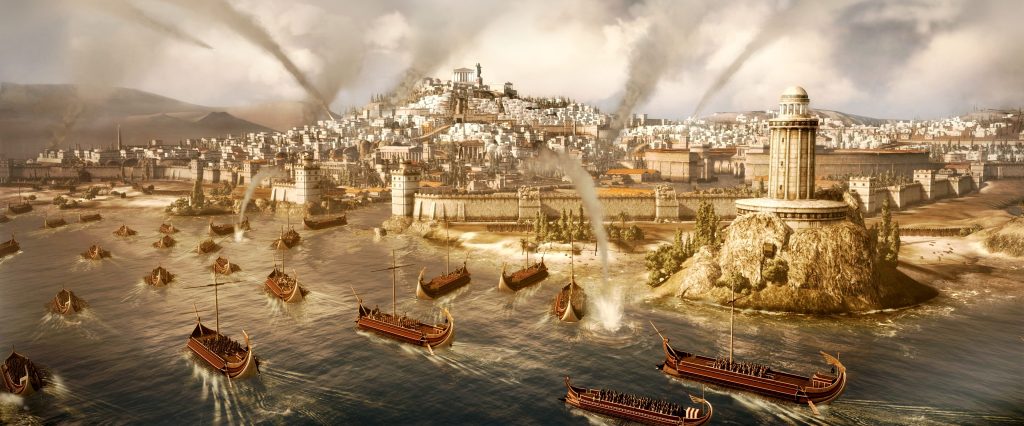
(c) Creative Assembly

 Digital Maps of the Ancient World