Agonalia
The Agonalia was an ancient Roman religious observance, shrouded in a degree of obscurity. Celebrated several times a year in honor of various divinities, its origins were attributed to the semi-legendary second king of Rome, Numa Pompilius.
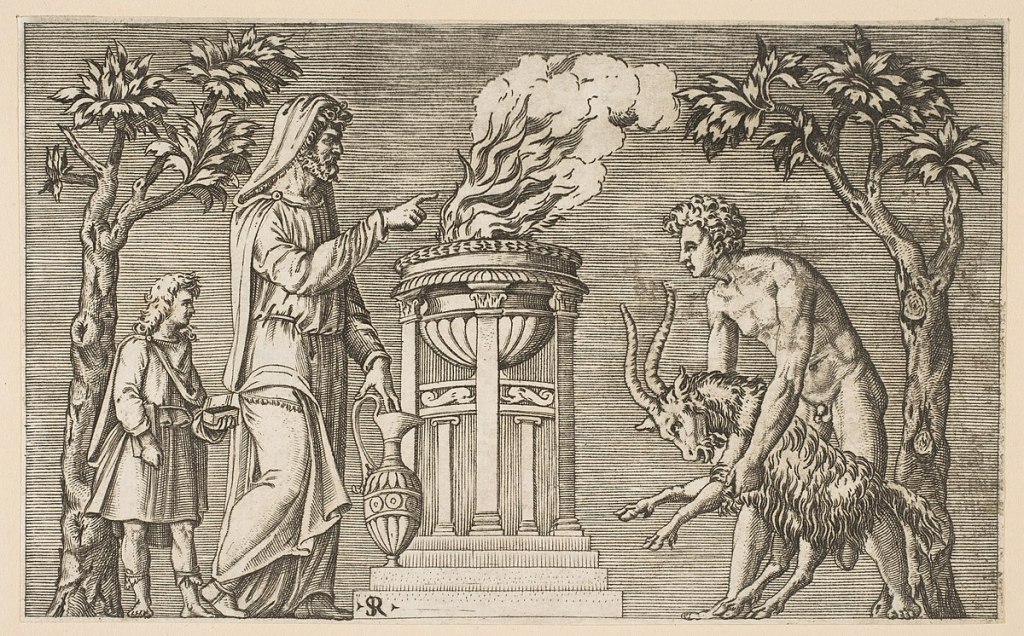
Dates: 9th January, 21st May and 11th December
Deity: Various
Observances: Animal sacrifice
According to ancient calendars, the Agonalia was regularly held on January 9, May 21, and December 11. The centerpiece of the ceremony was the sacrifice of a ram, presided over by the rex sacrificulus, a high-ranking priest. The Regia, the official residence of the Pontifex Maximus, served as the sacred site for this ritual.
However, the exact purpose of the Agonalia remains a subject of debate even among ancient sources. Some scholars suggest it was a festival of purification or expiation, while others propose it was a celebration of victory or a commemoration of a significant historical event.

 Digital Maps of the Ancient World