Parentalia
The Parentalia was a nine-day festival held in February to honor family ancestors. While the festival was primarily observed within families, public ceremonies were also held to commemorate the collective ancestors of the Roman state.
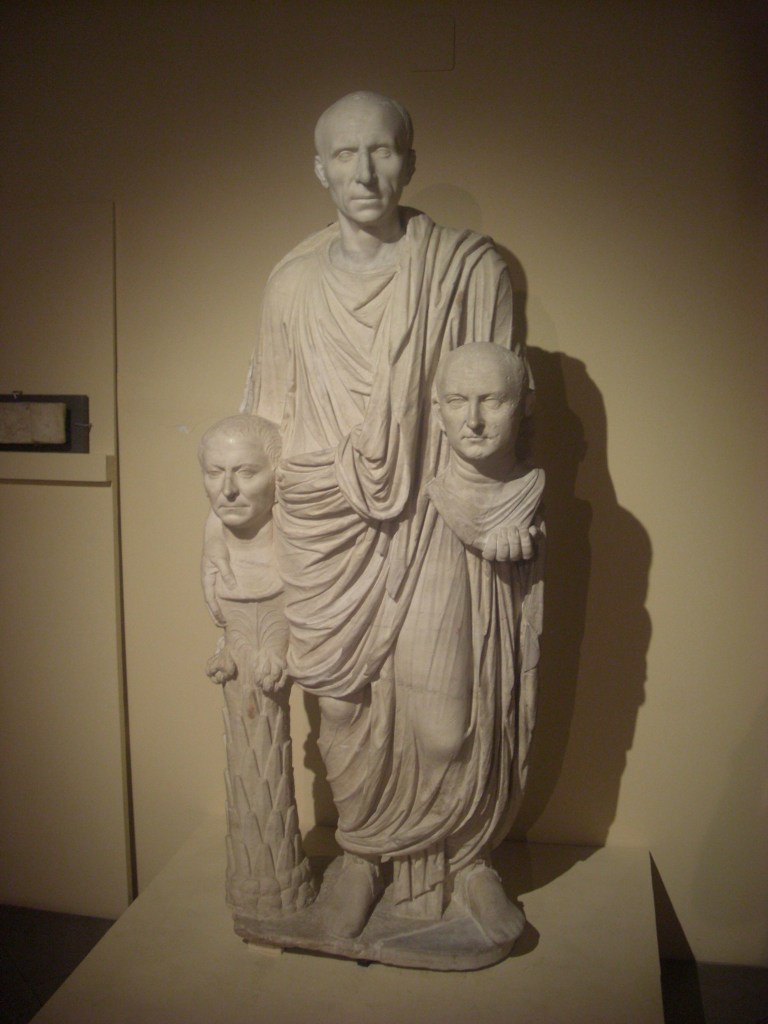
Date: 13th-22nd February
Observances: Ancestor veneration
During the Parentalia, families would visit the tombs of their ancestors outside the city walls and offer sacrifices of flowers, wheat, salt, wine-soaked bread, and violets. These offerings were believed to strengthen the bonds between the living and the dead and were considered a duty of the paterfamilias, the head of the family.
The festival concluded with the Feralia, a ritual aimed at placating the malevolent aspects of the dead. This was followed by the Caristia, a more informal family gathering to celebrate the affectionate bonds with benevolent ancestors.
The Parentalia reflected the importance of family and ancestry in Roman culture. The festival emphasized the collective nature of the dead and their ongoing influence on the living. Over time, the concept of the Manes evolved, becoming more individualized and eventually acquiring divine status in the Imperial cult.

 Digital Maps of the Ancient World