Terminalia
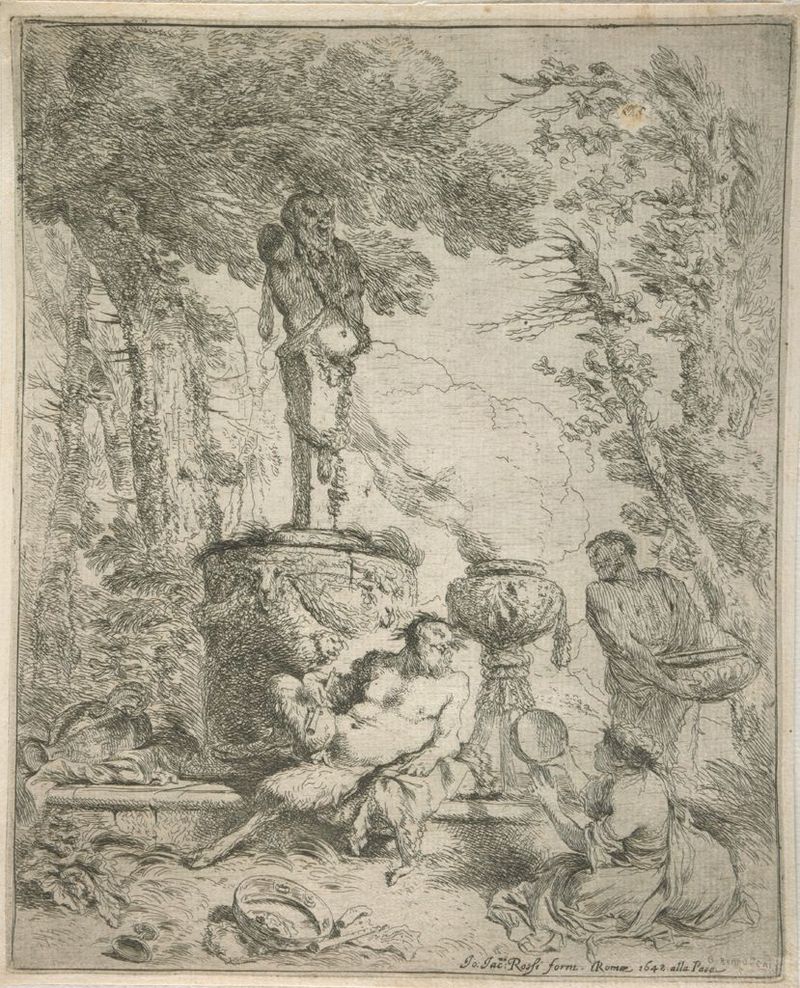
The Terminalia was a festival celebrated in honor of Terminus, the god who presided over boundaries. His statue was a simple stone or post placed at the border between properties.
Date: 23rd February
Deity: Terminus
Observances: Offerings of food and animal sacrifice
The festival was said to have been instituted by King Numa Pompilius, who ordered that every landowner mark their property boundaries with stones dedicated to Jupiter Terminalis. On the Terminalia, neighboring landowners would crown the boundary stone with garlands, build a makeshift altar, and offer sacrifices of corn, honeycombs, wine, and a lamb or suckling pig. They would then sing the praises of the god.
The public festival of the Terminalia was held at the sixth milestone on the road to Laurentum, which was the original extent of Roman territory in that direction. The festival was celebrated on 23rd February, the day before the Regifugium, and marked the end of the old Roman year.
The central shrine of Terminus was located on the Capitoline Hill, the most sacred site in Rome. When the temple of Jupiter was built on the Capitoline, a hole was left in the ceiling to accommodate Terminus, as the god was believed to refuse to be moved. This was seen as a sign of stability and permanence for the city.

 Digital Maps of the Ancient World