Galli
The Galli were a group of eunuch priests associated with the worship of Cybele, the Phrygian goddess known as Magna Mater in Rome. Their practices were incorporated into Roman state religion and involved a combination of ecstatic rituals and self-harm.

The Galli underwent a ritual castration on 24th March, a day known as the Dies sanguinis or “Day of Blood.” This act was a symbol of their devotion to Cybele and Attis, her consort. Following the castration, they engaged in frenzied rituals, including dancing, self-flagellation, and music.
Initiation into the cult of Cybele involved a sacred feast and a password. The password, as revealed by Firmicus Maternus, a Christian critic of other religions, was “I have eaten from the timbrel; I have drunk from the cymbal; I am become an initiate of Attis.” This password is similar to formulas found in other ancient mystery cults, such as the Eleusinian Mysteries.
There was some debate among ancient Romans and modern scholars regarding the participation of Roman citizens in the cult of Cybele. Some sources suggest that only foreign-born individuals were allowed to join, while others argue that Roman citizens could participate.
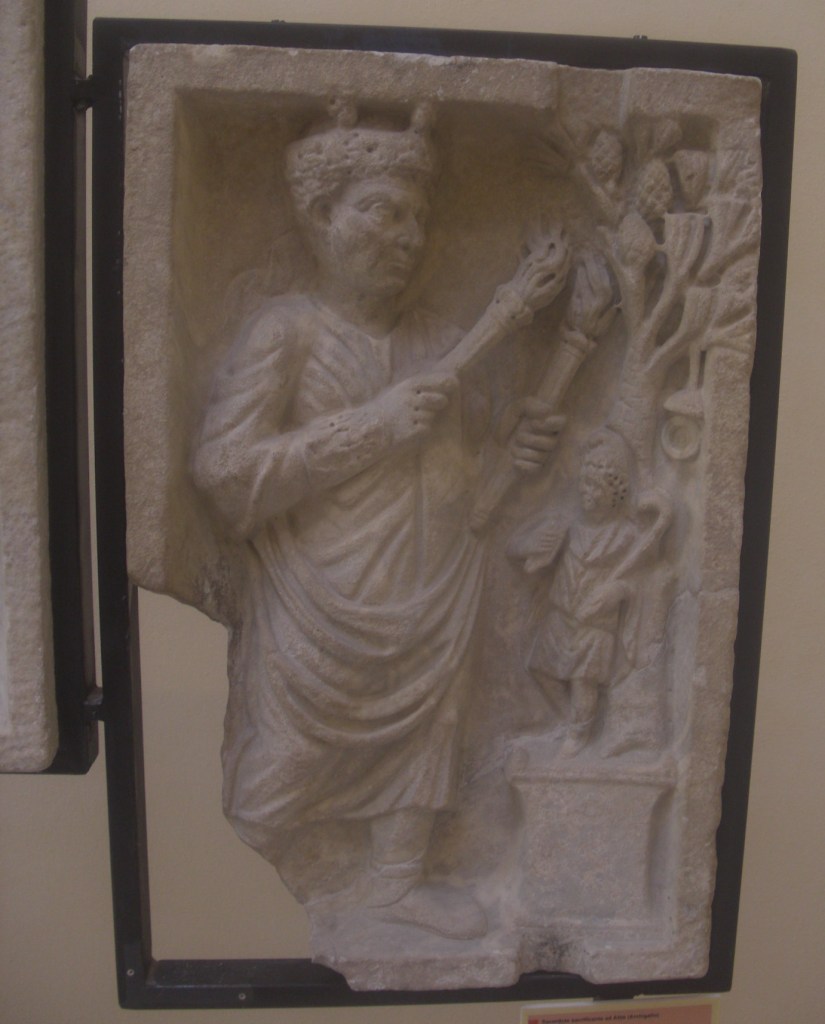
The Galli were easily recognizable by their distinctive appearance. They wore women’s clothing, including turbans, pendants, and earrings. They bleached their hair and wore heavy makeup. They often wandered the streets, begging for charity and offering to tell fortunes.
The leader of the Galli was known as the archigallus. He was a Roman citizen chosen by the quindecimviri sacris faciundis, a group of priests responsible for overseeing religious matters. The archigallus held a position of authority within the cult and was responsible for preserving its traditions.

 Digital Maps of the Ancient World