Salii
The Salii, or “leaping priests,” were a group of twelve patrician youths dedicated to the service of Mars, the Roman god of war. They were known for their distinctive attire, which included a tunic, breastplate, short red cloak, sword, and a spiked headdress called an apex.
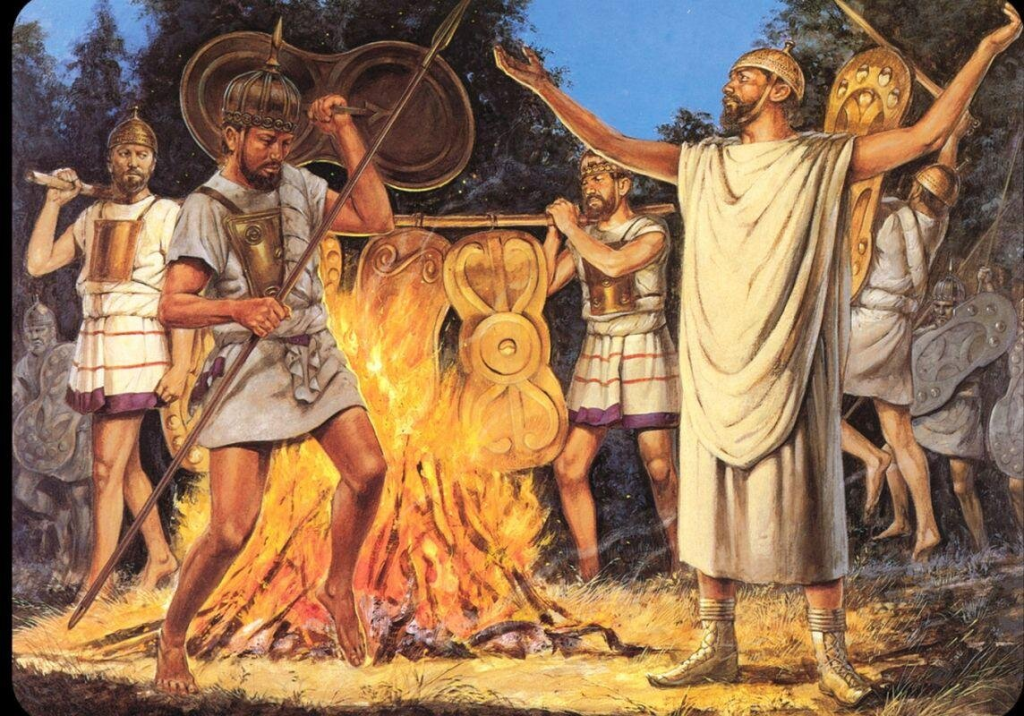
The Salii were entrusted with the care of twelve bronze shields known as ancilia. One of these shields was said to have fallen from heaven during the reign of King Numa Pompilius. According to legend, the nymph Egeria advised Numa to create eleven copies of the sacred shield to protect its identity and ensure the prosperity of Rome.
Each year in March, the Salii performed a procession around the city, dancing and singing the Carmen Saliare, a sacred song. Ovid, a Roman poet, described the hymn and rituals as outdated and difficult to understand. During the Principate, Augustus’s name was inserted into the song as part of a political maneuver.
King Tullus Hostilius established a second college of Salii, known as the Salii Collini, to fulfill a vow made during a war with Fidenae and Veii. This college was also composed of twelve patricians and was dedicated to the service of Quirinus, another Roman deity.
The Salii‘s dances were not merely entertainment; they were an integral part of their religious practices. These dances were believed to honor Jupiter, Janus, and Mars and maintain the social order of Rome. They also served as a way to transmit religious and historical stories.
The Salii‘s dance was known as the tripudium, which involved stamping the feet three times. Seneca the Younger described the tripudium as a popular dance that required professional training.

 Digital Maps of the Ancient World