Vestales
The Vestales, also known as Vestal Virgins, were a group of six priestesses dedicated to Vesta, the goddess of the hearth. Unlike other Roman priesthoods, the Vestales were exclusively female and were chosen before puberty. They were supervised by a senior Vestal, the Vestalis Maxima, but ultimately governed by the Pontifex Maximus.
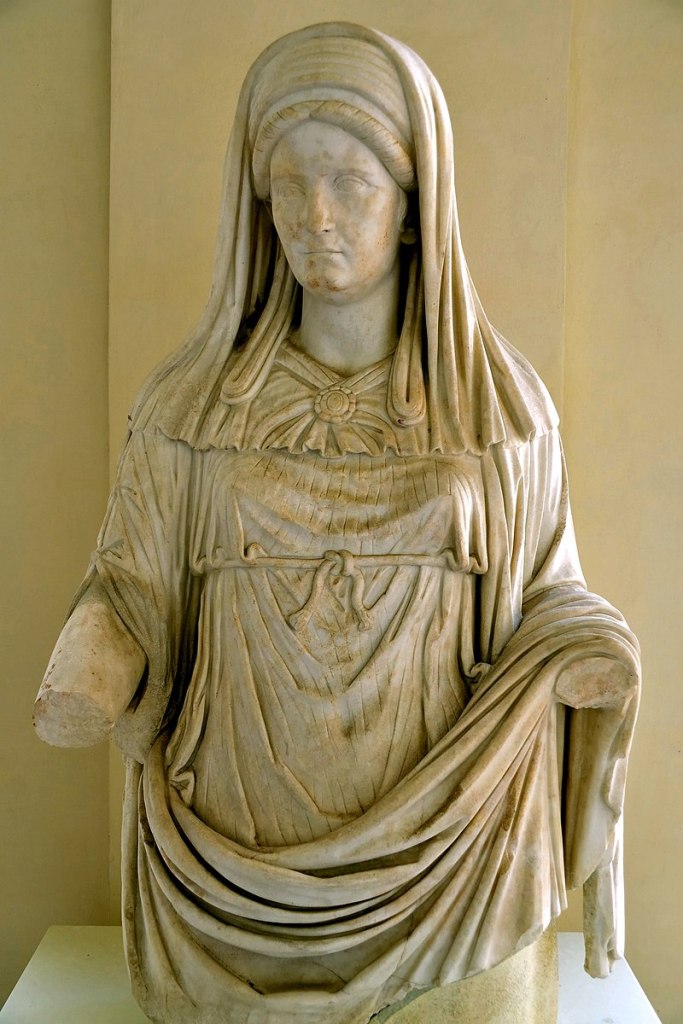
Vestals took a vow of chastity and were required to serve Vesta for at least thirty years. They studied and practiced Vesta’s rites and were responsible for maintaining the sacred hearth, a symbol of Rome’s enduring existence. If the sacred fire ever went out, it was considered a grave offense, and the Vestal responsible was punished with whipping.
Vestals who lost their chastity were guilty of incestum and were sentenced to a bloodless living burial. Their sexual partners, if known, were publicly beaten to death. However, these punishments were rare, and most Vestals retired with respect and generous pensions. While they were free to marry, few chose to do so, and some even renewed their vows to Vesta.
The Vestals enjoyed extraordinary rights and privileges, including exemption from legal ties to their birth families and protection from certain punishments. Their role in Roman society was unique and highly respected. They were seen as guardians of the city’s hearth and symbols of Rome’s enduring values.

According to Livy, the Vestals originated in Alba Longa, a neighboring city to Rome. Rhea Silvia, the daughter of King Numitor, forced to become a Vestal by her usurper uncle Amulius, miraculously gave birth to twin boys, Romulus and Remus. The twins were believed to be fathered by Mars, the god of war. Despite their uncle’s attempts to kill them, Romulus and Remus survived and Romulus went on to found Rome.
The legend of the Vestals’ origins connects them to the founding of Rome and highlights their sacred status. Numa Pompilius, Rome’s second king, is credited with establishing the first Temple of Vesta and appointing the four Vestals. He also subsidized them, recognizing their importance to the city. Later, Servius Tullius, the sixth king of Rome, increased the number of Vestals to six.
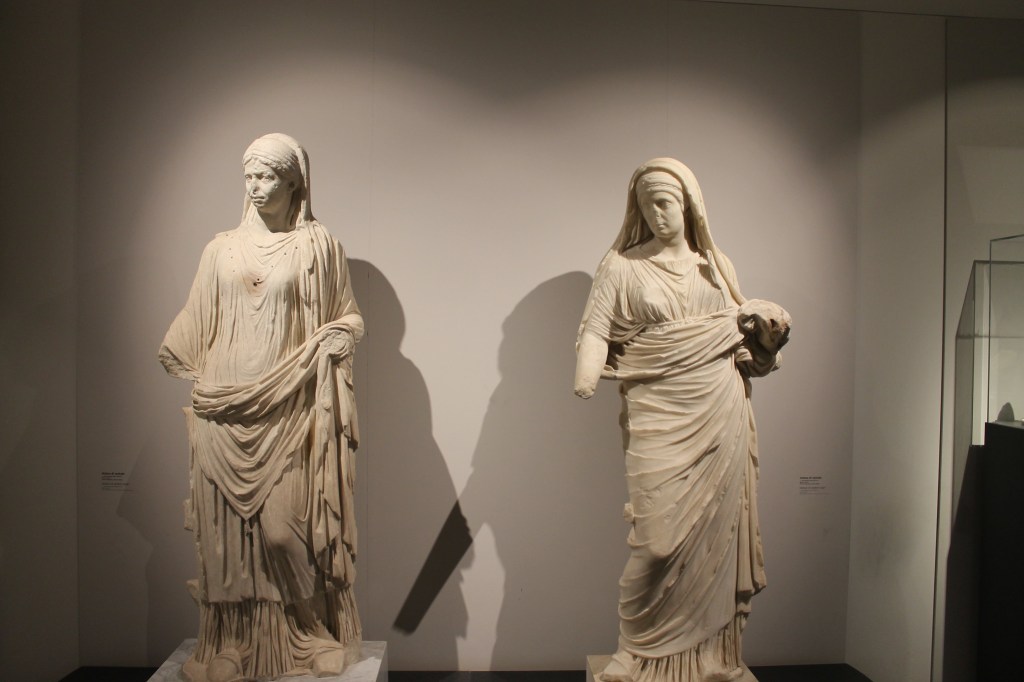
Candidates for the Vestal priesthood were carefully selected based on their physical, moral, and mental qualities. They had to be free of defects, have living parents, and be daughters of free-born Roman citizens. The Pontifex Maximus, the head of the College of Pontiffs, chose the Vestals through a lottery system.
The chosen Vestals underwent a ceremony known as captio, where the Pontifex Maximus would point to the girl and declare her a Vestal priestess. From that moment, she was under the protection of Vesta and dedicated to her service.
The Vestals had several important duties, including:
- Maintaining the Sacred Fire: They were responsible for tending to Vesta’s sacred hearth and ensuring that the flame remained lit. If the flame ever went out, it was considered a grave offense.
- Performing Rituals: They performed various religious rituals and ceremonies, including preparing substances used in public rites and presiding over the Vestalia, a festival dedicated to Vesta.
- Guarding the Penus: They were responsible for guarding the penus, a sacred store-room containing religious artifacts and supplies.
- Maintaining Religious Purity: They were required to maintain their chastity and avoid contact with men. They were also subject to strict rules regarding their behavior and appearance.

 Digital Maps of the Ancient World