The Imperial Roman Legion
The Imperial Roman Legion was the cornerstone of the Roman military, a highly disciplined and effective fighting force that conquered vast territories and maintained order across the Roman Empire. This page will explore the structure, equipment, tactics, and significance of the Roman legion, providing a comprehensive overview of this iconic military unit.
Under Augustus, the Imperial Roman legion became a permanent unit of about 5,200 heavy infantry, staffed by entirely professional soldiers on standard 25-year terms. He also fixed the number of legions at 28, having inherited over 50 after his defeat of Mark Anthony, although 3 were destroyed in the Varian Disaster. Under Septimius Severus, this number had grown to 30 legions of 5,600 heavy infantry.
Organisation
A legion was divided into ten cohorts, each of six centuries, with a small force of cavalry (eques legionis) attached to it used as messengers and scouts.
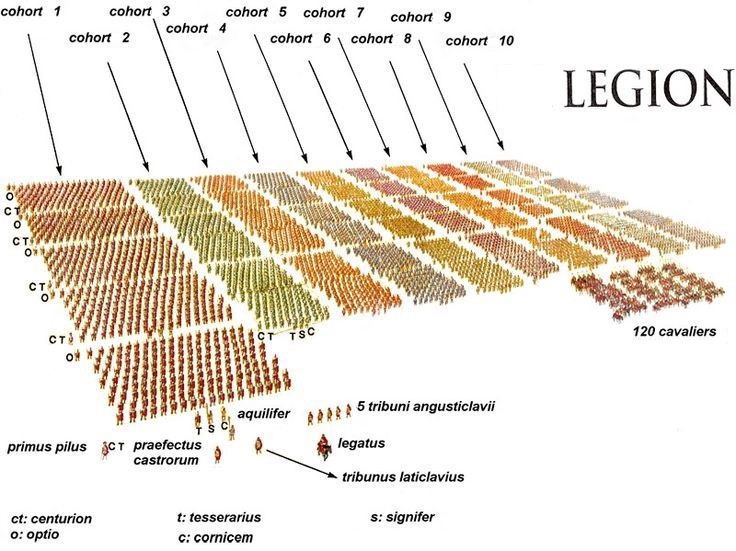
The cohort (cohors) was made up of 480 men in 6 centuries, with the first century being double-strength. The century (centuria) was made up of 80 men in 10 contubernia, or tent-groups. The contubernium was made up of 8 men.
The legion was commanded by a Legionary Legate (legatus legionis), supported by a Broad-Stripe Tribune (tribunus laticlavius), 5 Narrow-Stripe Tribunes (tribuni angusticlavii) and a Camp Prefect (praefectus castrorum). Each cohort and century was commanded by a centurion (centurio), with an optio as his second in command.
See Ranks of the Roman Army for more detail.
A legion was always supported by the Auxilia, non-citizen units, who normally matched the legion in strength.
Equipment
A legionary was expected to carry a great deal of equipment with him whilst on campaign; not only his weapons and armour but also his clothes, cooking utensils and tools for camp construction.
He was armed with a gladius, a pugio and two pila, while wearing a galea and lorica segmentata and carrying a scutum.
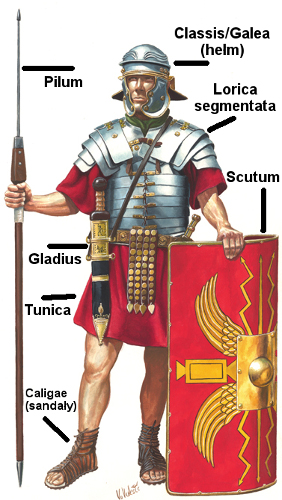
Aside from the weapons and armour, a legionary would carry such items as a pickaxe, a saw, a sickle, a shovel, a waterskin, a wicker basket and more, which would have been carried on a forked pole. This was first introduced by the consul C. Marius in 107 BC and earned his men the nickname Marius’ Mules.

Individual Legions
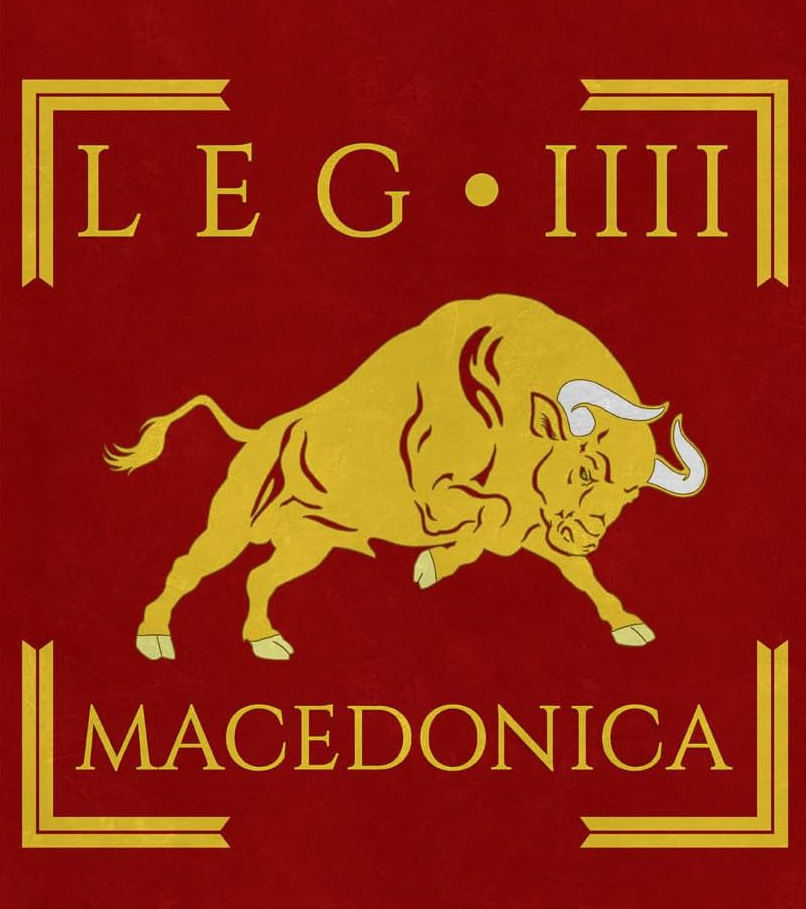
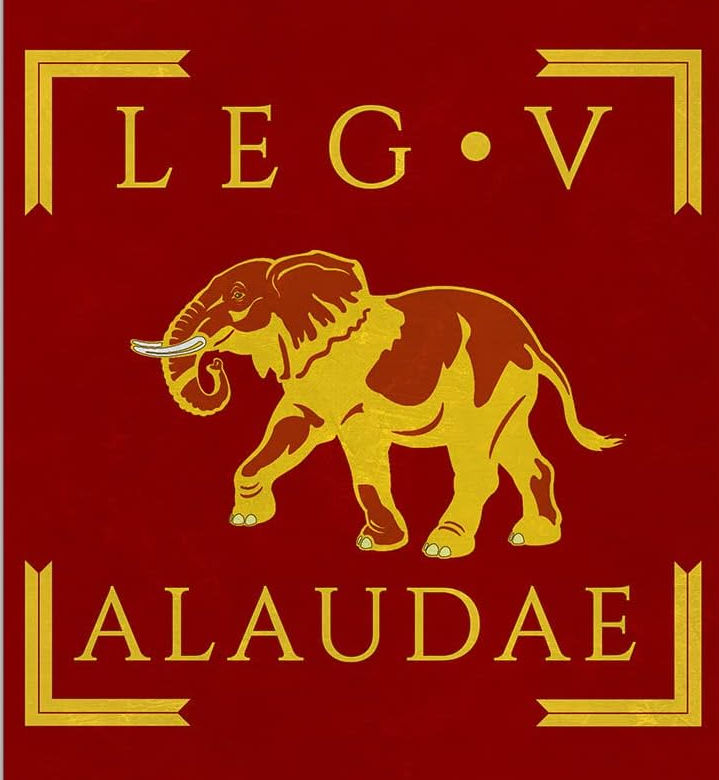
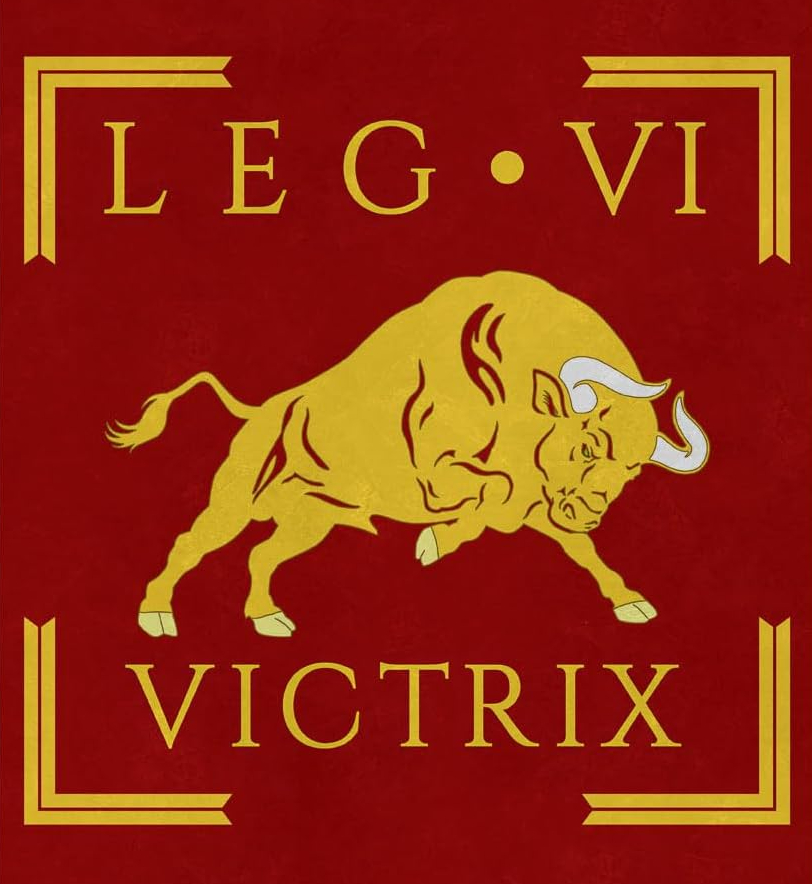
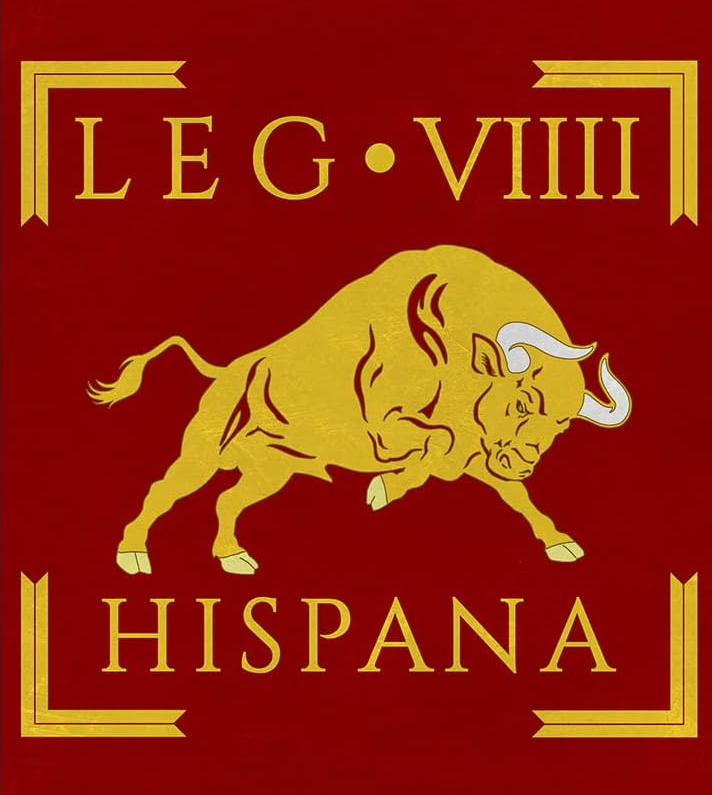
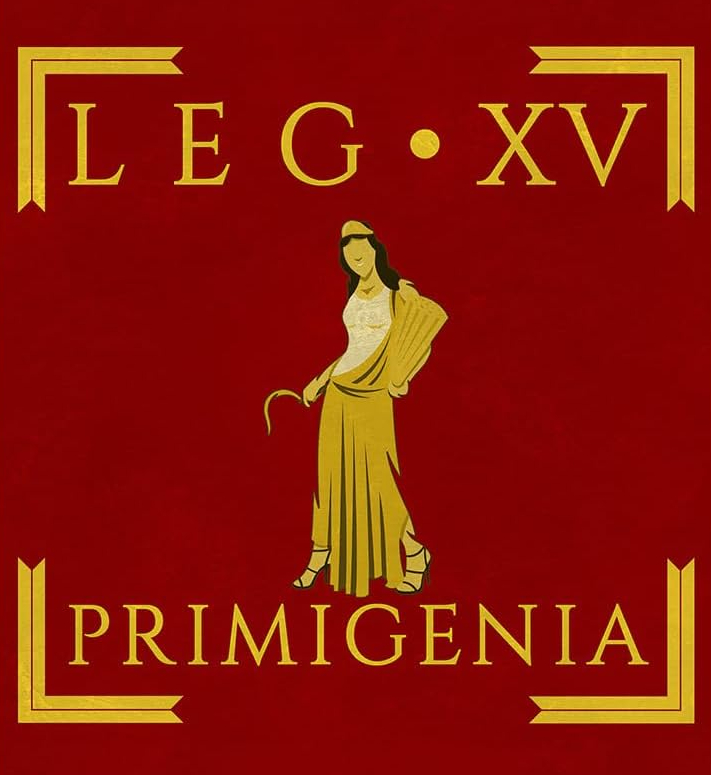
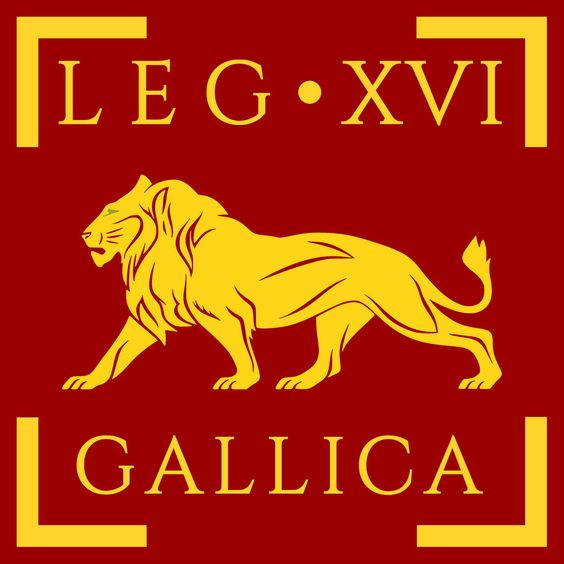
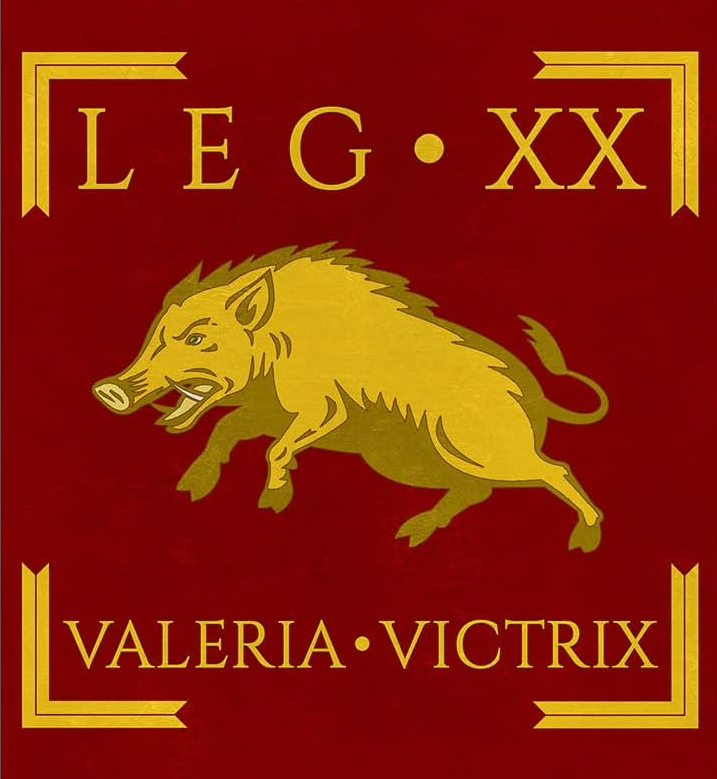
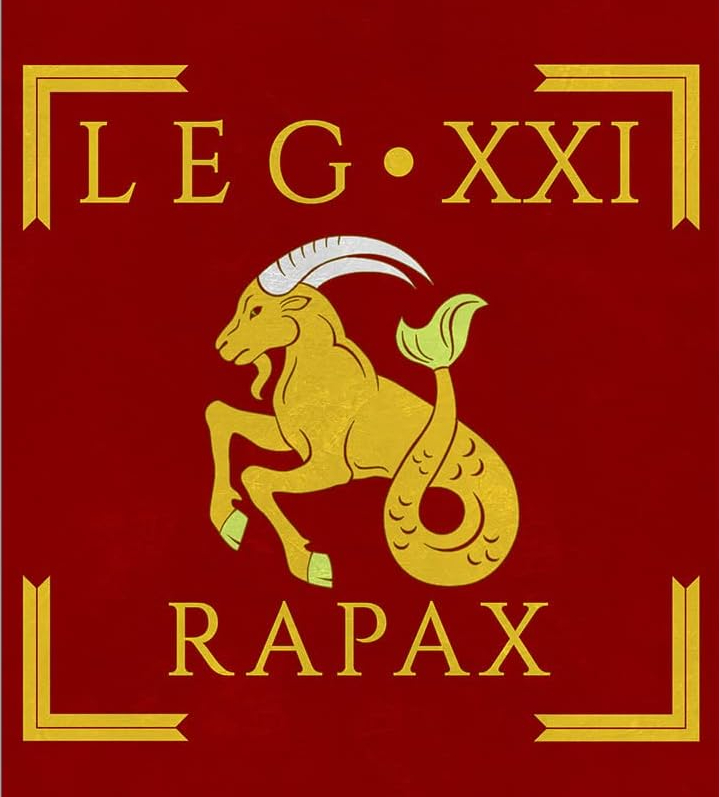
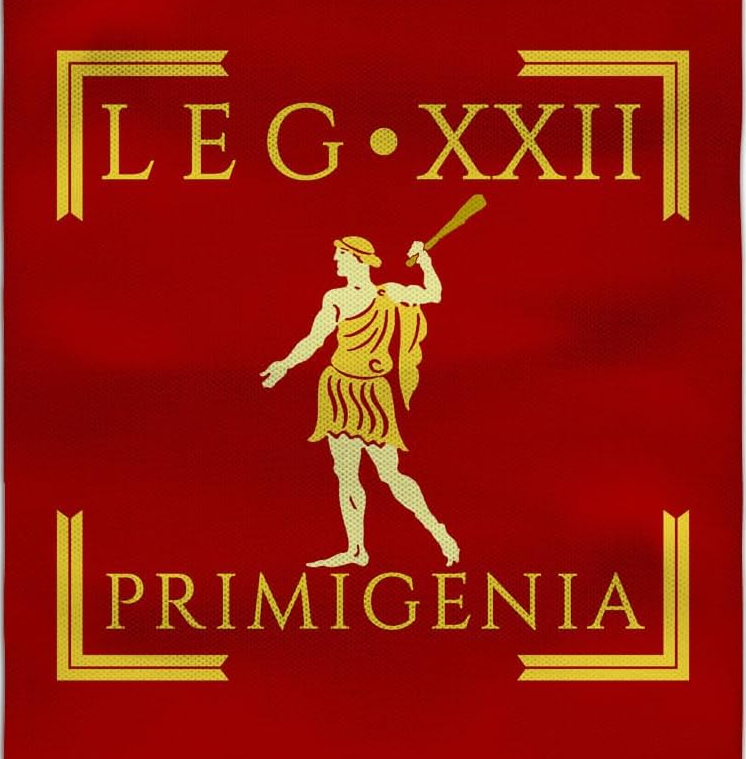
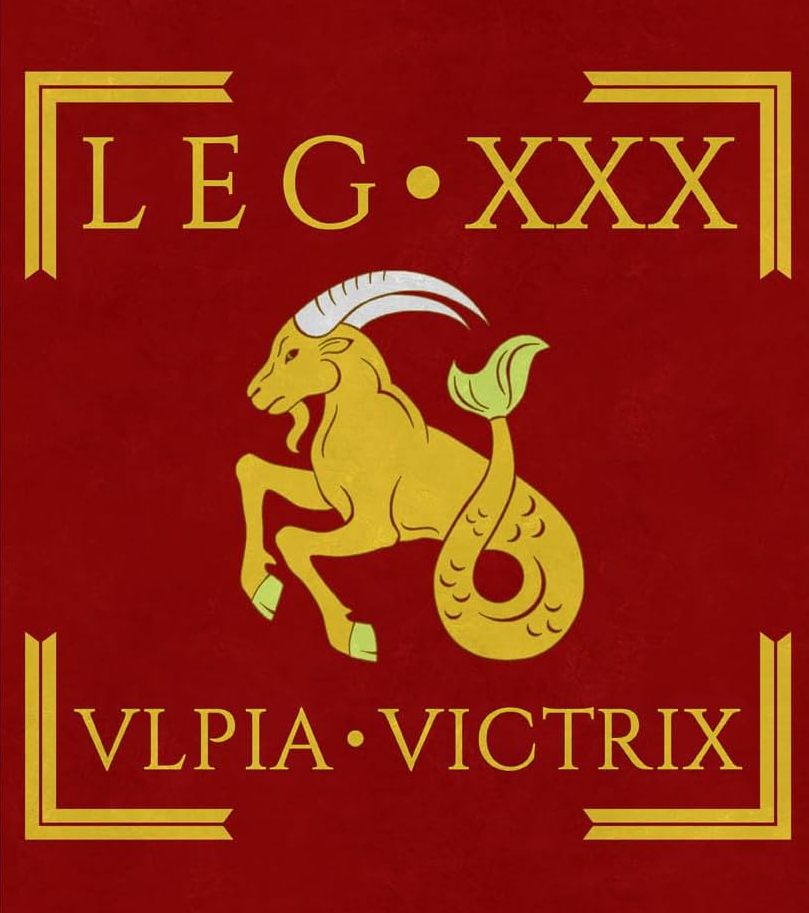
This section provides detailed profiles of each individual Roman legion, offering insights into their histories, backgrounds, and significant campaigns. Explore the individual soldiers who served in these legions and learn about their contributions to the Roman Empire.
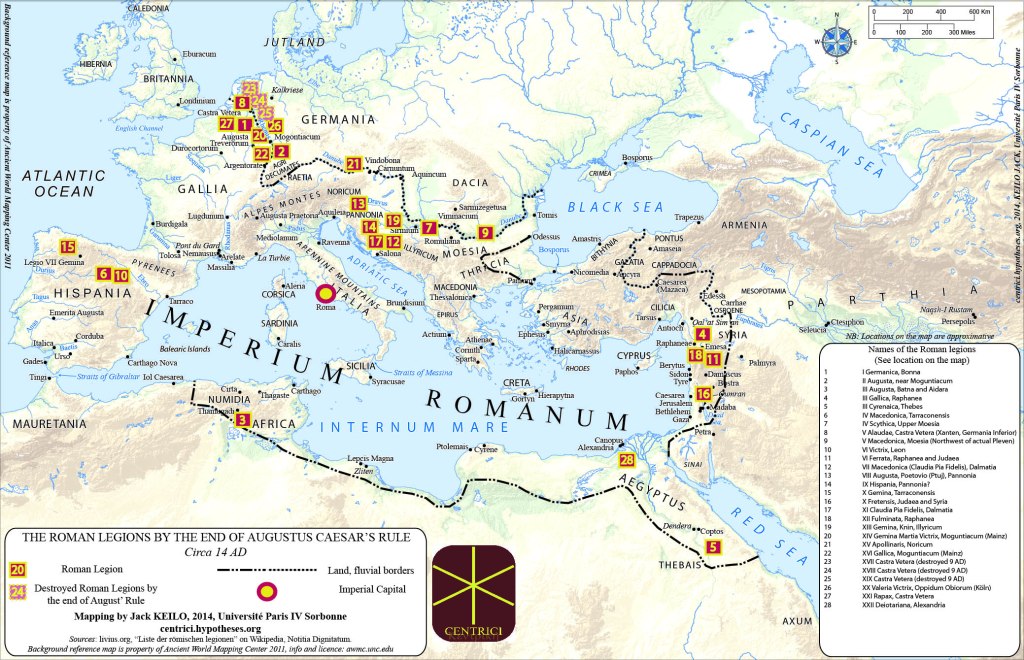
By delving into the stories of these individual legions, you can gain a deeper appreciation for the diversity, complexity, and enduring legacy of the Roman military. Each legion had its own unique history, shaped by its experiences, commanders, and the specific challenges it faced.




 Digital Maps of the Ancient World