Legio XXX Ulpia Victrix
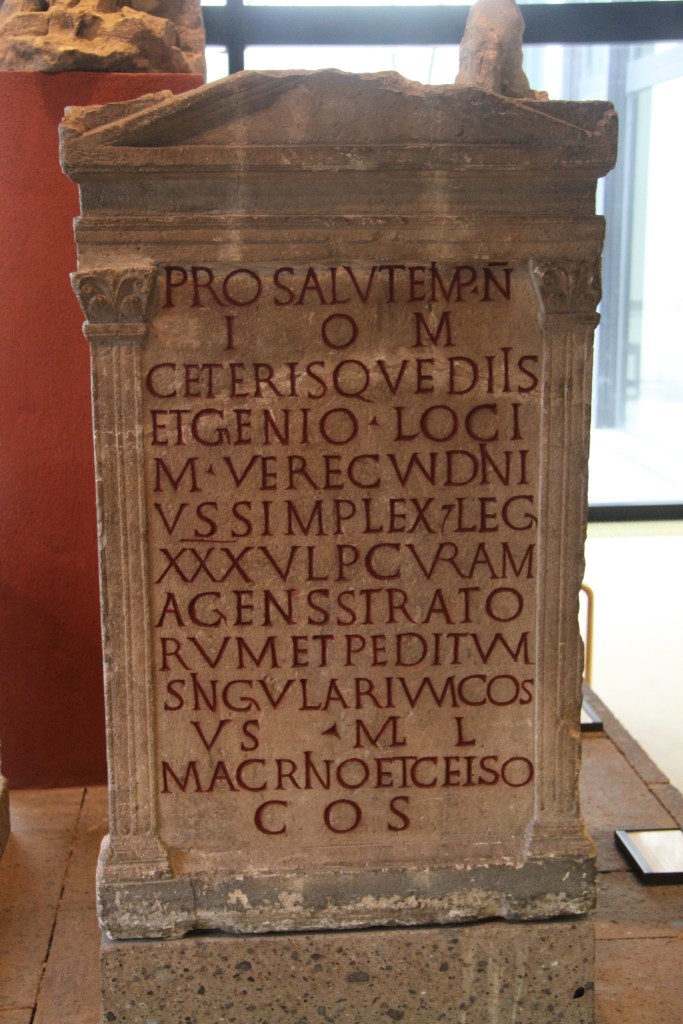
Legio XXX Ulpia Victrix, also known as the Thirtieth Victorious Ulpian Legion, was founded by Trajan in preparation for the Dacian Wars. Its emblem was Neptune and a Capricorn. The first part of its cognomen was Trajan’s family name and it received the second part after fighting well in the Dacian Wars.

Cognomen: Ulpia Victrix
Emblem: Neptune, Capricorn
Major Campaigns: Trajan’s Dacian Wars (101-106 AD); Antoninus Pius’ Moorish campaign (c. 150 AD); Lucius Verus’ Parthian War (161-166 AD); Marcus Aurelius’ Marcomannic Wars (166-180 AD); Lugdunum (197 AD); Septimius Severus’ Caledonian campaign (208-210 AD); Alexander Severus’ Persian campaign (230-233 AD); Frankish incursions (240 AD onwards)
Main HQ: Vetera II (Xanten, Germany)
Early Service
After its valiant contribution to the Dacian Wars, Legio XXX Ulpia Victrix was sent to Pannonia to replace Legio XI Claudia at Brigetio (Szony). The legion was tasked with helping to rebuild the legionary fortresses along the Danubian frontier.
Around 120 AD, Legio XXX Ulpia Victrix was sent to Germania Inferior and was stationed at Vetera (Xanten), alongside its sister-legion Legio I Minervia, where it remained for the rest of its existence.

Campaigning Abroad
Although the majority of the legion now remained at Vetera (Xanten), vexillation of Legio XXX Ulpia Victrix were used for major campaigns over the next century.
Firstly, it was used in Antoninus Pius’ campaign against the Moors, c. 150 AD, which can be seen from epigraphic evidence of the legion in Mauretania. Like its sister-legion, it must have sent at least one vexillation to fight in both Lucius Verus’ Parthian campaign, 161-166 AD, and Marcus Aurelius’ Marcomannic Wars, 166-180 AD.
During the Year of the Five Emperors, Legio XXX Ulpia Victrix supported Septimius Severus and fought for him at the Battle of Lugdunum in 197 AD. There is also epigraphic evidence that a vexillation was used to put down rebels in Gaul and Hispania in c. 206 AD and that it took part in Alexander Severus’ Persian campaign in 235 AD.
Frankish Incursions
From the mid-3rd c. AD onwards, Legio XXX Ulpia Victrix spent a considerable amount of time securing the Rhine frontier against Frankish incursions. The first occurred in 240 AD, the second in 256 AD and the third in 260 AD.
By this point the governor of Germania Inferior, Postumus, had had enough and declared himself emperor of the breakaway Gallic Empire. He had the full support of both Legio XXX Ulpia Victrix and Legio I Minervia. When the breakaway empire was brought back into the fold in 274 AD, the Franks saw this as another chance and invaded again. It took until c. 300 AD until the region was stable again.
Little is known about Legio XXX Ulpia Victrix after this but it is assumed that it remained on the Rhine until the frontier finally collapsed in 407 AD.


 Digital Maps of the Ancient World