The History of the Neo-Assyrians
This page serves as your comprehensive guide to the fascinating civilization of the Neo-Assyrians, delving into their remarkable rise to power, their fearsome military prowess, and the sophisticated administration that held their vast empire together.
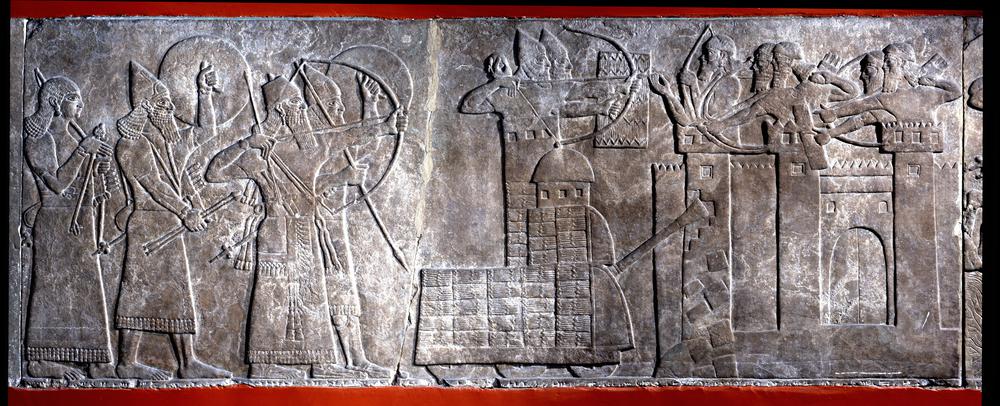
Prepare to be awed by their artistic brilliance and architectural wonders, a testament to their rich cultural legacy. We will explore how the Neo-Assyrians transformed from a regional kingdom into the largest empire the world had ever witnessed, unraveling the secrets of their innovative warfare and the weaponry that made them an unstoppable force.
This journey will encompass their complex governing system, a marvel of organization that allowed them to manage a diverse and sprawling domain. As we delve into the heart of the Neo-Assyrian era, be prepared to be both inspired by their accomplishments and challenged by the complexities of their rule.
Overview
The Neo-Assyrian Empire stands as a testament to ambition, innovation, and ruthless efficiency. Flourishing from the 9th-7th c. BC, it dominated the ancient Near East, stretching from Mesopotamia across the Levant and into Egypt, Anatolia, and parts of Arabia and Iran. This period marked the final flourish of a much longer Assyrian story, but it was the Neo-Assyrians who etched their name in history as the architects of the largest empire the world had seen to that date.
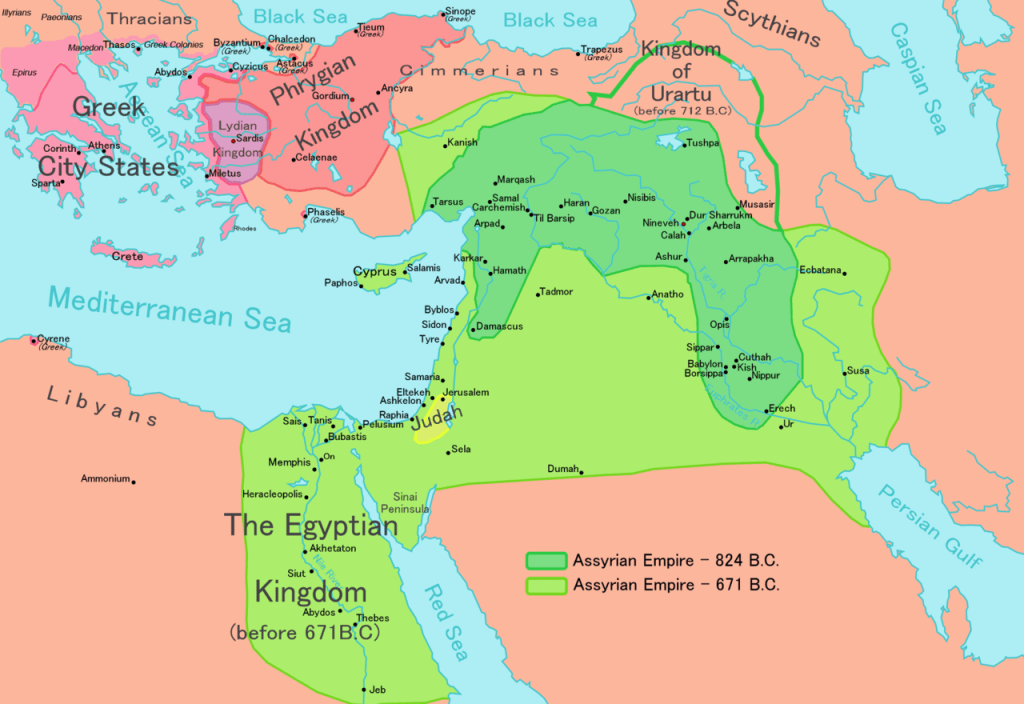
Click here the a Timeline of the Neo-Assyrians
The Neo-Assyrian era is often dated to the reign of Adad-nirari II (912-891 BC). While some debate the exact starting point, his rise marked a turning point. He embarked on a series of strategic campaigns, solidifying Assyrian control over northern Mesopotamia and pushing into Anatolia and the Levant. This period also saw the rise of a powerful and innovative Assyrian military. Iron weaponry, superior chariot tactics, and a ruthless approach to siege warfare became hallmarks of their dominance.
Following Adad-nirari II, a series of ambitious and ruthless kings further cemented Assyrian power. Ashurnasirpal II (883-859 BC) expanded the empire significantly, leaving behind awe-inspiring inscriptions and magnificent palaces that showcased the growing wealth and power of Assyria. Shalmaneser III (859-824 BC) continued the expansion, facing off against powerful coalitions but ultimately solidifying Assyrian control over key trade routes.
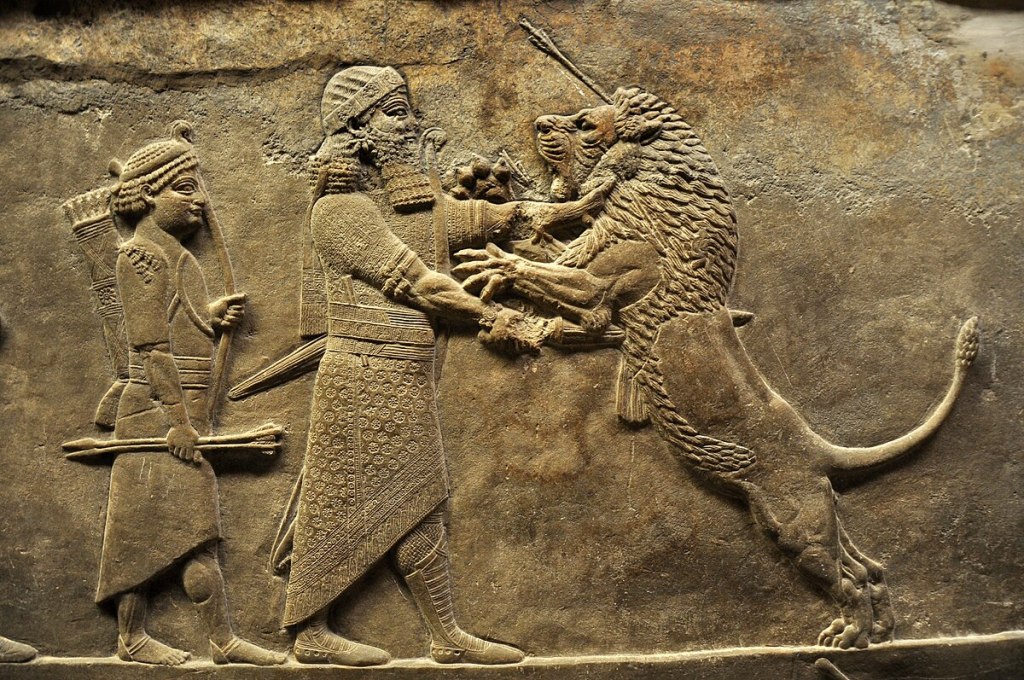
The reigns of Tiglath-pileser III (745-727 BC) and Sargon II (722-705 BC) marked the zenith of Assyrian power. Tiglath-pileser embarked on a series of brutal but strategically astute campaigns, conquering vast swathes of territory and implementing a sophisticated system of provincial administration. He even briefly captured Babylon, a historical rival. Sargon II, a usurper who rose to power through a military coup, continued this expansion, conquering Israel and parts of Egypt.
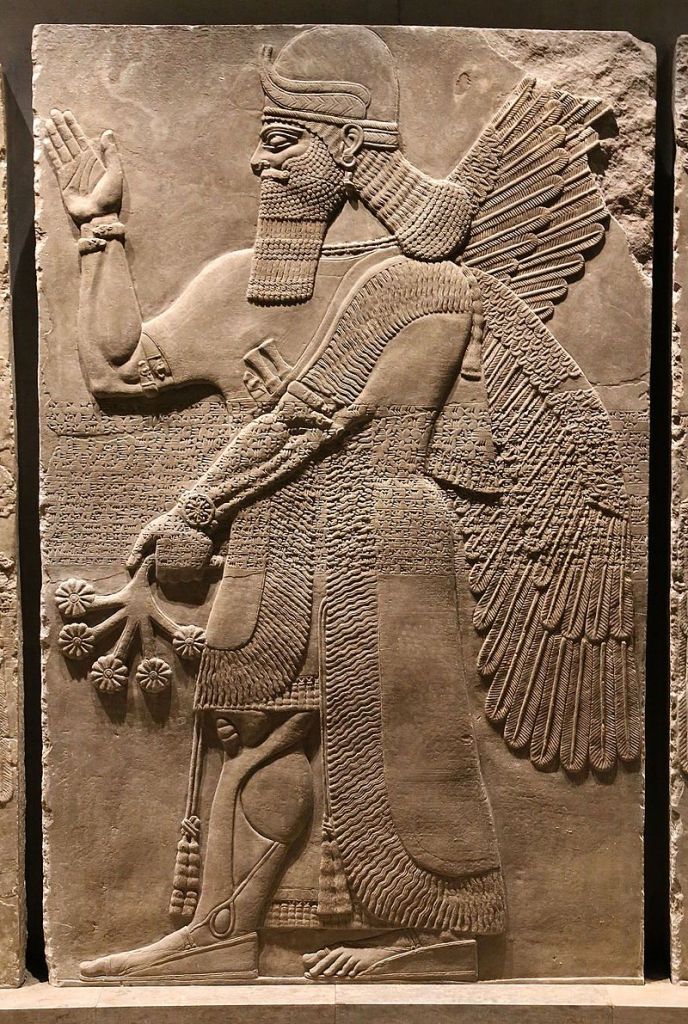
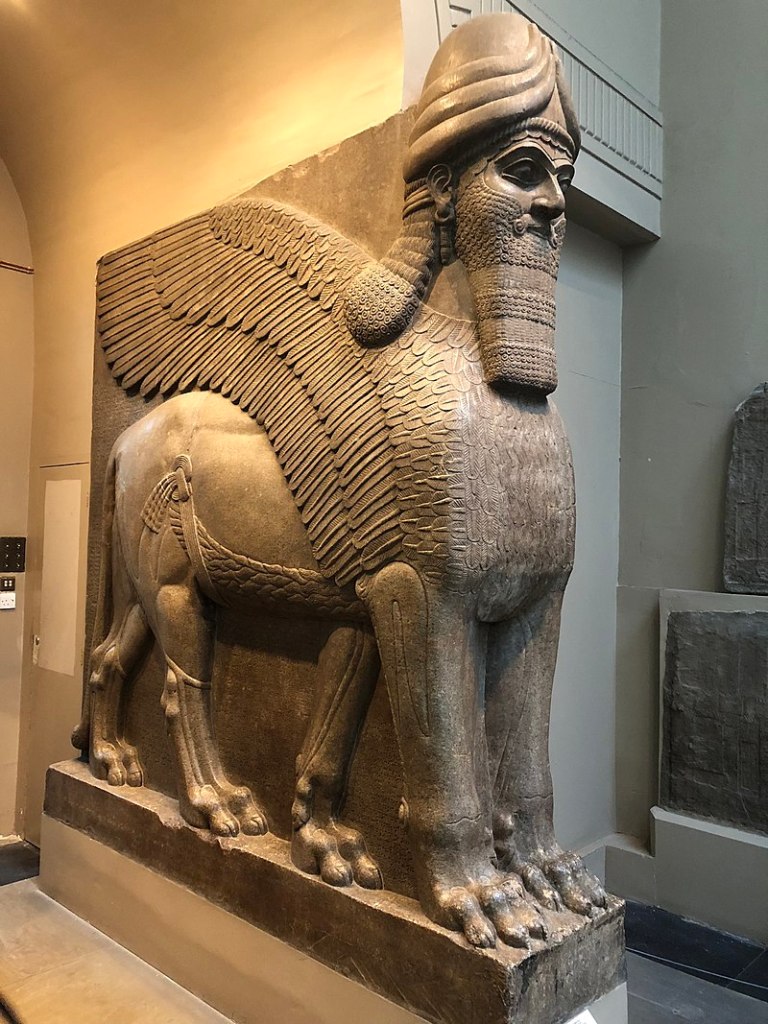
Despite their reputation for brutality, the Neo-Assyrians were also skilled administrators. They developed a complex system of provincial governance, relying on local elites while maintaining centralized control through taxation and military outposts. Their vast empire fostered cultural exchange, with Assyrian art and architecture influencing neighboring regions. The magnificent Assyrian capitals, like Nimrud and Nineveh, housed impressive palaces adorned with intricate stone reliefs depicting war campaigns and royal ceremonies.
The constant warfare and harsh rule eventually led to resentment amongst subject peoples. Rebellions began to flare, and the vastness of the empire became difficult to manage. The later years of the 7th c. BC saw a decline in Assyrian power. A series of civil wars and attacks by neighboring kingdoms, notably the Medes and Babylonians, ultimately led to the fall of the Neo-Assyrian Empire in 612 BC.
The Neo-Assyrian Empire remains a fascinating and complex historical period. While their methods were often brutal, their military prowess, administrative innovations, and cultural influence left an undeniable mark on the ancient world. Their legacy continued to influence empires that followed, and their rise and fall offer valuable lessons in the complexities of power and the challenges of maintaining vast empires.
Topics


 Digital Maps of the Ancient World