Huitzilopochtli
Huitzilopochtli, the patron god of the Aztecs, was a figure of immense power and influence. As the god of the sun, war, and human sacrifice, he was revered as the protector and guardian of the Aztec people. His story, steeped in myth and legend, provides a glimpse into the complex worldview of this ancient civilization.
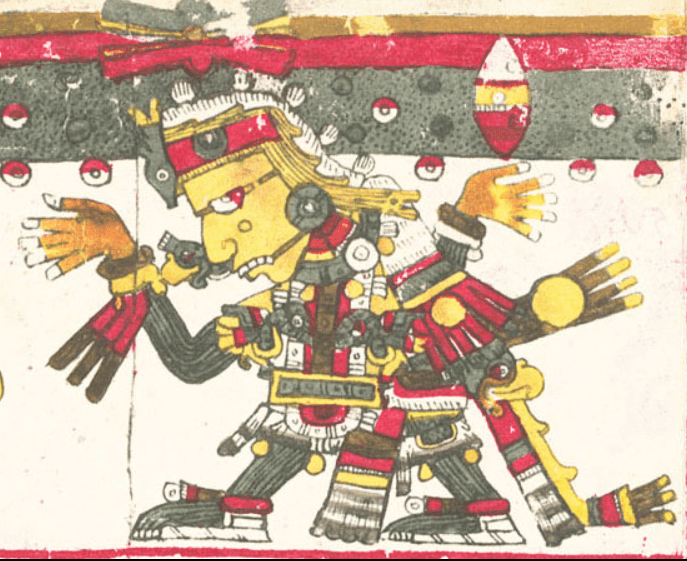
Residence: Ilhuicatl-Teteocan (Twelfth Heaven), Ilhuicatl-Xoxoauhco (Seventh Heaven), the South
Symbol: Hummingbird
Parents: Mixcoatl and Coatlicue (Codex Florentine), Ometecuhtli and Omecihuatl (Codex Zumarraga)
Siblings: Malinalxochitl (Codex Azcatitlan), Coyolxauhqui, Centzon Huitznahuac (Codex Florentine), Centzon Mimixcoa (Codex Ramirez), Quetzalcoatl, Xipe-Totec, Tezcatlipoca (Codex Zumarraga)
Born from the chest of Coatlicue, the Earth Mother, Huitzilopochtli was destined for greatness. His birth was a miraculous event, foretold by a prophecy and accompanied by celestial signs. From the moment of his birth, he was associated with the sun, the life-giving force of the universe.
As the god of war, Huitzilopochtli was believed to be the ultimate warrior, leading the Aztecs to victory in countless battles. His image adorned the banners of Aztec armies, inspiring fear and respect in their enemies. However, Huitzilopochtli’s association with war was not without its darker side. He was also the god of human sacrifice, a practice that was central to Aztec religious beliefs.

Huitzilopochtli was closely linked to the sun, the giver of life. The Aztecs believed that the sun’s daily journey across the sky was a constant battle between light and darkness, and Huitzilopochtli was the warrior who ensured the triumph of the sun. His image was often depicted as a young warrior, adorned with feathers and precious stones, symbolizing his connection to the sun and his role as the protector of the Aztec people.
The Aztecs believed that the sun god needed daily nourishment (tlaxcaltiliztli) in the form of human blood and hearts. They, as “people of the sun,” were required to provide Huitzilopochtli with this sustenance. Sacrificial hearts were offered to the sun quauhtlehuanitl (“eagle who rises”) and burned in the quauhxicalli (“the eagle’s vase”). Warriors who died in battle or as sacrifices to Huitzilopochtli were called quauhteca (“the eagle’s people”). It was believed that after their death, these warriors first formed part of the sun’s brilliant retinue; then after four years, they went to live forever in the bodies of hummingbirds.

The high priest of Huitzilopochtli, the Quetzalcóatl Totec Tlamacazqui (“Feathered Serpent, Priest of Our Lord”), was one of the two heads of the Aztec clergy. The 15th month of the ceremonial year Panquetzaliztli (“Feast of the Flags of Precious Feathers”) was dedicated to Huitzilopochtli and his lieutenant Paynal (“He Who Hastens”). During this month, warriors and auianime (courtesans) danced night after night on the plaza in front of the god’s temple. War prisoners or slaves were sacrificed during or after Paynal’s procession.
Huitzilopochtli was often represented as a hummingbird or as a warrior with armor and helmet made of hummingbird feathers. His distinctive appearance included a black mask, red and white pin stripes, an elaborate feathered headdress, a round shield, and a turquoise snake.
Art


 Digital Maps of the Ancient World