Mictlantecuhtli
Mictlantecuhtli, the Aztec god of death and ruler of the underworld, Mictlan, was a prominent figure in Aztec mythology. As the king of the dead, he presided over the souls of those who had passed away, regardless of their cause of death. His worship often involved ritual cannibalism, a practice that was considered a sacred act to honor the god and the departed.
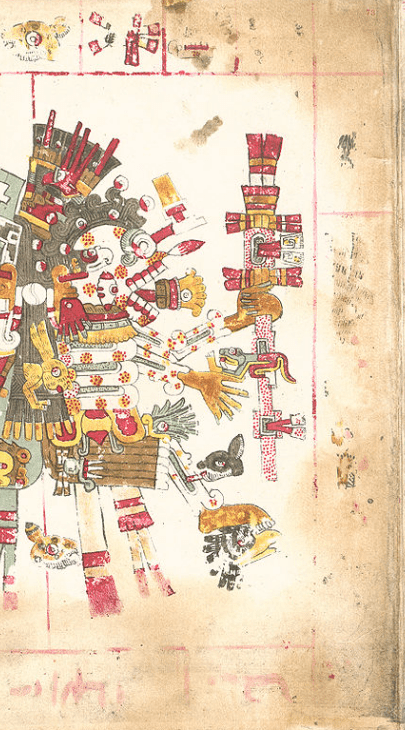
Residence: Mictlan (the Underworld)
Parents: Created by the Tezcatlipocas (Codex Zumarraga)
Consort: Mictecacihuatl
Maya Equivalent: Ah Puch
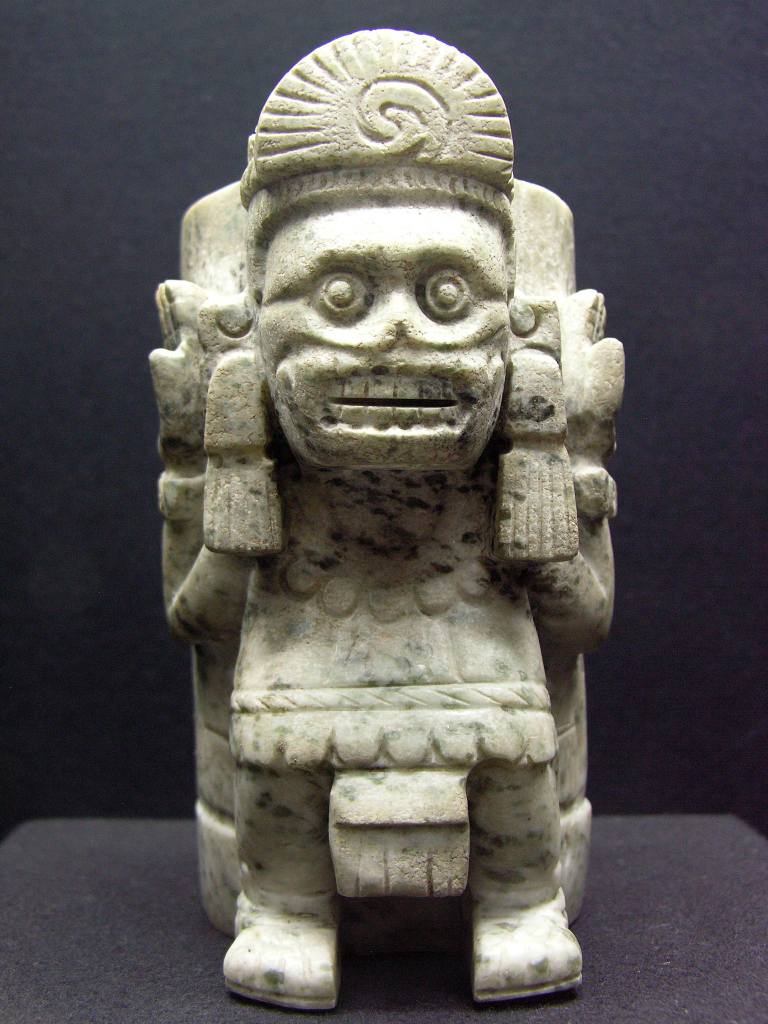
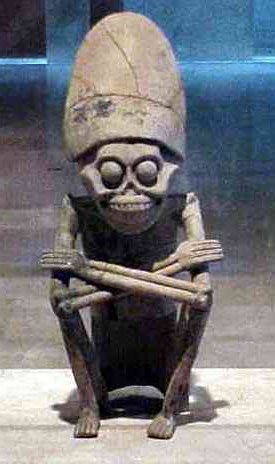
Depicted as a towering, blood-spattered skeleton or a person adorned with a skull-like mask, Mictlantecuhtli’s appearance was as formidable as his role. His headdress was often adorned with owl feathers and paper banners, and he wore a necklace of human eyeballs and earrings made of human bones. While he was not the only Aztec deity associated with death and the underworld, his skeletal imagery was particularly striking and symbolic. In Aztec culture, skeletons were seen as representations of fertility, health, and abundance, reflecting the cyclical nature of life and death.
Mictlantecuhtli was often depicted with his arms raised in a menacing gesture, suggesting his readiness to claim the souls of the dead. His wife, Mictecacihuatl, was said to dwell with him in a windowless house in Mictlan. Associated with spiders, owls, bats, the 11th hour, and the northern compass direction, Mictlantecuhtli was a powerful and feared deity. Unlike some other Aztec gods, he was believed to govern over all three types of souls: those who died natural deaths, those who died heroically, and those who died non-heroically. As the ruler of the underworld, Mictlantecuhtli stood in stark contrast to Ometecuhtli and Omecihuatl, the givers of life.
Art


 Digital Maps of the Ancient World