Omecihuatl
Omecihuatl was the female counterpart of Ometecuhtli, the Aztec deity representing the cosmic duality. Together, they formed the Ometeotl complex, a single creative force.
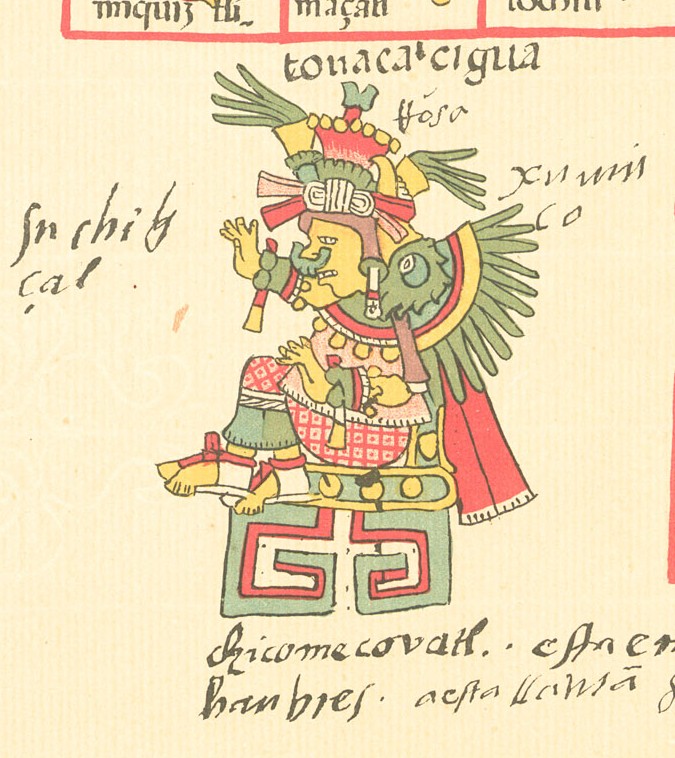
Residence: Omeyocan (Thirteenth Heaven)
Consort: Ometecuhtli
Children: Xipe-Totec, Tezcatlipoca, Quetzalcoatl, Huitzilopochtli (Codex Zumarraga). By fecund action: the Nauhtzonteteo (Tecpatl)
Omecihuatl, often translated as “Two-Lady”, embodied the feminine aspect of the cosmic duality. She was associated with nurturing, motherhood, and the earth. Like her partner, Ometecuhtli, she resided in Omeyocan, the highest heaven.
While Ometecuhtli and Omecihuatl were the supreme deities in the Aztec pantheon, they were not directly worshipped. Their remote celestial abode and their abstract nature as cosmic principles made them less accessible to everyday religious practices. However, their influence was recognized as underlying all aspects of Aztec life and culture.

As the divine feminine, Omecīhuatl was likely associated with fertility, childbirth, and the cycles of nature. She may have been seen as the ultimate mother, nurturing and protecting the universe. However, specific details about her worship and attributes are limited in the available historical records.
Despite their paramount importance, the Ometeotl deities were overshadowed by other, more accessible gods who were associated with specific aspects of Aztec life and were the subject of direct worship. Nevertheless, Omecihuatl’s role as the divine feminine and her partnership with Ometecuhtli in creating the universe were fundamental to Aztec cosmology.

 Digital Maps of the Ancient World