Xipe Totec
Xipe Totec, “Our Lord the Flayed One,” was an Aztec deity associated with life, death, rebirth, agriculture, vegetation, the east, spring, goldsmiths, silversmiths, liberation, deadly warfare, the seasons, and the earth. This complex deity interconnected agricultural renewal with warfare, symbolizing the cyclical nature of life and death.
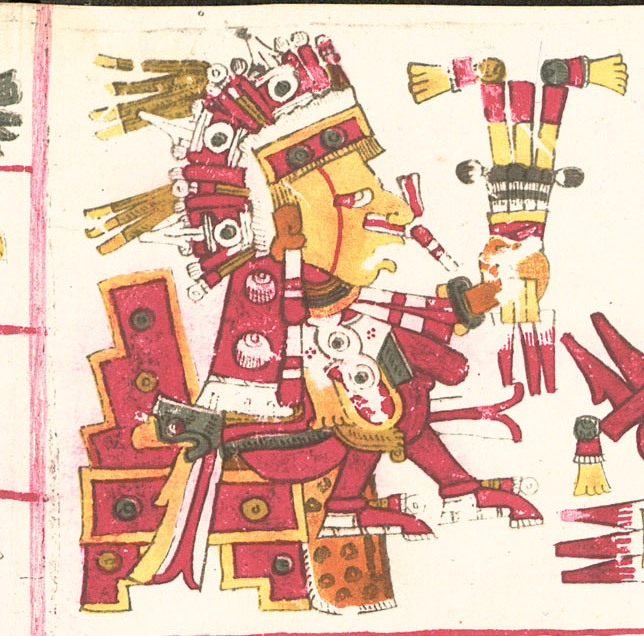
Residence: Ilhuicatl-Teteocan (Twelfth Heaven), the East
Symbol: Quail
Parents: Ometecuhtli and Omecihuatl (Codex Zumarraga)
Siblings: Quetzalcoatl, Tezcatlipoca, Huitzilopochtli (Codex Zumarraga)
Festivals: Tlacaxipehualiztli
According to Aztec mythology, Xipe Totec flayed himself to provide food for humanity, mirroring the process of maize seeds shedding their outer layer before germination and snakes shedding their skin. Often depicted with red skin beneath his flayed outer layer, Xipe Totec was believed to be the inventor of war. His insignia, the pointed cap and rattle staff, was the traditional war attire for the Mexica emperor.
Within the Great Temple of Tenochtitlan, Xipe Totec had a dedicated temple called Yopico. He was associated with various ailments, including pimples, inflammation, eye diseases, and even plague. Offerings were made to Xipe Totec to seek relief from these afflictions, particularly smallpox, blisters, and eye sickness.
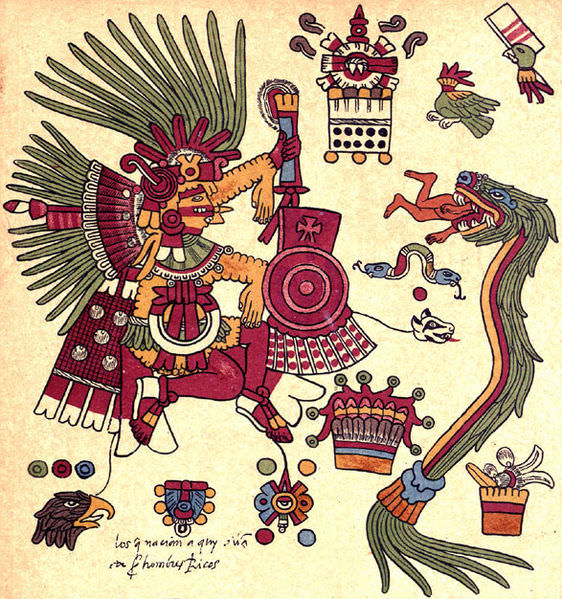
The worship of Xipe Totec appears to have originated in the post-Classic Toltec period, with early representations found near Teotihuacán and Texcoco. The Aztecs adopted his cult during the reign of Axayacatl. The second ritual month of the Aztec year, Tlacaxipehualiztli, was dedicated to Xipe Totec and involved the gruesome practice of human sacrifice and flaying. Victims were flayed alive, and the priests would wear their skins, which were dyed yellow and called “golden clothes.” Other victims were sacrificed with arrows, their blood symbolizing the life-giving spring rains.
In a hymn honoring Xipe Totec, he was referred to as “Yoalli Tlauana,” meaning “Night Drinker,” as the beneficial rains fell during the night. The hymn thanked him for bringing the Feathered Serpent, a symbol of abundance, and for averting drought.
Art



 Digital Maps of the Ancient World