Eshmun
Eshmun, the god of healing and medicine in Carthage, stands as a fascinating figure within their pantheon. Unlike some deities with clear local origins, Eshmun’s story reveals the cultural exchange that shaped the Carthaginian world.
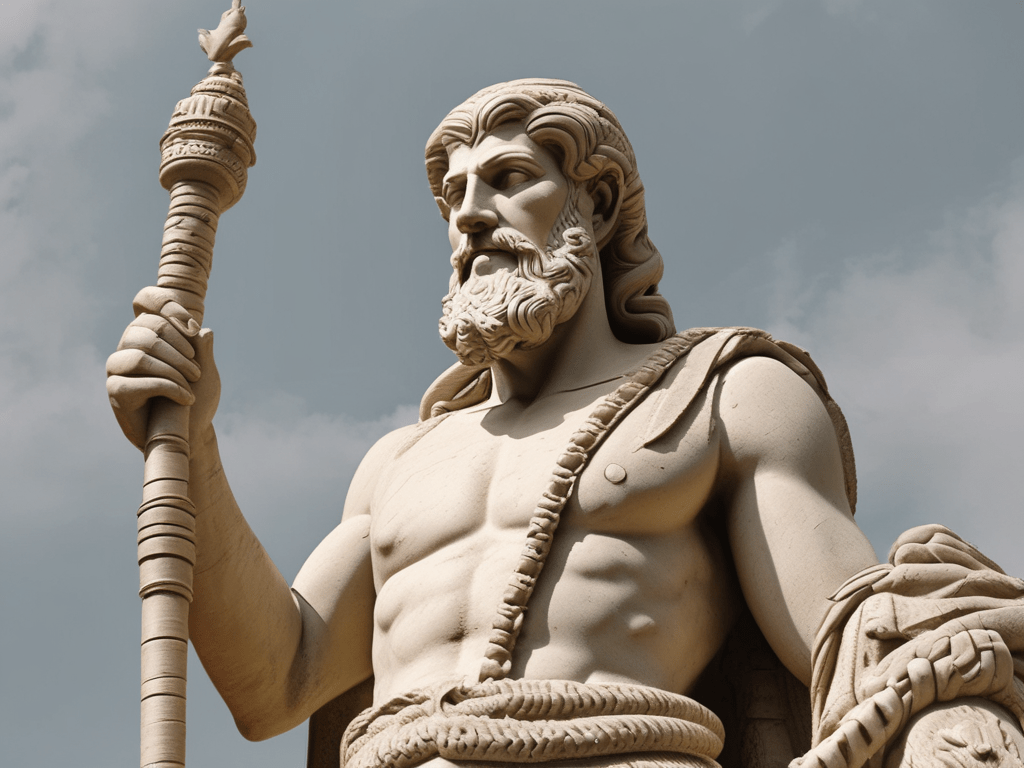
Symbols: Serpent
Greek equivalent: Asclepius
Roman equivalent: Aesculapius
The name Eshmun itself has clear Phoenician roots, potentially linked to the word for “oil,” which held significance in both medicine and religious rituals throughout the Near East. Furthermore, archaeological evidence confirms that Eshmun was worshipped in the prominent Phoenician city of Sidon, indicating his presence long before the rise of Carthage.
Carthage, a powerful Phoenician colony, likely inherited the worship of Eshmun from its motherland. As Carthage grew into a maritime empire, the cult of Eshmun may have spread alongside their trade routes and colonial expansion.
While no depictions of Eshmun have survived, we can hypothesize that he was typically portrayed as a bearded man, often holding a staff entwined with a serpent – a universal symbol of healing and medicine across many ancient cultures, due to his connections to Asclepius.
Temples dedicated to Eshmun likely existed within Carthage, serving as centers for healing and worship. Individuals seeking cures for ailments might have visited these temples to make offerings, pray for his intervention, or perhaps even sleep within the temple, hoping for a divine dream offering guidance or a path to recovery.
Much about Eshmun’s specific rituals and practices remains a mystery. The destruction of Carthage by the Romans and the scarcity of written records leave gaps in our understanding.

 Digital Maps of the Ancient World