Culsans
Culsans, the two-faced god of gates and doorways in Etruscan mythology, held a unique place in the pantheon, embodying the liminal spaces between realms. With his dual countenances, he symbolized the transition between inside and outside, past and future, known and unknown.
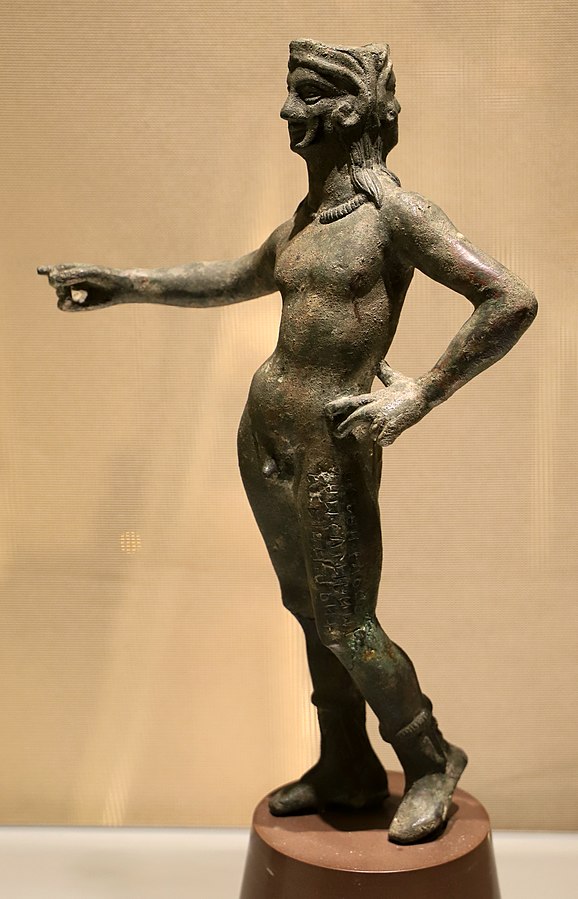
Symbols: Two faces, rustic boots and cap
Roman Equivalent: Janus
As the guardian of gates and doorways, Culsans was believed to preside over the thresholds that marked the boundaries between different domains, both physical and metaphysical. His presence was invoked during rites of passage, such as births, weddings, and funerals, where transitions from one stage of life to another were marked.
Devotees sought Culsans’ protection and guidance when crossing these thresholds, believing that he held the power to ward off malevolent forces and ensure safe passage. Offerings and prayers were made to appease him and gain his favor, particularly during times of transition and change.

In Etruscan art and iconography, Culsans was often depicted with two faces, each looking in opposite directions, symbolizing his role as a guardian of the liminal spaces between worlds. His imagery served as a reminder of the importance of acknowledging and respecting the thresholds that separate one realm from another.

 Digital Maps of the Ancient World