Hector
As prince and heir, he held the promise of a future king. But on the battlefield, his role transformed him into something more – the formidable leader of the Trojan army. His courage and skill were legendary, making him a beacon of hope for his people and a formidable opponent for the Greeks.

Parents: Priam and Hecuba
Consort: Andromache
Sibling: Paris, Cassandra, Deiphobus and Helenus
Children: Astyanax
The Trojan War
While burdened by the weight of war, a conflict he didn’t necessarily seek, he emerged as the leader of the Trojan army. His skill and valor were unmatched, making him a symbol of hope for his people and a formidable foe for the invading Greeks.

Fate, however, cast a long shadow. A prophecy loomed, declaring that the first Greek to touch Trojan soil would die. The cunning Odysseus, ever resourceful, outsmarted this by leaping from his ship, landing not on the earth itself, but on his discarded shield. This technicality allowed Protesilaus, the next man off the ship, to unwittingly fulfill the prophecy, falling to Hector’s blade in a brutal duel.
Hector, though a fierce warrior, wasn’t without moments of reason. He recognized the mounting cost of the war and, in a glimmer of hope, proposed a duel – one champion from each side to decide the conflict’s fate. The Greeks countered with Ajax, a mighty warrior in his own right. Their clash was legendary, a day-long dance of steel that ended in a stalemate. Mutual respect blossomed between the two warriors, a testament to their shared strength and a brief flicker of humanity amidst the carnage.

But destiny had a crueler duel in store. Hector’s final battle pitted him against Achilles, the near-invincible Greek hero. Initially, fear gripped Hector, and he retreated before Achilles’ relentless pursuit. Yet, cornered and fueled by a surge of courage, he turned to face his fate. A cruel deception by Athena, who appeared as Hector’s brother, left him vulnerable. Achilles’ spear found its mark, ending Hector’s life in a brutal ballet of war.
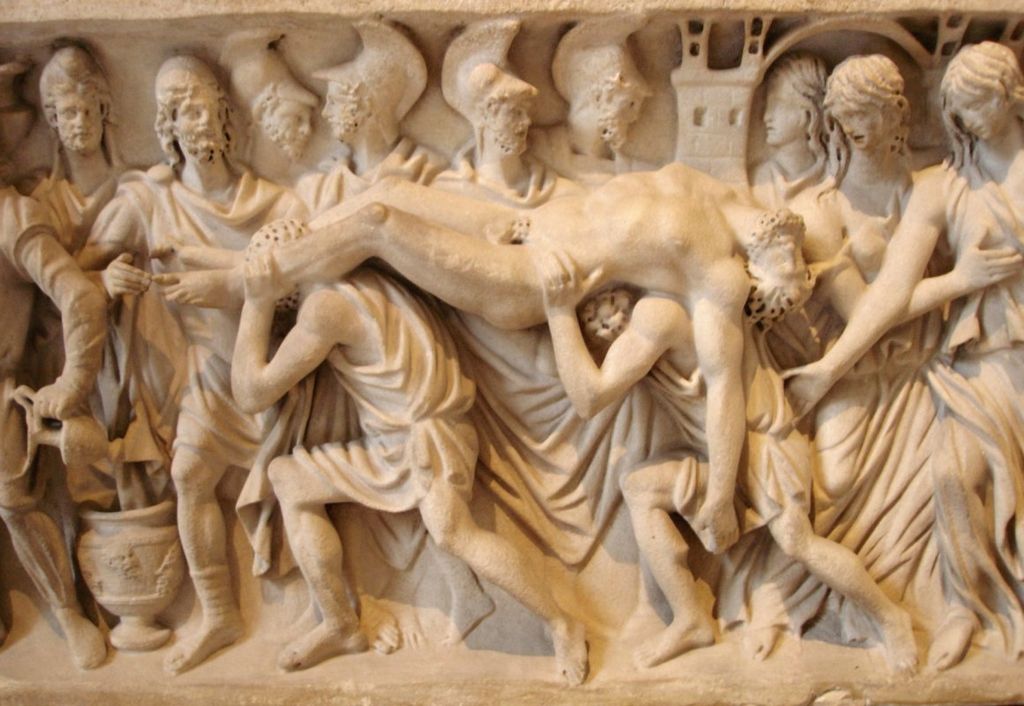
Achilles, consumed by rage for Hector’s slaying of his friend Patroclus, further dishonored the fallen hero by dragging his body behind his chariot for days. Eventually, however, even Achilles relented, allowing Hector a proper burial within the walls of Troy. Hector’s death wasn’t just the fall of a warrior; it was a turning point in the war, a moment of immense loss that would forever alter the course of the Trojan conflict.

 Digital Maps of the Ancient World