Menelaus
Menelaus, king of Sparta, was a pivotal figure in the Trojan War. While his beautiful wife, Helen, became the spark that ignited the conflict, Menelaus himself was a formidable leader. He wasn’t just overshadowed by his elder brother, Agamemnon, king of Mycenae. Menelaus commanded the Spartan forces, a vital contingent of the Greek army. His leadership and skill were crucial to the war effort.
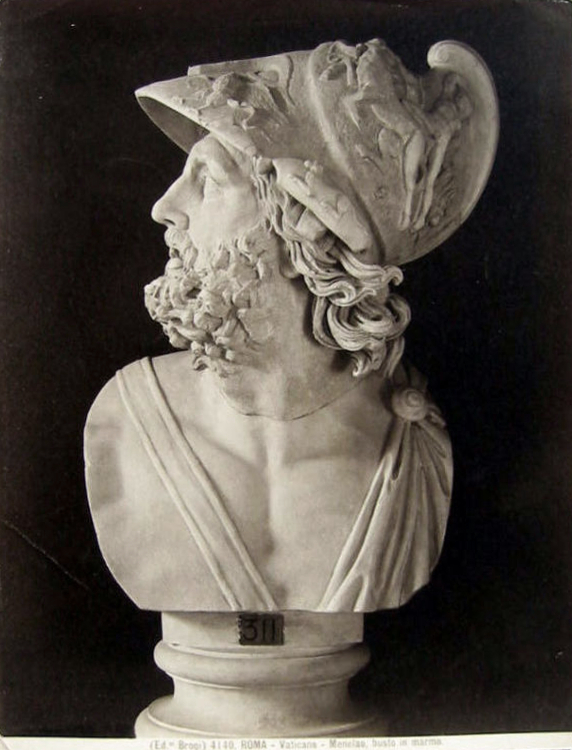
Parents: Atreus and Aerope
Consort: Helen
Siblings: Agamemnon
Children: Hermione, Nicostratus and Megapenthes
Early Life
His lineage was steeped in a bitter family feud that cast a long shadow over his reign. The throne of Mycenae, a powerful city-state, was the coveted prize at the heart of this bloody conflict.
The feud pitted Menelaus’ father, Atreus, against his own brother, Thyestes. Their rivalry spiraled into a grotesque display of betrayal, with adultery, incest, and even cannibalism staining the Mycenaean soil. Ultimately, Thyestes, through his son Aegisthus’ act of murder, ascended the throne, forcing Menelaus and his brother Agamemnon into exile.
Menelaus’ path to Sparta’s throne was paved with hardship. He and Agamemnon found refuge with King Polypheides and later with King Oeneus. However, ambition burned bright. When the opportunity arose, they, with the backing of King Tyndareus of Sparta, challenged the Mycenaean power structure. Their combined forces ousted Thyestes, and Agamemnon, the elder brother, claimed the Mycenaean throne, leaving Menelaus to inherit Sparta.
Helen
When Helen, famed for her beauty, reached marriageable age, a storm of suitors descended upon Sparta. Kings and princes, including Odysseus, Menestheus, Ajax, Patroclus, and Idomeneus, all vied for her hand. Tyndareus, her stepfather, faced a daunting task. Choosing one suitor over the others could ignite a devastating war between the vying kingdoms.

Enter Odysseus, ever the strategist. He proposed a clever solution: an oath. Each suitor would swear to respect Tyndareus’ final decision and to defend the chosen couple against any future misfortune. This ingenious plan ensured peace by binding the suitors to a common cause.
The oaths were sworn, and the competition narrowed. Ultimately, Helen’s hand went to Menelaus, securing his position as ruler of Sparta alongside her. With Tyndareus and Leda stepping down, Menelaus and Helen ascended the Spartan throne, their reign forever marked by the memory of the legendary suitors and the cunning oath that prevented bloodshed.
The Trojan War
The Trojan diplomatic mission to Sparta took a turn when news arrived of Menelaus’ grandfather’s passing in Crete. While he was away, Paris, prince of Troy, defied his brother Hector’s warnings and absconded with Helen. This act of betrayal ignited a firestorm. Menelaus, fueled by a potent mix of personal outrage and the obligation to uphold the oath of Tyndareus, rallied the Greek forces.

A thousand ships amassed, led by Menelaus and his brother Agamemnon. Their singular purpose: to reclaim Helen and avenge the insult to Spartan honor. The Trojan War, a conflict destined to echo through the ages, had begun.
Menelaus was a warrior king, and he proved his mettle on the battlefield. He faced Paris in a personal duel, a clash that resonated with the war’s very cause. His victory served as a potent symbol of Spartan might. He even participated in the daring Trojan Horse ploy, a testament to his courage and strategic thinking.

As Troy fell, vengeance burned in Menelaus’ heart. He sought out Helen, expecting a confrontation fueled by years of betrayal. However, when he found her, not defiance, but tears filled her eyes. Witnessing her vulnerability, a complex web of emotions washed over him – rage, hurt, and perhaps even a flicker of the love they once shared. In that moment, the sword raised for vengeance faltered. Pity, a powerful force, disarmed his anger. Menelaus chose not to punish Helen, but to take her back, the future of their relationship uncertain but forever marked by the scars of war.


 Digital Maps of the Ancient World