Perseus
Perseus, a demigod born from the union of Zeus and the mortal Danaë, wasn’t content with a life in the shadows. Destined for greatness, he rose to become one of Greece’s mightiest heroes, his name whispered alongside Cadmus and Bellerophon. A slayer of monstrous beasts, he carved his legend before the rise of the legendary Heracles.

Parents: Zeus and Danae
Consort: Andromeda
Children: Perses
Early Life
Acrisius, king of Argos, lived under the shadow of a chilling prophecy. An oracle at Delphi had declared that his own grandson would one day be his undoing. Consumed by fear, Acrisius became obsessed with thwarting fate. His solution: isolate his only daughter, Danae, from any potential suitors. He ordered the construction of a brazen chamber, a tomb-like prison beneath the earth, where Danae would be cut off from the world.
Danae, a young woman brimming with life, was condemned to this cold, metallic existence. But fate, it seemed, could not be entirely chained. Zeus, the king of the gods, captivated by Danae’s beauty, descended upon her in a shower of golden rain, piercing through the very walls of her confinement. From their forbidden union, Perseus was born, a glimmer of hope in the darkness of Danae’s captivity.

When Acrisius discovered the truth, rage and disbelief warred within him. He refused to believe Zeus’ involvement, convinced his daughter had betrayed him. Blinded by fury, he condemned both Danae and her infant son to a watery grave. He sealed them in a wooden chest and cast it adrift on the unforgiving sea. Danae, clutching her child, could only cling to a fragile hope as the waves tossed them about.
Days turned into weeks, the relentless rhythm of the ocean a constant reminder of their plight. Yet, even amidst despair, a sliver of kindness emerged. The chest eventually washed ashore on the island of Seriphos, where a fisherman named Dictys, brother to the island’s king, discovered them. Dictys, a man of compassion, took pity on Danae and Perseus, offering them sanctuary and a chance to rebuild their lives.
Years flowed by. Perseus grew into a strong and handsome young man, a constant source of love and pride for Danae. However, their newfound peace was threatened by the island’s ruler, King Polydectes. Polydectes, a man driven by lustful desires, set his sights on Danae. He knew Perseus, fiercely protective of his mother, would stand in his way. Thus, the king devised a treacherous plan, a seemingly impossible quest that would send Perseus far away – a quest to retrieve the head of the monstrous Gorgon, Medusa. Unaware of the dangers that lurked ahead, Perseus, driven by a need to prove himself and protect his family, set out on a journey that would forever alter his destiny.
Perseus and Medusa
Medusa’s story was shrouded in tragedy. Once a breathtaking beauty, she served as a priestess in Athena’s temple. But fate, cruel and unpredictable, intervened. Legends whispered of a brutal encounter with Poseidon, the sea god, within the very sanctuary he was meant to protect. Was she a willing participant or a helpless victim? The truth was lost to time, but the consequences were undeniable. Athena, enraged by the violation of her sacred space, unleashed a punishment as chilling as it was irreversible. Medusa’s captivating locks transformed into a writhing nest of vipers, her gaze cursed to turn any who met it to stone. Beauty became monstrous, forever bound to a fate she never chose.
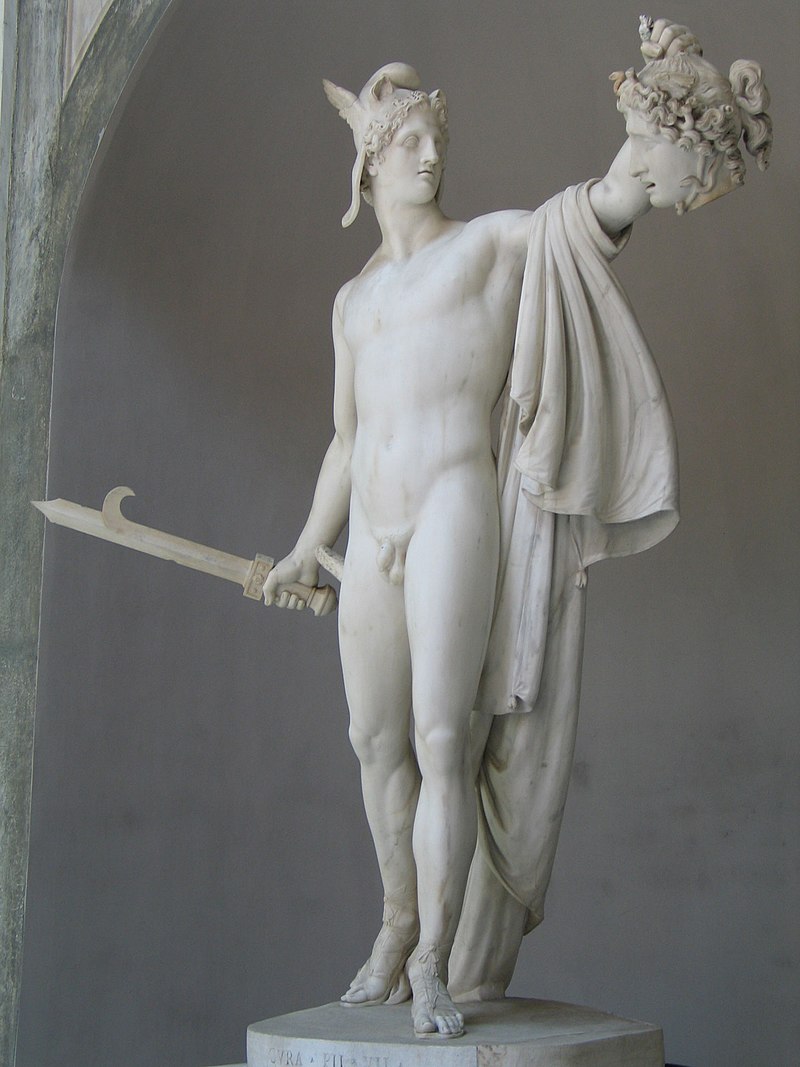
Perseus, burdened by the task of severing Medusa’s head, knew he could not succeed alone. He sought the aid of the gods, his pleas reaching the ears of Athena and Hermes. Athena, perhaps harboring a flicker of remorse for Medusa’s fate, offered him a polished shield, its surface imbued with the magic to reflect even the most petrifying gaze. Hermes, the swift messenger god, provided winged sandals, allowing Perseus to soar through the air with the speed of the wind.

With these divine gifts in hand, Perseus embarked on his perilous journey. He finally reached the Gorgons’ lair, a place shrouded in perpetual twilight. There, amidst the snarling shadows, he spotted Medusa. He didn’t look directly at her, relying on the mirrored shield to guide his movements. With a swift, practiced strike, he severed her head from her body. A gush of blood erupted, and from that gruesome birth emerged two extraordinary creatures: Pegasus, a magnificent winged horse, and Chrysaor, a giant born from the violence of the act. Perseus, heart pounding with a mixture of accomplishment and horror, knew his quest had only just begun. With Medusa’s head secured, he fled the Gorgon’s lair, forever marked by the encounter with the woman-turned-monster.
Andromeda
Perseus’ journey home was far from over. His path led him to the kingdom of Ethiopia, a land shrouded in despair. King Cepheus and Queen Cassiopeia, burdened by a terrible curse, had been forced to chain their daughter Andromeda to a desolate rock as a sacrifice to a monstrous serpent sent by Poseidon. Legend spoke of Cassiopeia’s boastful claim – that her daughter’s beauty rivaled that of the Nereids, sea nymphs favored by the god. Now, the kingdom paid the price for her arrogance.

Andromeda, though a pawn in a divine game, awaited her fate with stoic defiance. As Perseus approached, he saw not just a damsel in distress, but a young woman radiating courage in the face of her horrifying ordeal. Intrigued and determined, he vowed to help.
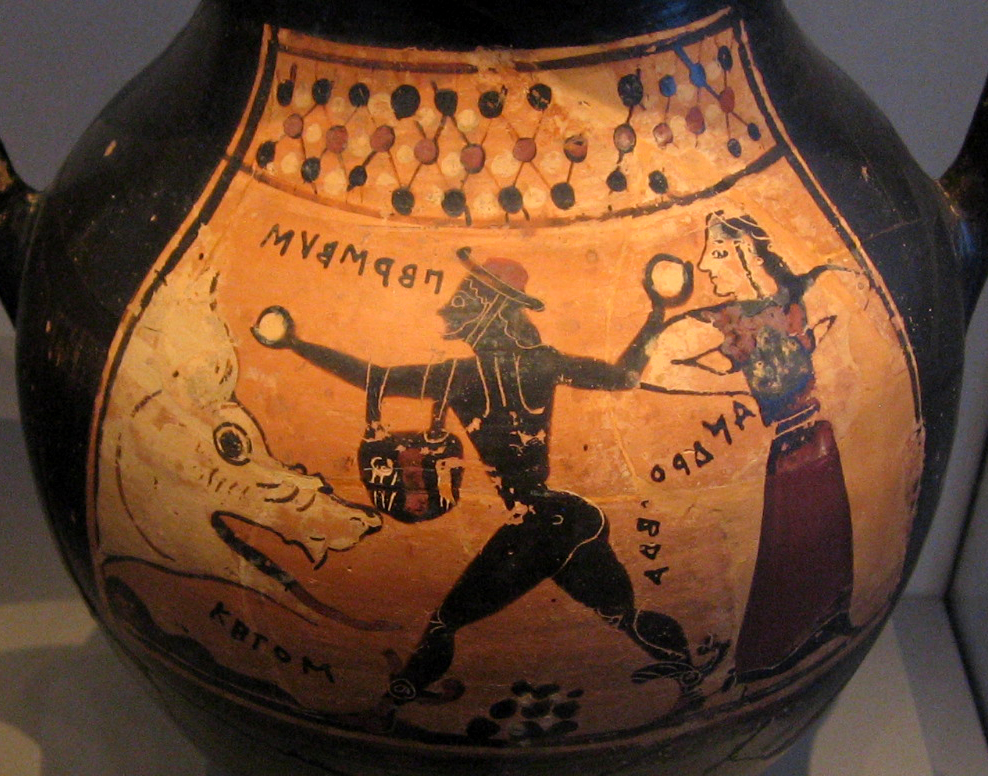
The battle with the sea monster was a fierce one. The creature, a leviathan of the deep, rose from the churning waves, its roar echoing across the desolate shore. Perseus, with his winged sandals granting him agility, dodged the monster’s snapping jaws and flailing tentacles. With a well-placed strike, guided by the reflection on his mirrored shield, he plunged his sword deep into the beast’s underbelly. A geyser of blood erupted, staining the rocks crimson, but the threat was vanquished.
Andromeda, freed from her chains, rushed towards Perseus, relief and gratitude etched on her face. Their connection was instant, a bond forged in the crucible of danger. News of Perseus’ heroism spread like wildfire, reaching the ears of King Cepheus and Queen Cassiopeia. Overjoyed at their daughter’s rescue, they readily agreed to her union with their brave savior.
The wedding festivities, however, were marred by a simmering tension. Phineus, to whom Andromeda had been promised before the curse struck, refused to accept his defeat. A heated argument erupted, fueled by jealousy and wounded pride. Thinking quickly, Perseus unveiled Medusa’s head, and with a flash of horror, Phineus was turned to stone, a permanent statue forever locked in a silent scream.
With his newfound wife by his side, Perseus returned to Seriphus, only to find his mother Danae seeking refuge from the unwanted advances of King Polydectes. Fury surged through Perseus. He confronted the king, and without a moment’s hesitation, used Medusa’s head once more. Polydectes, caught off guard by the petrifying power, instantly turned into a chilling stone monument, a grim reminder of his transgressions.
His debts settled and his heroism acknowledged, Perseus knew it was time to return the divine gifts that had aided him on his quest. He journeyed to Olympus, the home of the gods, where he returned the winged sandals and mirrored shield to Hermes and Athena respectively. As a final act, he presented Medusa’s head to Athena, who with a gesture of respect, placed it upon her famed shield, the Gorgoneion, a permanent symbol of her power and a chilling reminder of the fate that awaited those who dared to defy her.
Oracle Fulfilled
Driven by a desire to see his homeland and reclaim his rightful place, Perseus set sail for Argos. News of his exploits, his marriage to Andromeda, and the mythical head of Medusa had preceded him. But upon reaching Argos, a crushing realization awaited him. King Acrisius, consumed by the prophecy of his own demise at his grandson’s hands, had fled into exile in Thessaly.
Fate, however, seemed to have a cruel sense of humor. In Larissa, a city within Thessaly, King Teutamides was holding funeral games in honor of his deceased father. Acrisius, ever fearful, had chosen this very city as his refuge. Unaware of his grandfather’s presence, Perseus, eager to display his prowess, entered the discus throwing competition.
The atmosphere crackled with anticipation as Perseus grasped the discus, its weight a familiar comfort in his hand. With a heave born of years of training and battle, he hurled the object into the air. Tragically, a sudden gust of wind or perhaps a misplaced step sent the discus careening off course. It arced through the cheering crowd, finding its mark not on the intended target but on a figure standing at the edge of the arena. A horrified gasp rippled through the audience as the discus struck – Acrisius, King of Argos, crumpled to the ground, lifeless.
Perseus rushed to his grandfather’s side, his heart pounding with a sickening dread. The prophecy, a shadow that had loomed over his entire life, had finally come to pass. He had slain the monstrous Medusa, defied treacherous kings, and rescued a princess, but here, in a moment of unintended consequence, he had fulfilled the very fate he had hoped to avoid. The cheers of the crowd died down, replaced by a heavy silence. Perseus, the hero, was now a kinslayer, forever marked by the weight of his unintentional act.

