Automatons
The Automatons weren’t just statues; they were marvels of engineering. Crafted by Hephaestus, the god of fire and metalworking, these automatons possessed an uncanny degree of realism. Some walked, some flew, some even possessed the ability to speak and reason (depending on the myth). They blurred the line between machine and living being, a testament to Hephaestus’ ingenuity.
The Horses of the Cabeiri
These bronze steeds were not for the faint of heart. Their nostrils flared with infernal flames, and their every whinny echoed with the roar of a forge. These fire-breathing beasts were a fearsome sight, a testament to Hephaestus’ ingenuity and a symbol of the raw power harnessed by his Cabeiri sons.

The Caucasian Eagle
It was a monstrous punishment forged in Hephaestus’ fiery depths. This wasn’t a creature of feathers and bone, but a gigantic eagle sculpted from gleaming bronze. Every morning, its cruel arrival echoed across the desolate peaks of the Caucasus Mountains. Its razor-sharp beak and talons, crafted with the god’s unmatched skill, weren’t meant for hunting prey, but for a far more sinister purpose – to tear at the ever-regenerating liver of the imprisoned Titan, Prometheus.

The Golden Celedones
These golden automatons took the form of ethereal maidens with captivating features. Yet, some accounts whispered of an avian aspect – the heads of wrynecks, a bird known for its ability to twist its head in an unnervingly contortionist fashion. This unique blend – bird-women like Sirens, both alluring and unsettling – added a layer of mystery to their already enchanting presence.
The Golden Maidens
These woman-shaped automatons, crafted from precious gold, served as attendants in the palace of the fire god. Their purpose wasn’t just menial labor; it was a display of the god’s mastery. The way they anticipated needs, their movements a testament to meticulous engineering, served as a constant reminder of Hephaestus’ dominion over both fire and creation.
The Gold and Silver Dogs
The Gold and Silver Dogs flanking the entrance to King Alcinous’ palace weren’t just impressive statues; they were a powerful symbol. One, crafted from golden sunlight, embodied vigilance and unwavering loyalty. The other, cast in moonlit silver, represented watchfulness and unwavering protection. Together, they stood as a silent testament to the king’s foresight and the ever-present guardians, ensuring both daytime security and nighttime peace for the Phaeacian people.
Talos
Towering over Crete was Talos, a colossal bronze automaton forged by the divine Hephaestus. A gift from Zeus to his love Europa, this mechanical marvel patrolled the island tirelessly. Three times a day, the earth trembled beneath his thunderous steps as he circled the coast, his form a glinting monolith against the azure sky. Pirates trembled at the sight of his fiery gaze, for Talos, with volleys of rocks at his command, was an impenetrable guardian.
The Bronze Bulls
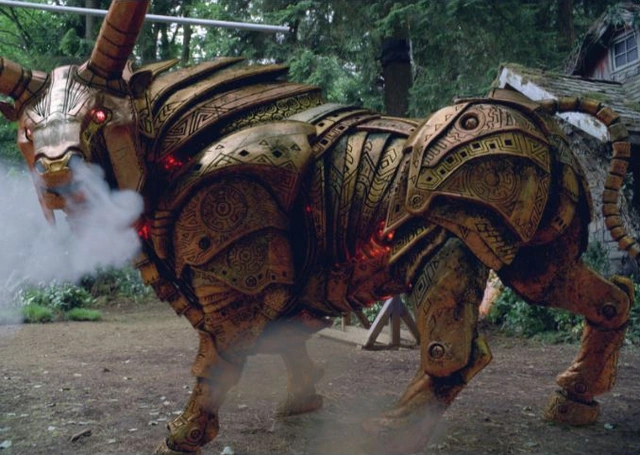
King Aeetes of Colchis wasn’t known for his hospitality. Guarding the coveted Golden Fleece were no ordinary bulls. These were monstrous creations of Hephaestus – fire-breathing behemoths sculpted from gleaming bronze. Their nostrils flared with infernal flames, and their every bellow echoed with the fury of a forge. These weren’t beasts of burden; they were living furnaces, a terrifying testament to Hephaestus’ power and a near-insurmountable obstacle for any who dared challenge Aeetes.
In the tale of Jason and the Argonauts’ quest for the Golden Fleece, these fire-breathing bronze monstrosities presented a seemingly insurmountable obstacle. Their fiery breath and imposing presence forced Jason to rely on both strength and cunning, paving the way for the intervention of Medea, the king’s daughter, who ultimately aided Jason in overcoming this terrifying challenge.
The Golden Tripods
Gone were the days of lumbering servants and overflowing tables at Mount Olympus. Hephaestus had crafted a marvel unlike any other – a set of twenty golden tripods. These weren’t your average serving tables. Imbued with the divine spark of self-animation, they gleamed with an inner light, their golden forms radiating opulence. Imagine the spectacle – twenty tripods, imbued with a life of their own, gracefully wheeling themselves in and out of the grand halls of Olympus, ever prepared to serve the feasts of the gods.

 Digital Maps of the Ancient World