The booming sound of Triton’s conch shell echoed across the waves, a constant reminder of his presence. This fish-tailed god, son and herald of Poseidon, wasn’t just a powerful figure; he was the voice of the sea itself. With a single, resonating blast from his conch, he could command the attention of all within the ocean’s vast domain, calming raging storms or heralding his father’s arrival.
Greek gold armband with Triton holding a putto, 200 BC. Metropolitan Museum of Art. (c) PHGCOM
Residence: The Sea Symbols: Conch-shell Parents:Poseidon and Amphitrite Siblings: Rhodus
Art
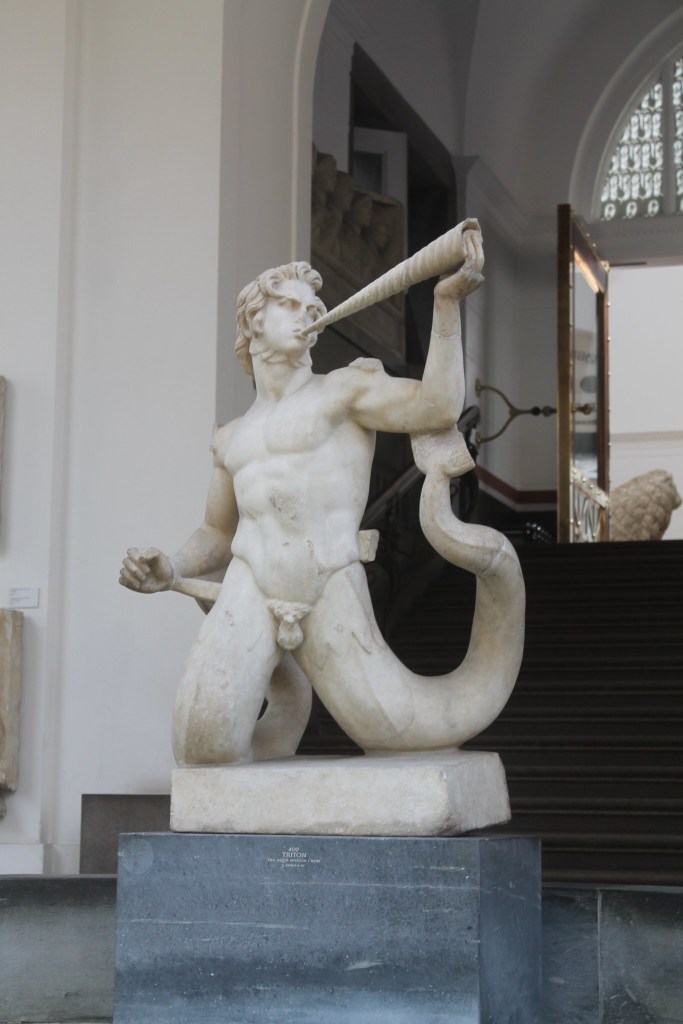
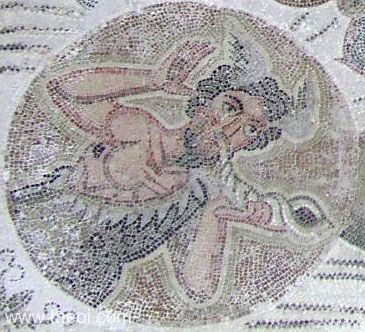
Bronze applique of Triton, 2nd c. BC. Cleveland Museum of Art.Relief of Triton and a Nereid, 2nd c. AD, Paris. Carnavalet Museum.Mosaic of Triton, 200 AD, Ephesus. British Museum.Mosaic of Triton, Shops of the Fishmongers, Ostia.Statue of Triton, Rome, 3rd c. AD. Ny Carlsberg Glyptotek.Mosaic of Triton and a hippocamp, 2nd-3rd c. AD, Antioch. Hatay Archaeology Museum. (c) theoiMosaic of Triton with conch-shell trumpet. Bardo Museum. (c) theoiDetail of a Paestan red-figure krater, c. 340 BC, depicting Triton holding a conch shell. Getty Museum. (c) theoiRelief of Triton with his parents, 2nd c. BC. Munich Glyptothek. (c) Miguel Hermoso Cuesta





 Digital Maps of the Ancient World