K’awil
K’awil stands as a captivating yet enigmatic figure in the Maya pantheon. He is primarily associated with lightning, rulership, and fertility, and his image is often adorned with symbolism that reflects these domains. Uniquely, Maya mythology credits him with the discovery of two crucial crops: cocoa and maize.

SZT Classification: God K
K’awil is most recognized for his association with lightning. He is often depicted with a serpent foot, representing a lightning bolt, or holding flint objects, the source of sparks. Lightning, in Maya beliefs, was a life-giving force, fertilizing the earth and ensuring bountiful harvests. This association extends to K’awil’s role in Maya mythology. One story tells of how K’awil struck a mountain with his lightning, splitting it open and revealing the first cacao tree, a source of sustenance and even currency. Another tale credits him with uncovering maize, the staff of life for the Maya civilization, in a similar manner.

K’awil’s association with lightning extended to the realm of rulership. Maya kings were seen as wielders of lightning-like power, ensuring order and prosperity for their people. K’awil’s image is sometimes depicted on stelae and other royal monuments, linking him to the concept of divine kingship. Some scholars even suggest a connection between K’awil and the Maize God, a central figure in Maya creation myths. Their shared association with fertility and rulership strengthens this possible link.
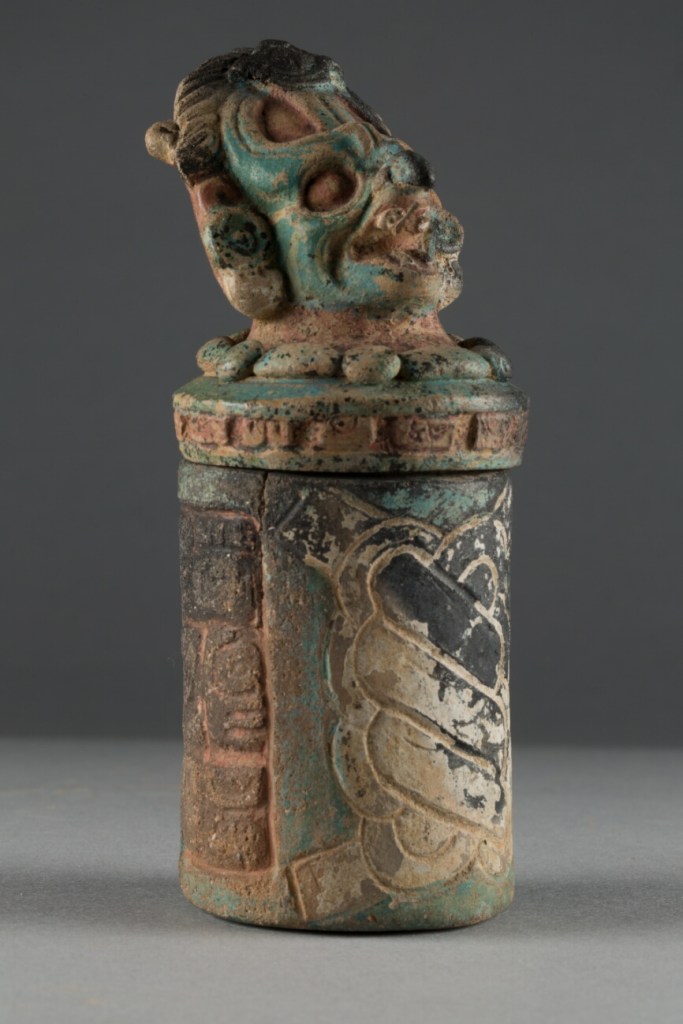
K’awil is often depicted with a distinctive hooked snout, large eyes, and a serpent foot symbolizing lightning. He may be adorned with elaborate headdresses and wear a jaguar pelt, symbols of rulership and power. In some cases, he is shown holding a scepter or flint objects, further reinforcing his connection to lightning and rulership.

 Digital Maps of the Ancient World