Ereshkigal
In the shadowy depths of Mesopotamian mythology, Ereshkigal reigned as the queen of the Underworld. Sister to the vibrant Inanna, goddess of love and war, Ereshkigal embodied a stark contrast – the enigmatic ruler of the realm of the dead. Her very presence whispered of the mysteries that awaited after life, both alluring and unsettling.
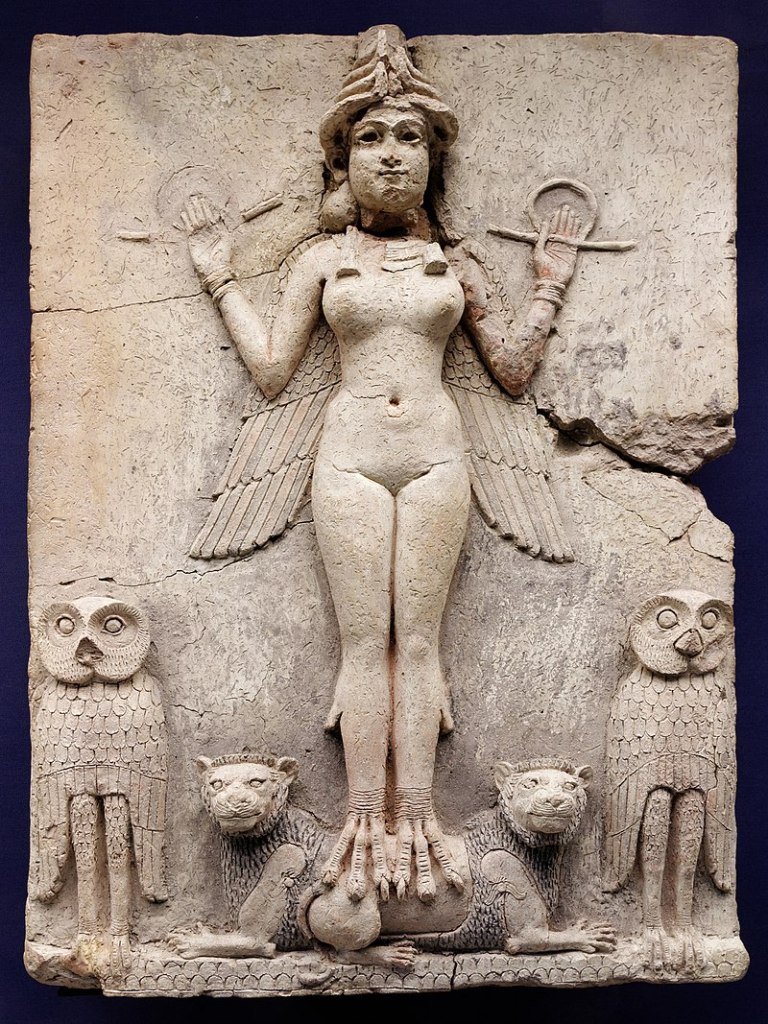
Residence: Kur (Mesopotamian underworld)
Parents: Nanna and Ningal
Siblings: Utu and Inanna
Consort: Ninazu, Gugalana, later Nergal
Children: Nungal, Ninazu, Namtar
Greek Equivalent: Persephone
Roman Equivalent: Proserpina
Ruling the shadowy realm of Kur, she presided over the dead, not as a tormentor, but as a powerful and enigmatic judge. Kur wasn’t a fiery hell, but a land of whispers and echoes, where the souls of the deceased faced trials to determine their fate. This is where the famous myth of “The Descent of Inanna” comes in. Inanna, Ereshkigal’s vibrant sister, dared to enter Kur, a testament to Ereshkigal’s power over both the living and the dead.
Ereshkigal wasn’t just the queen of darkness; she was a symbol of the cycle of life and death. Her presence reminded Mesopotamians of their mortality and the mysteries of the afterlife. But she wasn’t solely associated with endings. Ereshkigal, in her own way, represented the continuation of existence. After all, how can there be new life without the return of the old to the earth? She embodied the duality so prevalent in Mesopotamian belief – light and dark, life and death, two sides of the same coin. Ereshkigal wasn’t a monster, but a powerful force in a delicate balance, a reminder of the interconnectedness of all things.

 Digital Maps of the Ancient World