Mercury
Romans envisioned Mercury not just as a god, but as a whirlwind of activity. He was the swift messenger, zipping across the sky with winged sandals, delivering messages from the gods and ensuring smooth communication. But his influence wasn’t limited to the heavens. He was also the patron of commerce, eloquence, and even tricksters, reflecting the fast-paced world of Roman business.
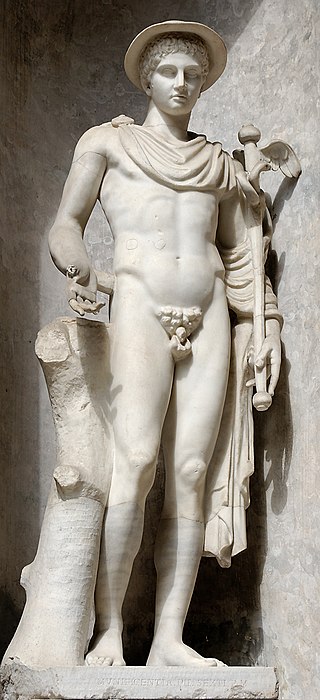
Symbols: Caduceus, winged sandals, winged hat, tortoise, ram, cockerel
Parents: Jupiter and Maia
Consort: Larunda
Children: Lares
Festivals: Mercuralia
Greek equivalent: Hermes
Like Hermes, Mercury was often depicted wearing winged sandals and a winged hat, highlighting their shared role as messengers. The caduceus, a staff entwined with serpents, was a common attribute for both deities. Mercury’s Roman artists sometimes included a rooster, ram, and tortoise in their portrayals, reflecting his additional domains of influence.

He was a key figure in the Roman economy, particularly the crucial grain trade. His association with abundance and commercial success was especially strong in Gaul, where he was held in high regard. Interestingly, Mercury wasn’t solely focused on earthly matters. He also served as the Romans’ psychopomp, the guide who led newly deceased souls to the afterlife.

Archaeological evidence from Pompeii suggests that Mercury was among the most popular deities in Roman society. This widespread reverence is further confirmed by his presence on two early bronze coins of the Roman Republic, the Sextans and the Semuncia. These depictions highlight the importance Romans placed on commerce and communication, domains over which Mercury presided.
Art

Vesunna Gallo-Roman Museum.


Museum of Aquitaine.

British Museum.

Carnavalet Museum.
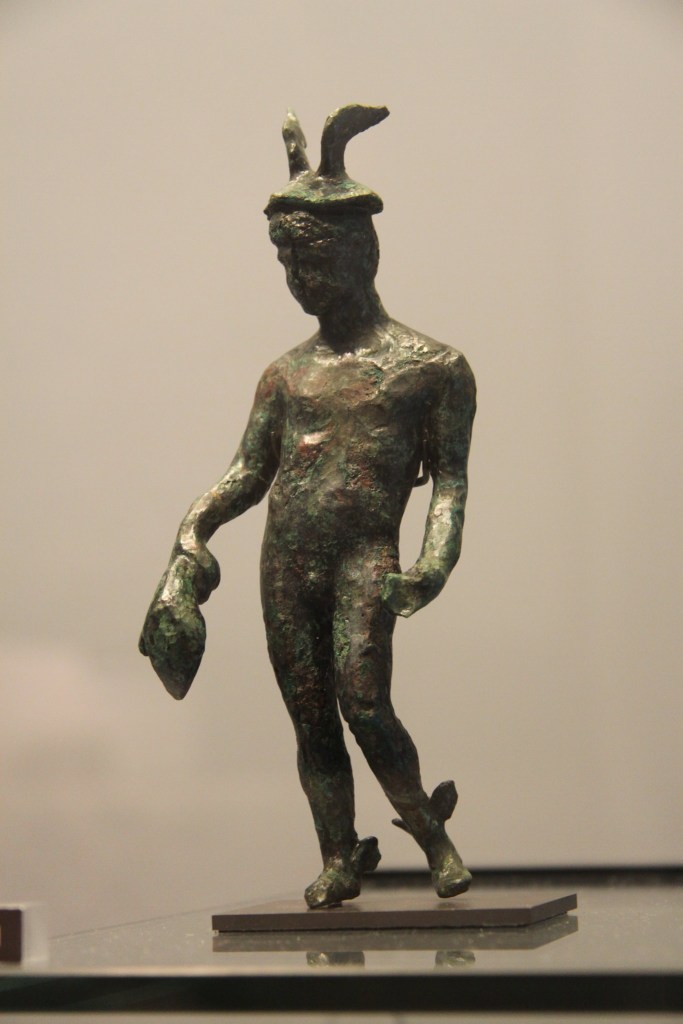
Carnavalet Museum.


 Digital Maps of the Ancient World