Roman Coin Denominations
Forget the boring piles of change in your pocket! Roman currency wasn’t just about buying bread – it was a story etched in metal. Each coin, from the humble bronze As to the gleaming gold Aureus, played a vital role in the Roman economic and social fabric.
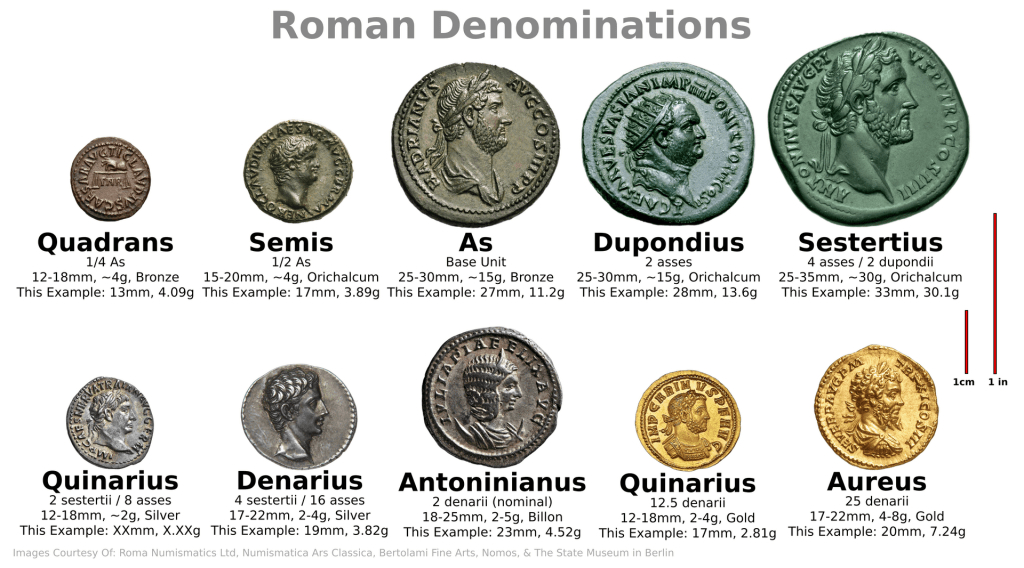
Quadrans (1/4 As): The smallest denomination, a tiny bronze coin used for the most basic transactions like buying a handful of olives or paying a bathhouse entrance fee.
Semis (1/2 As): Twice the value of a quadrans, this small bronze coin catered to purchases like a loaf of bread or a simple tunic.
As (1 As): The most basic unit, the As was a small bronze coin used for everyday needs like buying vegetables or paying a cobbler for repairs.
Dupondius (2 Asses): Worth two asses, the dupondius was a mid-range bronze coin often used for tolls, taxes, and smaller purchases at markets.
Sestertius (4 Asses): A larger bronze coin, the sestertius became increasingly important during the Empire. Initially valued at four asses, its worth fluctuated over time. It served as the primary coin for everyday transactions, from paying artisans to attending public games. Emperors often used sestertii to commemorate significant events or public works projects.
Quinarius (1/2 Denarius): A less common silver coin worth half a denarius. It might have been used for specialized transactions or military payments.
Denarius (10 Asses): The undisputed champion of Roman currency for centuries, the denarius was a high-quality silver coin. Its value remained relatively stable for a long period, facilitating trade, funding military campaigns, and serving as the standard for tax collection.
Antoninianus (Initially = Denarius, Later Debased): Introduced by emperor Caracalla, the antoninianus was initially minted with the same silver content as the denarius. However, over time, it experienced significant debasement, with its silver content steadily declining.
Aureus (Varies): The most prestigious coin, the aureus was crafted from gold. Initially reserved for large payments or imperial gifts, it became more common under the Empire. The aureus served as a powerful symbol of the emperor’s wealth and authority.

 Digital Maps of the Ancient World