Summanus
Roman religion wasn’t always clear-cut. Take Summanus, for instance. He was the god of nocturnal thunder, a shadowy counterpart to Jupiter, the mighty god of the daylit sky who wielded lightning. Unlike Jupiter, however, Summanus remained shrouded in a bit of mystery. His exact nature and role in the pantheon were never fully defined.
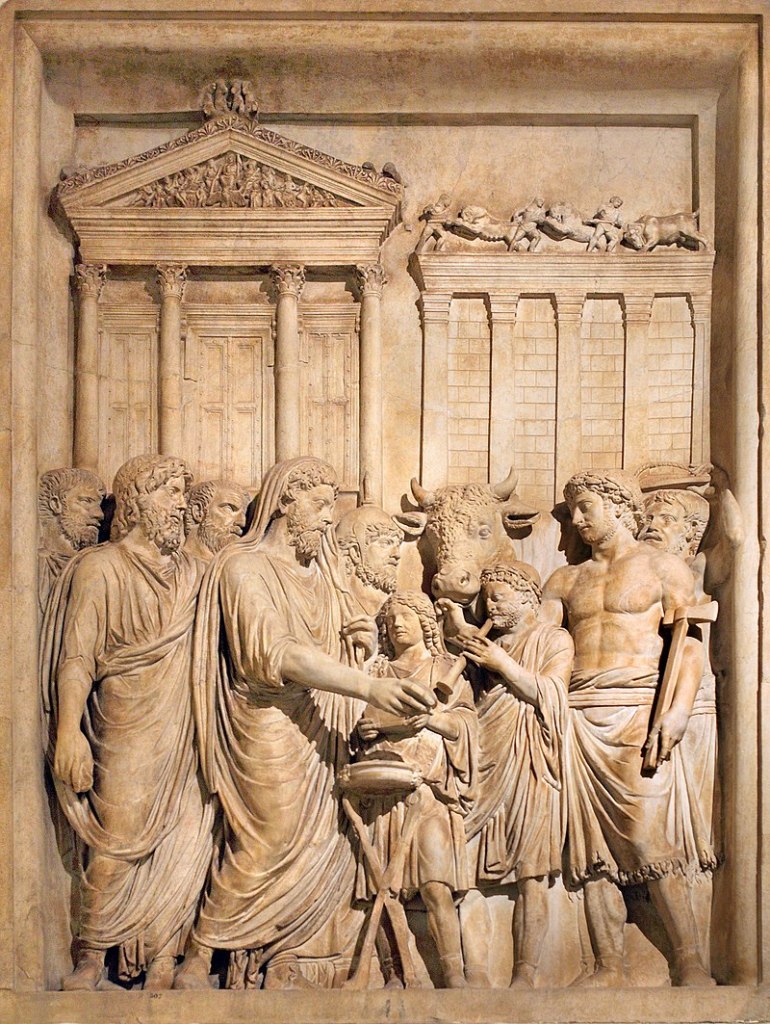
Though his exact nature remains enigmatic, Summanus boasts a surprisingly long history. According to the scholar Varro, an altar dedicated to Summanus was established by Titus Tatius, a Sabine king, hinting at the god’s presence in Rome’s early years.
Further evidence of Summanus’ significance emerged during the Punic Wars, a period of intense conflict for Rome. Around 278 BC, coinciding with the Pyrrhic War, a temple dedicated to Summanus was built on the western edge of the Circus Maximus, possibly on the Aventine Hill. Interestingly, the construction of this temple seems to have been prompted by a specific event – a lightning strike that damaged his statue on the Temple of Jupiter on the Capitoline Hill. Perhaps this incident served as a potent reminder of Summanus’ domain – the unseen power of thunder in the night sky.

 Digital Maps of the Ancient World