Sekhmet
Sekhmet embodied the duality of power and healing in Egyptian mythology.
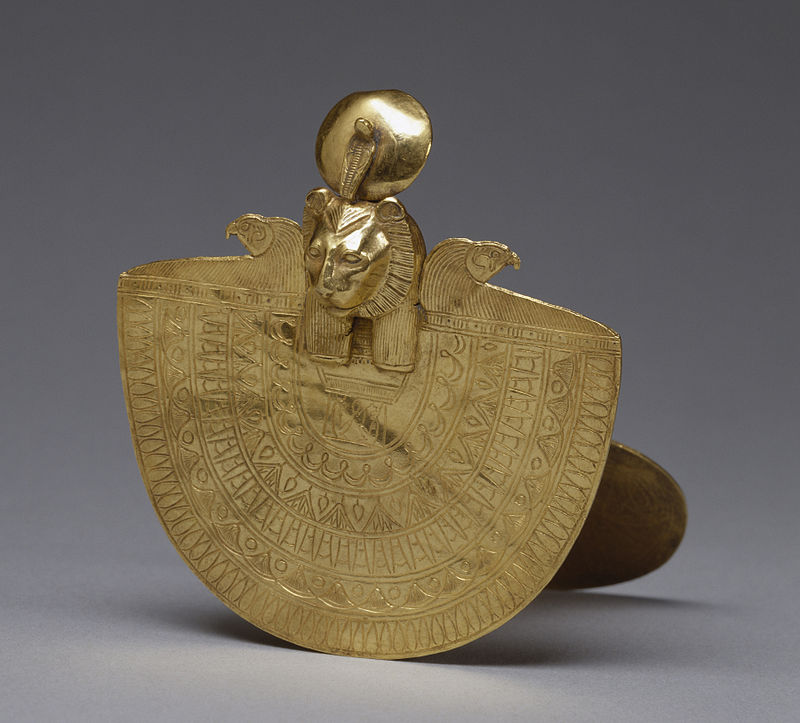
Revered as a warrior goddess, Sekhmet was both feared and revered for her ferocity and strength in battle. She was often depicted as a lioness-headed woman, symbolizing her fierce and untamed nature. As the goddess of war, Sekhmet was believed to protect the pharaoh and the kingdom from enemies, embodying the destructive force of the sun’s rays when unleashed in battle.
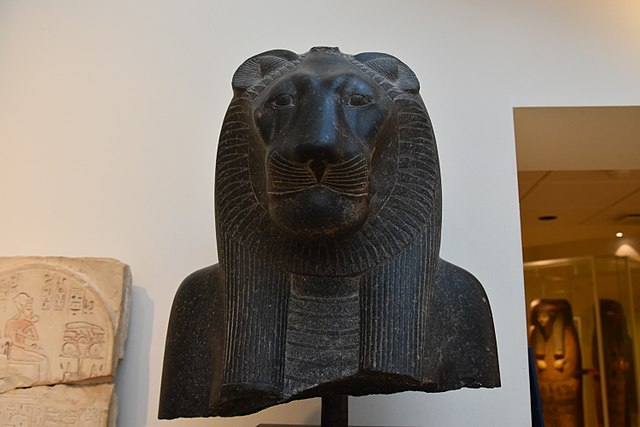
Symbols: Lioness, sun disk and red linen
Cult Centre: Leontopolis and Memphis
Parents: Ra and Hathor
Consort: Ptah
Children: Nefertem
Despite her martial prowess, Sekhmet also held a significant role as a goddess of healing and medicine. In times of peace, she was invoked to dispel illness and disease, using her divine powers to restore health and vitality to the afflicted. This aspect of Sekhmet’s character reflected the ancient Egyptians’ belief in the interconnectedness of life and death, as well as the cyclical nature of existence.
Sekhmet’s dual nature as both a warrior and a healer underscored the complex and multifaceted understanding of divinity in Egyptian religion. She represented the delicate balance between destruction and creation, chaos and order, embodying the inherent contradictions of existence. As such, Sekhmet was not only a symbol of power and protection but also a source of comfort and renewal, offering solace to those in need and safeguarding the divine order of the cosmos.
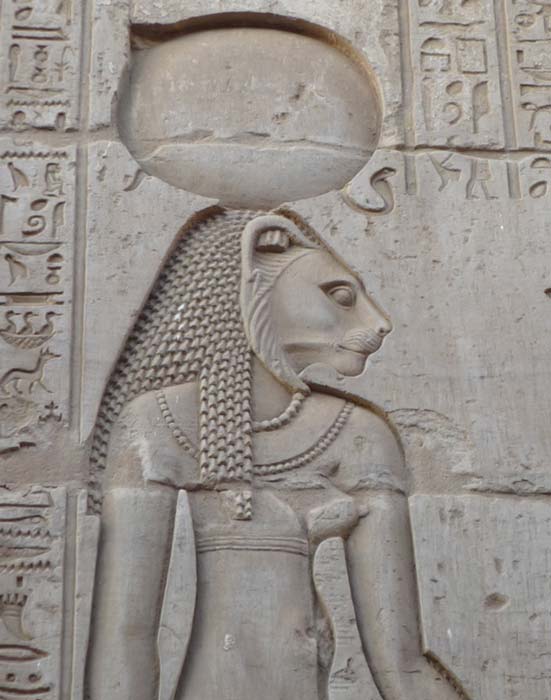
Sekhmet’s divine lineage traced back to Ra, the sun god, as his daughter, lending her immense power and authority as one of the principal goddesses in Egyptian mythology. As the fierce and vengeful manifestation of Ra’s authority, Sekhmet embodied the potent force of the sun’s rays, known as the Eye of Ra. Her association with fire and scorching winds evoked the relentless heat of the desert, symbolizing her ferocity and destructive potential.


2. Upper torso and head of Sekhmet, Kelvingrove Art Gallery and Museum, Glasgow. (c) Osama Shukir Muhammed Amin
3. Image from a ritual Menat necklace, depicting a ritual being performed before a statue of Sekhmet. Altes Museum, Berlin. (c) Keith Schengili-Roberts
4. Gilded bier from the Tomb of Tutankhamun with representations of Sekhmet. Egyptian Museum, Cairo. (c) Hans Ollermann
5. Four granite seated statues of Sekhmet. British Museum. (c) Captmondo

 Digital Maps of the Ancient World