Ambarvalia
The Ambarvalia was an agricultural fertility rite held in honor of Ceres, Bacchus, and Dea Dia. The festival typically took place on 29th May, but its exact timing could vary as it was a feriae conceptivae, a festival not bound to a fixed date.
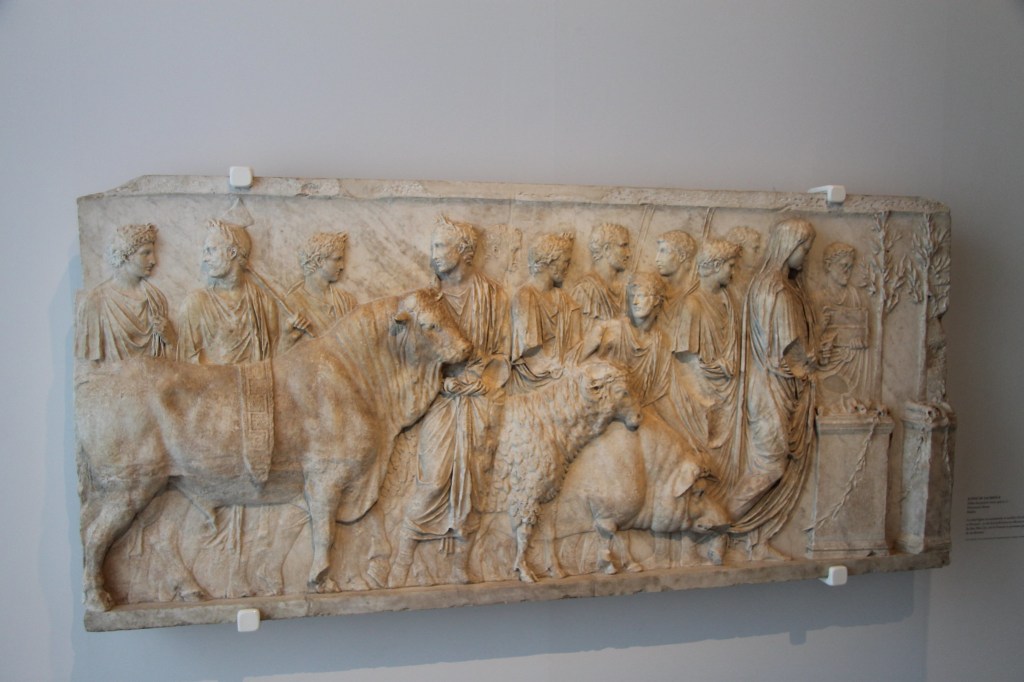
Date: 29th May
Deity: Ceres, Bacchus and Dea Dia
Observances: Suovetaurilia, procession, prayers
The name Ambarvalia is derived from the Latin words ambio, meaning “to go around,” and arvum, meaning “field.” During the festival, a bull, a sow, and a sheep were led in a procession around the fields. This sacrifice was known as a suovetaurilia.
The Ambarvalia could be either public or private. Public Ambarvalia were celebrated within the city’s boundaries by the fratres arvales, a group of priests responsible for agricultural rituals. Private Ambarvalia were solemnized by families in their villages and farms.
During the procession, prayers were offered to the goddess Ceres. The ambervale carmen was a commonly used prayer for this occasion. The name Ambarvalia itself appears to be predominantly an urban designation, as Roman farmers’ almanacs often referred to the ritual as segetes lustrantur, meaning “crops are purified.”

 Digital Maps of the Ancient World