Melqart
Melqart, a captivating figure in the Carthaginian pantheon, transcended the boundaries of a single city-state. Originally the tutelary god (protector deity) of the Phoenician city of Tyre, his influence spread across the Mediterranean, becoming a major deity in the Phoenician and Punic worlds.
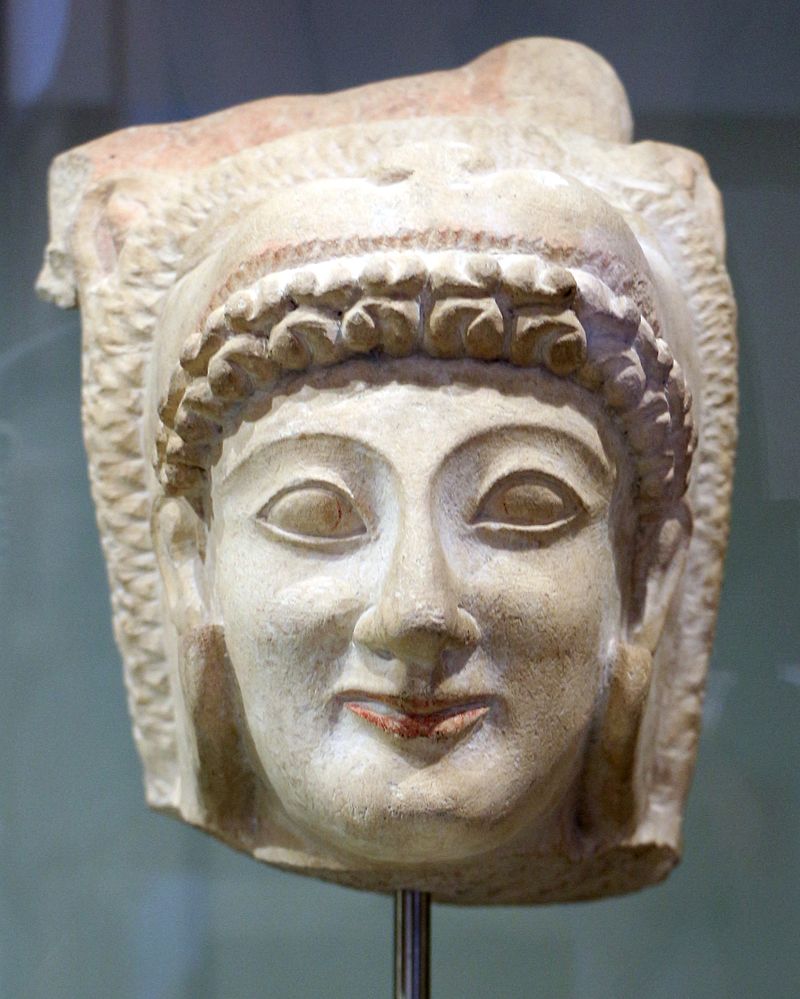
Greek equivalent: Heracles
Roman equivalent: Hercules
The name Melqart itself translates to “King of the City,” potentially reflecting his association with Tyre’s prosperity and dominance in trade. Carthage, a Phoenician colony, inherited the worship of Melqart, adapting him to their own evolving identity.
Carthaginian artists portrayed Melqart in a way that reflected his complex and multifaceted nature. He was typically depicted as a vigorous figure, either bearded or with prominent sideburns. His attire was often minimal, consisting solely of a lion’s skin – a symbol of strength and perhaps even royalty – or a simple rounded shepherd’s hat. This seemingly contrasting attire hints at his dual roles.
Melqart’s symbolism further emphasizes his complex nature. In one hand, he might hold an Ankh, the Egyptian symbol of life, or a flower, another symbol of growth and renewal. In the other hand, he might brandish a fenestrated axe, a weapon with a distinctive openwork design. This axe served as a symbol of death, creating a fascinating visual representation of Melqart’s dominion over both the living world and the underworld.
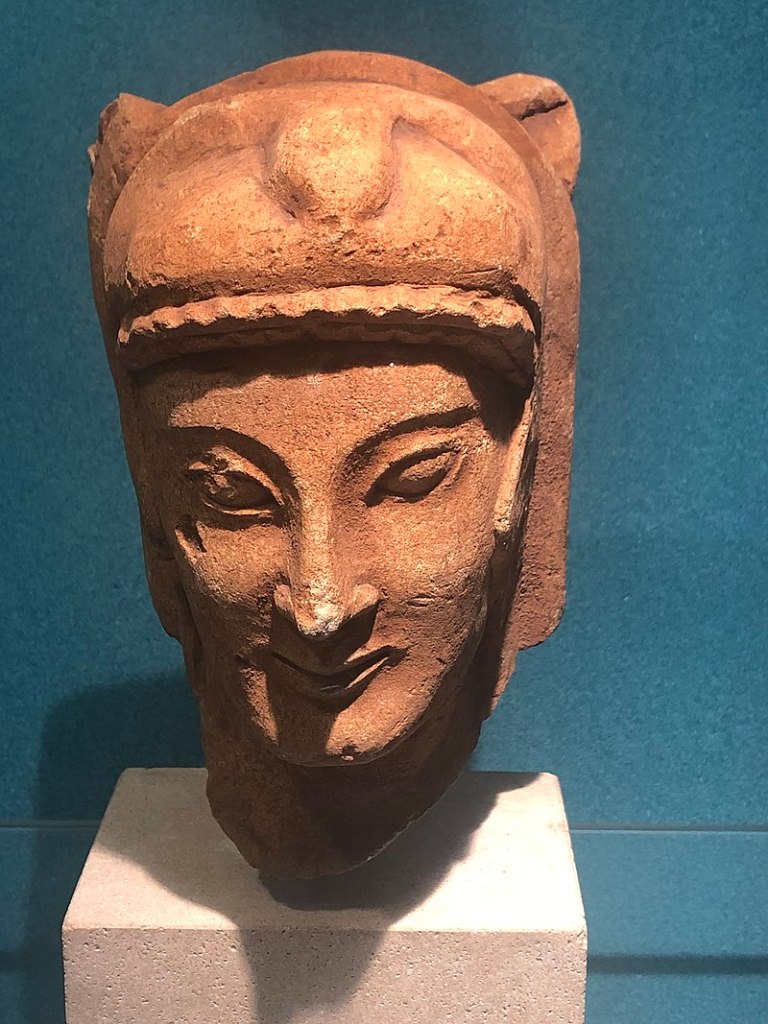
As Tyrian trade, colonization, and settlement expanded, Melqart’s influence spread across the Mediterranean. He became venerated in Phoenician and Punic cultures, especially in major colonies like Carthage and Cádiz. During the height of Phoenician civilization (1000-500 BC), Melqart’s reach extended beyond Phoenician cultures. He was identified with the Greek Heracles and the Roman Hercules, eventually becoming interchangeable with his Greek counterpart. In some places, like Cyprus and Ibiza, Melqart was even syncretized with other healing deities like Eshmun and Asclepius.
The influential Barcid clan of Carthage, particularly known for the famous military leader Hannibal, were particularly devoted worshippers of Melqart. This deep devotion highlights the importance Melqart held within Carthaginian society. In fact, a famous story recounts a young Hannibal, at the tender age of nine, swearing an oath to Melqart on his everlasting enmity towards Rome. This act emphasizes the role Melqart played not just in trade and exploration, but also in fostering a sense of national identity and even military resolve.

 Digital Maps of the Ancient World