Reshef
Reshef, the Carthaginian god of war, storms, and fire, emerges from the mists of history as a fascinating yet enigmatic figure. Unlike some deities with clearer origins, piecing together Reshef’s story requires delving into the murky waters of cultural exchange and limited evidence.
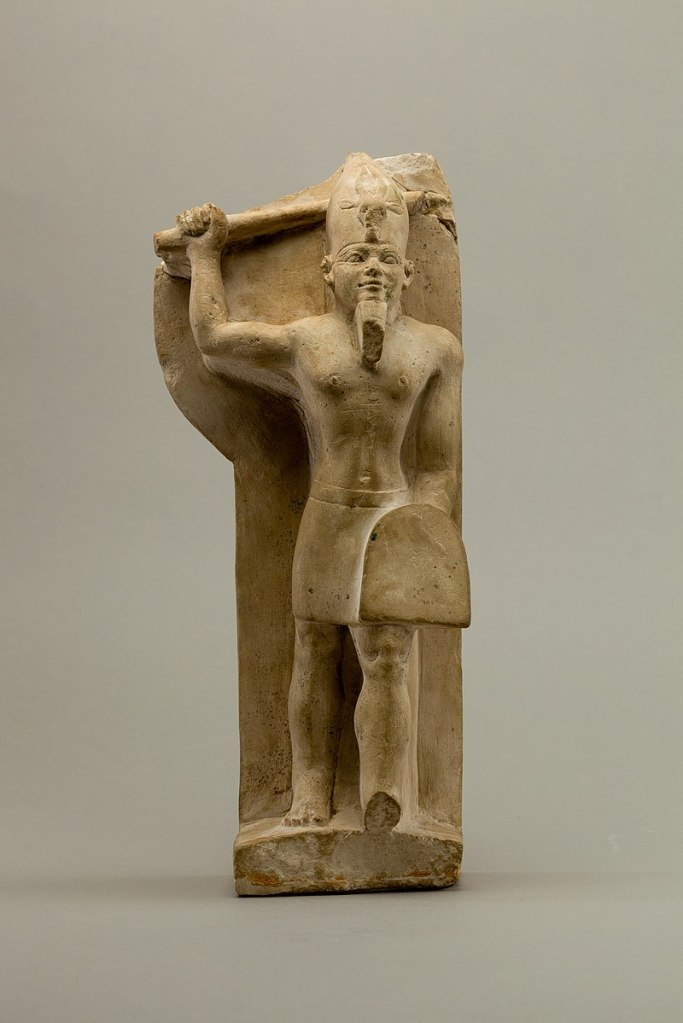
Greek equivalent: Apollo
Roman equivalent: Apollo
Reshef’s origins likely lie in the Canaanite god of the same name. This Canaanite deity was a fierce warrior associated with storms, lightning, and plagues. Carthaginian trade and cultural interaction with the Canaanites facilitated the adoption of this powerful god, integrating him into their pantheon.
Depictions of Reshef, though scarce, portray him as a formidable warrior figure. He is typically shown as a standing with a weapon in his hand. In some representations, he stands triumphantly on a lion, symbolizing his strength and dominion. These characteristics echo the Canaanite portrayals, solidifying his borrowed nature.
While war and violence were undoubtedly central aspects of Reshef’s domain, his role might have extended further. Some scholars believe he was also associated with storms and fire, reflecting his Canaanite origins where he was linked to destructive natural forces. This connection to storms might also explain a potential association with fertility, as storms could bring life-giving rain.
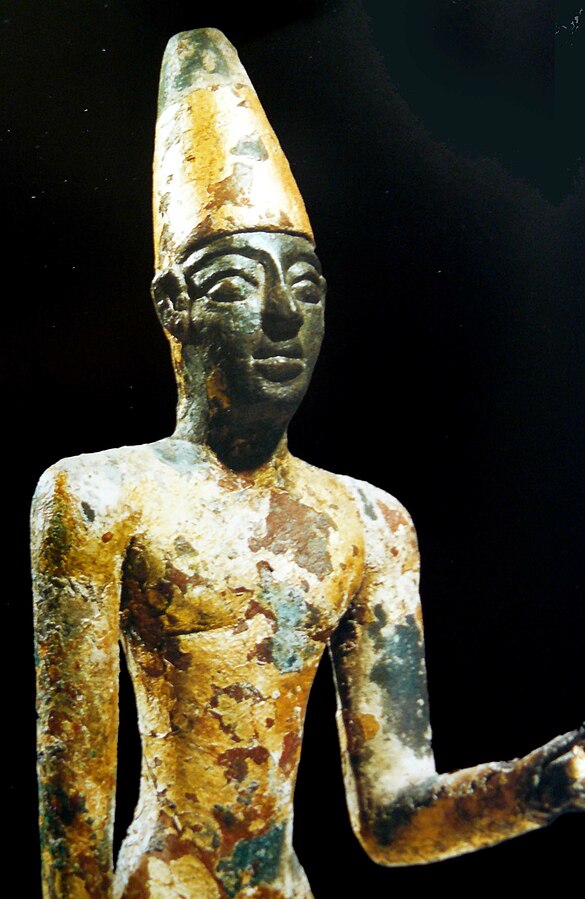
The ambiguity surrounding Reshef extends to the question of whether he was solely a destructive deity. Paradoxically, some evidence suggests he might have been seen as a protector in certain contexts. Warriors might have invoked him for victory and protection in battle, blurring the lines between destruction and defense.
Reshef’s presence in the Carthaginian pantheon reflects the realities of their world. As a major maritime power, Carthage relied heavily on its military might. Reshef served as a symbolic embodiment of their strength and a source of power for their warriors.
The scarcity of written records and the destruction of Carthage by the Romans leave many unanswered questions about Reshef. His exact role in Carthaginian religion, the specifics of his worship, and even the nuances of his character remain shrouded in mystery.

 Digital Maps of the Ancient World