Orpheus
Orpheus was a legendary musician, poet, and prophet from Thrace. He was renowned for his enchanting music, played on a lyre, that could charm all living things, even stones and trees. Some myths credit his mother as Calliope, the muse of epic poetry, making him a child of the arts.
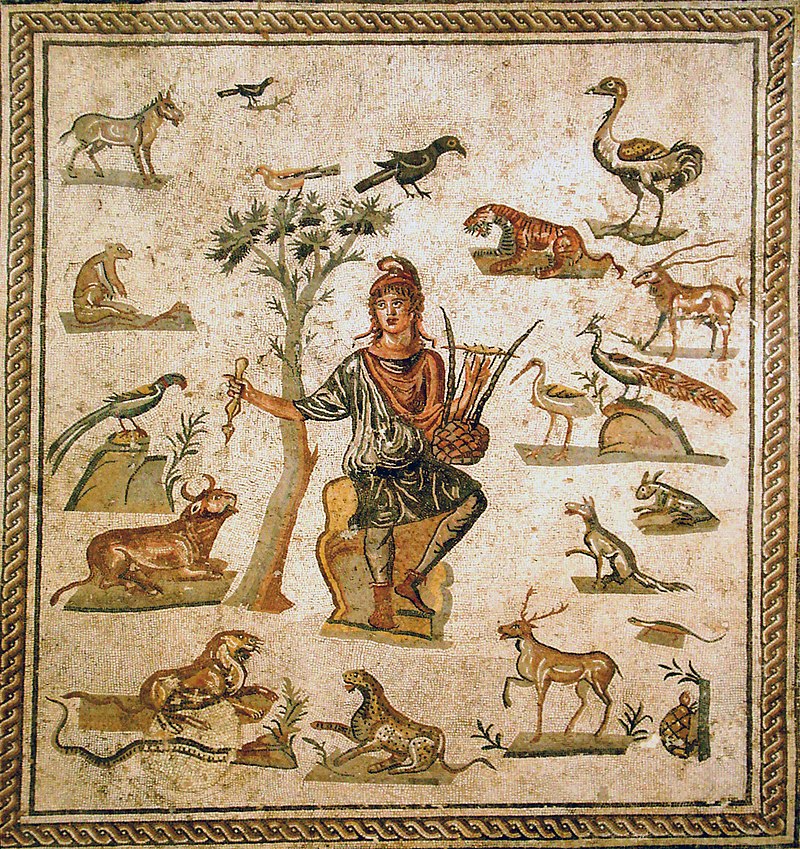
Parents: Oeagrus or Apollo and Calliope
Consort: Eurydice
Siblings: The Graces and Linus
Children: Musaeus
The Argonauts
One crucial member of the Argonauts’ crew was Orpheus, the legendary musician. His presence proved invaluable, especially when they faced the infamous Sirens. These bewitching creatures resided on a cluster of rocky islands, luring sailors to their doom with their captivating songs. Any who succumbed to the Sirens’ melody found their ships wrecked on the treacherous shores.

As the Argonauts approached the Sirens’ domain, an eerie silence descended. Then, the air filled with hauntingly beautiful music, promising untold pleasures to any who dared listen. Unease rippled through the crew, their hearts drawn towards the source of the melody. But Orpheus, ever prepared, countered the threat with his own weapon – music. He seized his lyre and poured his soul into his playing, weaving a melody that eclipsed the Sirens’ song in both volume and beauty. The Argonauts, captivated by Orpheus’ music, were immune to the Sirens’ allure. Their ship sped past the islands, leaving the frustrated calls of the Sirens behind. Thanks to Orpheus’ musical prowess, the Argonauts had overcome a perilous challenge on their quest for the Golden Fleece.
Orpheus and Eurydice
The joy of their wedding day, filled with music and laughter, was shattered by a horrifying twist of fate. As Eurydice frolicked through the tall grass, a satyr, a creature of lust and mischief, lunged at her. In her frantic escape, she stumbled upon a nest of vipers, their venomous bite striking her heel. Orpheus, upon finding her lifeless body, was consumed by a grief so profound it echoed through the valleys. His music, a torrent of sorrow, poured from his lyre. Trees swayed in mournful rhythm, animals wept, and even the wind seemed to sigh in sympathy.

Driven by an unwavering love, Orpheus ventured into the perilous Underworld. He braved rivers of fire, outsmarted monstrous guards, and all the while, his music, a plea for Eurydice’s return, resonated through the Underworld. Hades and Persephone, the rulers of the dead, were captivated by his love and sorrow. They agreed to allow Eurydice to follow Orpheus back to the world of light, on one heart-wrenching condition – he could not look back at her until they both reached the surface.
The journey back was an agonizing test of faith. With each step closer to the light, Orpheus’ heart pounded with a mixture of hope and dread. Finally, they neared the threshold, the fresh air a tantalizing promise of life renewed. But overwhelming anxiety twisted within him. Was she truly there? He couldn’t help himself. With a quick glance back, fueled by a desperate need to see her, he shattered the fragile condition. Eurydice, on the cusp of returning, faded back into the mists of the Underworld, her mournful cry echoing in the emptiness he had created. His love, his music, had almost conquered death, but a single moment of doubt had condemned Eurydice to a final farewell.

 Digital Maps of the Ancient World