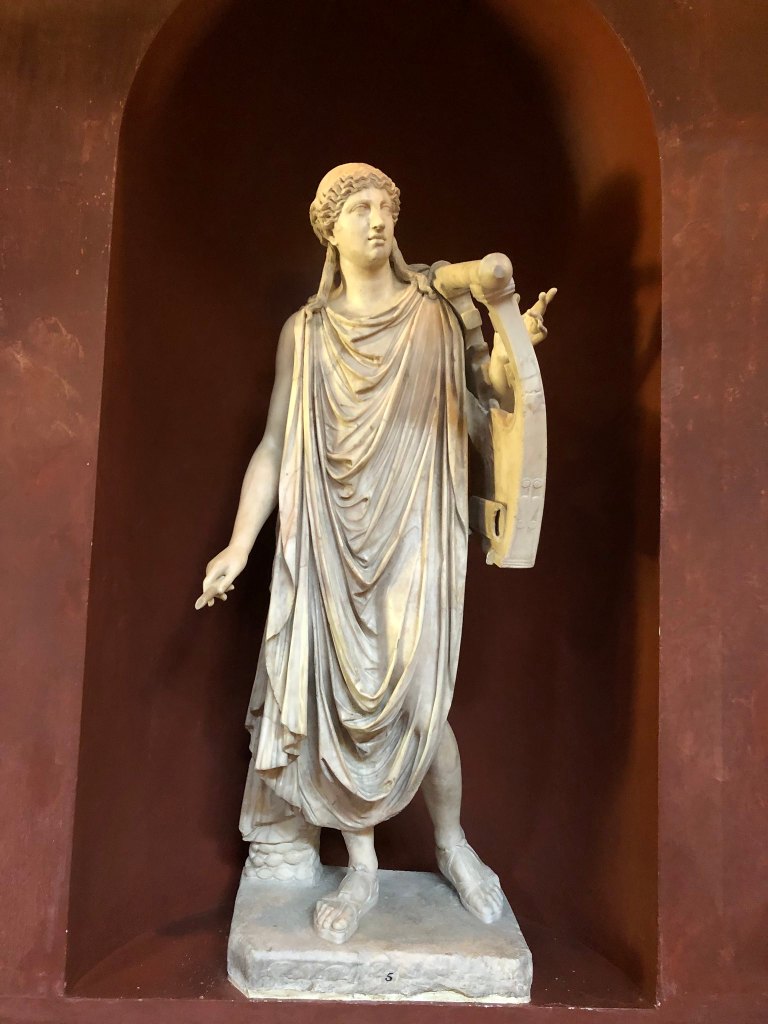
Apollo, a revered Greek god, was adopted by the Romans and became associated with archery, music and dance, truth and prophecy, healing and diseases, the Sun and light, poetry, and more.

Symbols: Lyre, laurel wreath, python, raven, swan, bow, arrows
Parents: Jupiter and Latona
Siblings: Diana
Festivals: Ludi Apollinares
Greek equivalent: Apollo
Other Names: Phoebus
Legend has it that the Romans consulted the famed oracle of Apollo at Delphi even during the time of their kings, hinting at an early connection to the Greek god. This connection solidified in the 5th c. BC when a plague struck Rome. Seeking divine intervention, the Romans built their first temple dedicated to Apollo on the Flaminian Fields, replacing an older sacred site known as the Apollinare. The god’s influence continued to grow during the Second Punic War. Following a prophecy attributed to Marcius, the Romans established the Ludi Apollinares, public games held in Apollo’s honor.

Emperor Augustus, who believed himself favored by Apollo and even claimed divine descent from the god, significantly elevated Apollo’s status in Rome. Following his decisive victory at the Battle of Actium, fought near an Apollo sanctuary, Augustus expanded the existing temple dedicated to the god. He also dedicated a portion of the war spoils and instituted quinquennial games (games held every five years) in Apollo’s honor. Further solidifying Apollo’s importance, Augustus commissioned a new temple on the prestigious Palatine Hill. Sacrifices and prayers offered to Apollo and Diana on the Palatine Hill became the centerpiece of the Secular Games, held in 17 BC to mark the beginning of a new golden age.
Art





 Digital Maps of the Ancient World