Centaurs
Centaurs weren’t a singular entity but a diverse collection of horse-and-man creatures scattered across the Greek world. Imagine powerful warriors with the torso of a human seamlessly melded to the body of a powerful horse. These weren’t mere beasts; they possessed human intelligence and a fierce independence.
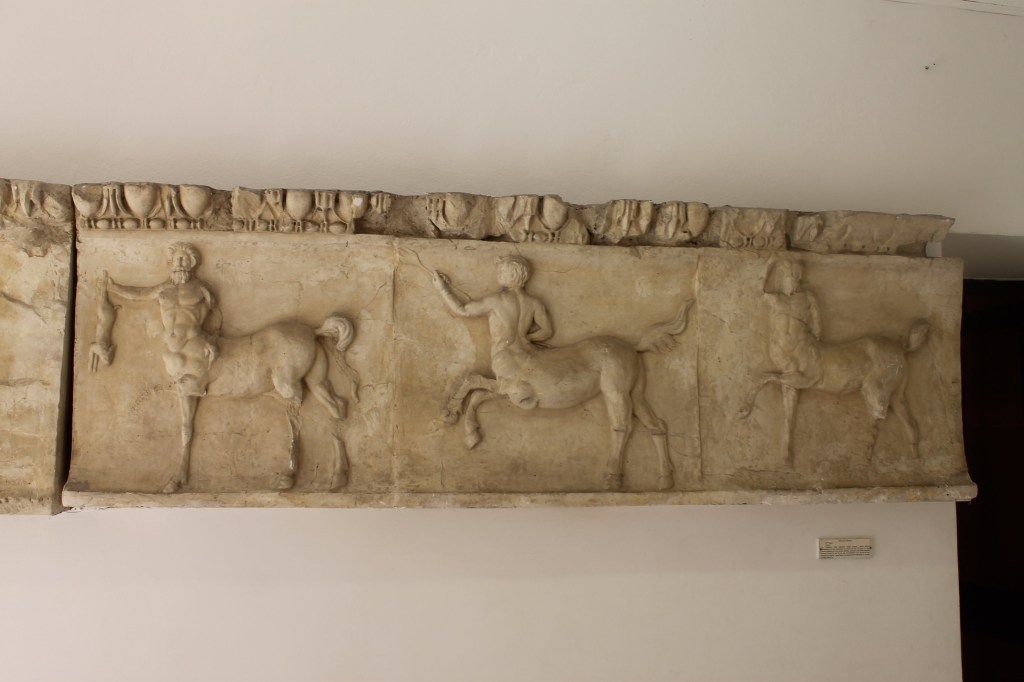
Tribes of Centaurs roamed the mountains and forests, each with their own customs and characteristics. Some, like the wise Chiron, were known for their knowledge and healing skills. Others, like the warlike tribe encountered by the Lapiths, were notorious for their brutality and fondness for strong drink.
Tribes
Cyprian Centaurs
Legend whispers of a celestial fumble. In a clumsy attempt to woo the goddess Aphrodite, Zeus, king of the gods, ended up accidentally…well, fertilizing the earth goddess Gaia instead. The result? The Cyprian Bull-Centaurs, a living testament to Zeus’ occasional awkwardness.
Though born of an accident, these bull-centaurs weren’t inherently monstrous. Unlike their mainland counterparts, they were said to be attendants of Aphrodite, associated with fertility and a more peaceful side of nature.
Female Centaurs
Parents: Ixion and Nephele
Unlike their male brethren who feature prominently in various myths, centauresses are rarely mentioned in ancient literature. However, their absence from written stories doesn’t diminish their existence. Centauresses come alive in the vibrant world of ancient Greek art. Paintings and, more prominently, Roman-era mosaics and reliefs depict these fascinating creatures.

Lamian Centaurs
Parents: The Lamids
In the heart of Cilicia, where the River Lamus flowed, resided twelve unique beings – the Lamian Daemons. Entrusted by Zeus with a critical task, they became guardians of the infant Dionysus, the god of wine and revelry. Their duty was to protect the young god from the wrath of his vengeful stepmother, Hera.

Their loyalty proved costly. When the enraged Hera discovered their defiance, her punishment was swift and cruel. With a jealous rage, she twisted their forms, transforming the Lamian Daemons into ox-horned centaurs. Though forever altered, their spirits remained unbroken. They didn’t abandon Dionysus; instead, they embraced their newfound form and became his loyal companions. Side-by-side with the god of wine, they fought valiantly in his war against the Indians.
Pelopponesian Centaurs
Parents: Ixion and Nephele
Killed by: Heracles
One such centaur, Pholus, offered Heracles a warm welcome on his journey. Tragically, this act of kindness sparked a deadly conflict. A misunderstanding over a shared wineskin escalated into a brutal battle. The Arcadian Centaurs, despite their superior numbers, were no match for Heracles’ rage and his deadly poisoned arrows. The once peaceful grove echoed with the clash of hooves and the screams of the dying.

Only a handful of Arcadian Centaurs managed to escape the slaughter. They fled south, some seeking refuge on the harsh Malean peninsula, while others found sanctuary at Eleusis under the protection of the powerful sea god, Poseidon.
Thessalian Centaurs
Parents: Ixion and Nephele
Killed by: The Lapiths
Legend whispers they were born from the vengeful act of a cloud-nymph, Nephele, after she was assaulted by the impious King Ixion. Abandoned on Mount Pelion, these creatures grew into a primitive race, dwelling in caves and wielding crude weapons like rocks and tree branches.
Despite their savagery, the Centaurs received an unexpected invitation – a chance to mingle with civilized society. Their half-brother, King Pirithous, was getting married and extended an olive branch, inviting them to the festivities. However, the Centaurs, unaccustomed to wine and revelry, descended into chaos. Fueled by intoxication, they attempted to abduct the bride and other female guests, their primal instincts taking over.

What began as a celebration became a bloody brawl. The Lapiths, the bride’s people, rose in furious defense. In the ensuing battle, the refined weaponry and disciplined fighting style of the Lapiths proved superior. Most of the drunken Centaurs were slain, their rampage ending in a scene of carnage.
Individuals
Chiron
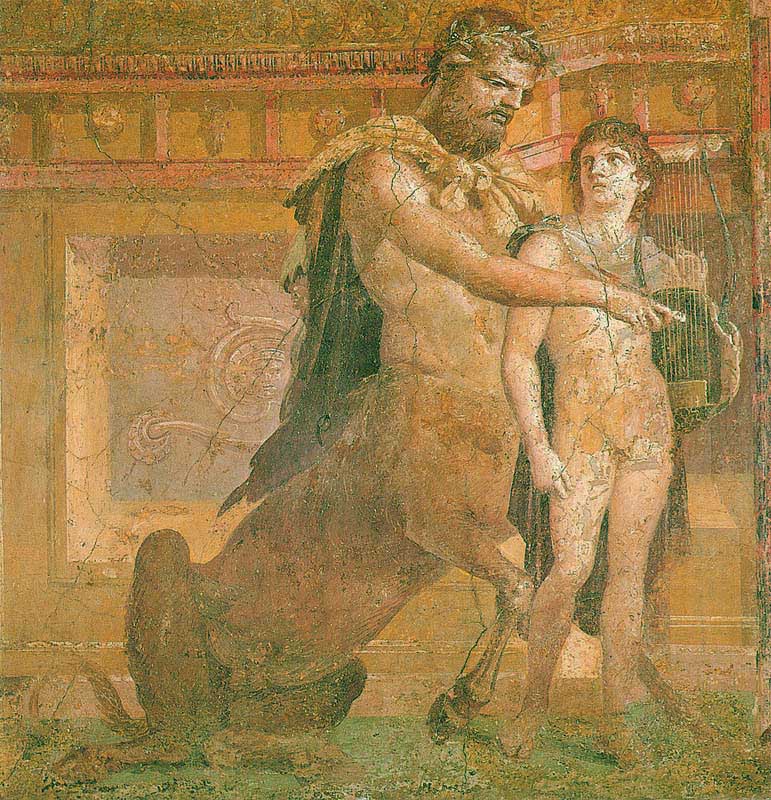
While his brethren were known for their wild and unruly nature, Chiron stood as a beacon of wisdom and knowledge. This distinction stemmed from his very birth. He was the son of the Titan Cronus (father of Zeus) and the nymph Philyra. The story goes that their secret tryst was interrupted by Rhea, Cronus’ wife, forcing him to transform into a horse to escape. The unusual circumstances resulted in Chiron’s unique form – a powerful human torso seamlessly melded with the body of a magnificent horse.
Residence: Mount Pelion
Parents: Cronus and Philyra
Siblings: Hera, Hestia, Hades, Demeter, Poseidon and Zeus
Consort: Chariclo
Children: Pelionids
Killed by: Heracles
Jason, the leader of the Argonauts, honed his leadership and courage under Chiron’s tutelage. Achilles, the mighty warrior famed for his invulnerability, learned the art of combat and channeled his rage under the centaur’s guidance. Even Asclepius, the future god of medicine, received his foundational knowledge from Chiron. The list of illustrious pupils doesn’t end there. Peleus, the father of Achilles, the demigod Aristaeus, and many more heroes benefited from Chiron’s wisdom and training.
Tragedy struck when Heracles, a hero Chiron himself had trained, became embroiled in a battle with other centaurs. In the chaotic clash, an arrow meant for a savage centaur struck Chiron by accident. But it wasn’t any ordinary arrow; it was tipped with the deadly venom of the Hydra, a creature Chiron had once helped Heracles slay.
The very gift that allowed him to guide generations of heroes now brought him unbearable pain. Faced with this agonizing existence, Chiron made a heart-wrenching decision. He, the immortal teacher, willingly gave up his gift in exchange for freedom from the torment. Touched by his sacrifice, Zeus, king of the gods, placed Chiron amongst the stars as the constellation Sagittarius.
Eurytion (Thessalian)
Parents: Ixion and Nephele
Killed by: The Lapiths
Eurytion was the mighty leader of the Thessalian centaurs. A respected warrior among his kin, he also harbored a wild streak. Invited to his half-brother’s wedding, revelry turned disastrous. Fueled by wine, Eurytion attempted to abduct the bride, sparking a brutal brawl. The centaurs, under Eurytion’s failing leadership, were ultimately defeated, their leader succumbing to the consequences of his recklessness.

Eurytion (Pelopponesian)
Parents: Ixion and Nephele
Killed by: Heracles
Unlike his Thessalian brethren who brawled at a wedding, Eurytion, a Peloponnesian centaur, took a cruder approach. He strong-armed King Dexamenus into promising his daughter’s hand. But on the wedding day, Heracles, ever the hero (or perhaps wedding crasher), intervened and sent Eurytion packing – permanently.
Nessus (Thessalian)
Parents: Ixion and Nephele
Killed by: Heracles
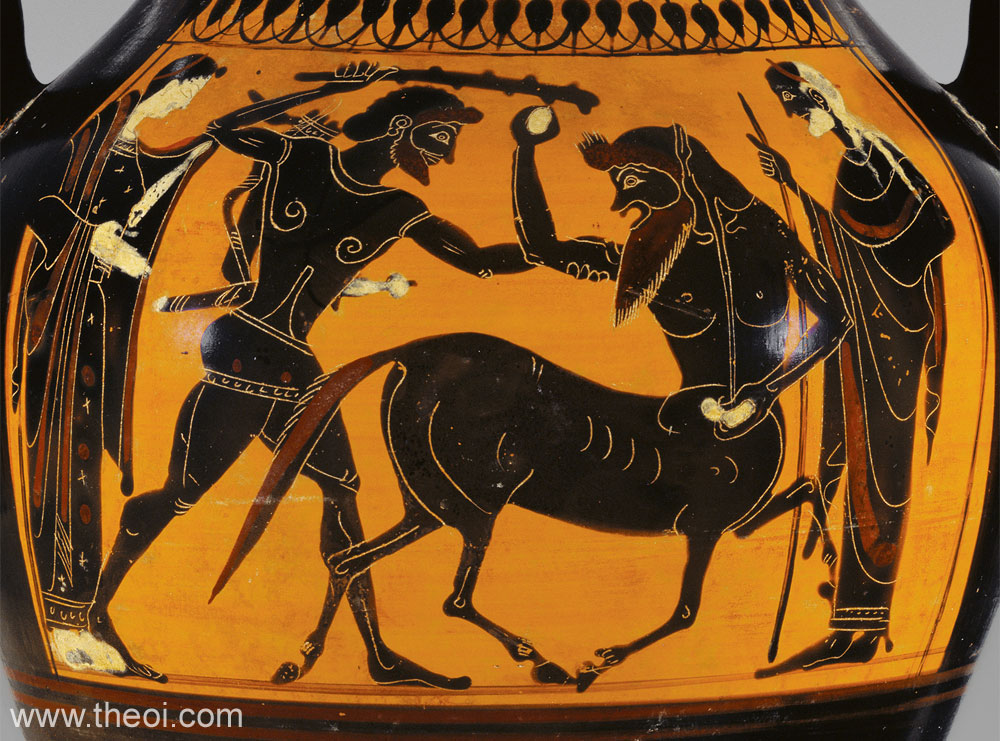
Nessus, a Thessalian centaur fleeing the Lapiths, reinvented himself as a ferryman on the Evenus River. When Heracles arrived with his bride Deianeira, Nessus offered passage across the water. But lust overwhelmed him, and he attacked Deianeira. Heracles’ swift arrow ended Nessus’ life, but with a final act of vengeance, the dying centaur tricked Deianeira into taking his poisoned blood as a love potion, setting in motion a chain of events that would lead to Heracles’ own demise.

Pholus (Peloponnesian)
Parents: Silenus and Melia
Killed by: Dropping Heracles‘ poisoned arrow on his foot
Arcadian centaur Pholus offered weary Heracles hospitality in his cave, sharing a wineskin. The aroma, however, proved disastrous. Lured by the scent, other centaurs stormed in, consumed by a drunken rage. Heracles, forced to defend himself, unleashed a deadly hail of arrows, scattering the attackers and leaving Pholus’ home in ruins. Tragically, Pholus himself met an untimely end – a poisoned arrow, meant for the monstrous boar, accidentally pierced his foot, claiming his life.


 Digital Maps of the Ancient World