Ninhursag
Unlike deities confined to specific domains, Ninhursag embodied the nurturing and life-giving aspects of the divine. As the mother goddess, she presided over fertility, motherhood, and healing, playing a vital role in shaping the destiny of humanity.

Symbols: Omega-like symbol
Siblings: Enlil, Enki and Adad
Consort: Sulpae, Enlil, Enki
Children: Ashgi, Panigingarra, Lisin, Egime, and Lillu (with Šulpae); fifteen other children, consisting of Atugula, Atutur, NIG-gumaḫa, Burukaš, Zarzaru, Zurmuzarmu, Nin-BUR.SAL, Šazumaḫ, Ušumšasu, Naĝaršaga, Anmea, Amaea, UR-guru, Urra, and Amaniranna; Ninurta
Greek Equivalent: Gaia
Roman Equivalent: Terra
Her very name, translating to “Lady of the Foothills,” spoke of her deep connection to the earth’s life-giving potential. Farmers saw her in the fertile plains and rolling hills, the source of their crops and prosperity. Women in childbirth called upon her as the “Lady of Birth” (Nintu), seeking her gentle guidance and ensuring healthy offspring. The sick and injured revered her as a healer, the soother of wounds and the one who brought relief. Ninhursag wasn’t aloof; she was an ever-present force, a nurturing hand cradling humanity through the cycles of life.
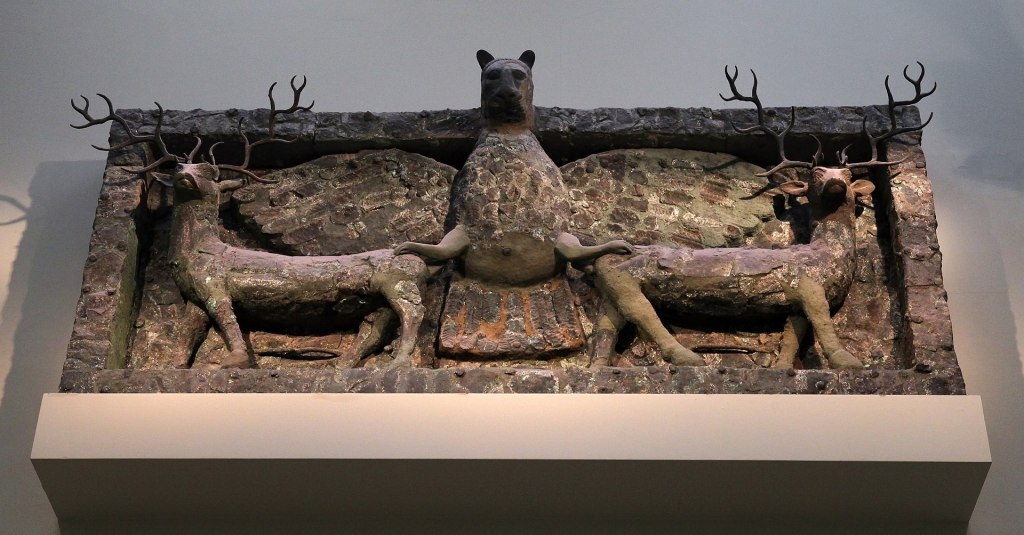
This profound connection to creation extended to humanity’s very origins. Mesopotamian myths often portray Ninhursag as playing a central role in the creation of humankind. In some stories, she works alongside the god Enki, fashioning the first humans from clay. This act underscores her role not just in human existence, but in shaping the very fabric of the world. She wasn’t merely a protector; she was the source of life, breathing vitality into the forms she crafted.
Ninhursag’s association with the fertile lands of Mesopotamia wasn’t just symbolic; it was a vital link to the well-being of civilization. As the “Lady of the Foothills,” she was seen as the guardian of agricultural abundance. Her blessings ensured bountiful harvests, the lifeblood of Sumerian society. The prosperity of cities and the health of the people were believed to be intricately tied to her benevolence.

 Digital Maps of the Ancient World