Saturn
While often depicted as the benevolent ruler of a mythical golden age, Saturn’s role in Roman religion was multifaceted. He was a god of agriculture, ensuring bountiful harvests, but also embodied liberation and change. This broader domain reflects the evolving Roman society, where tradition coexisted with the need for progress.

Residence: At the limits of Earth, at the extremity of the Heavens
Symbols: Sickle, scythe
Parents: Terra and Caelus
Siblings: Janus, Ops
Consort: Ops
Children: Ceres, Juno, Jupiter, Neptune, Pluto, Vesta
Festivals: Saturnalia
Greek equivalent: Cronus
Early mythology depicted Saturn as a benevolent ruler who presided over a mythical Golden Age of abundance and peace. This image resonated with Romans, who saw him as a symbol of prosperity and a reminder of a simpler time. However, Saturn’s influence extended far beyond this idyllic past.

Following the Roman conquest of Greece, there was a cultural exchange of ideas and deities. Saturn became increasingly conflated with the Greek Titan Cronus, who held dominion over time. This association imbued Saturn with a new dimension – he became not just the god of beginnings and endings within life cycles, but also the keeper of time itself.
Each December, the city erupted in revelry during the Saturnalia festival, perhaps the most famous Roman celebration. A time of feasting, role reversals (where social hierarchies were temporarily upended), free speech, gift-giving, and general merrymaking, Saturnalia honored the god and offered a welcome break from the seriousness of everyday life.
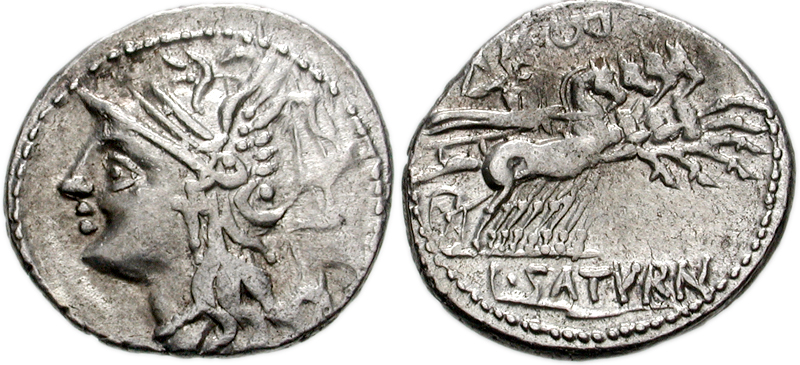
The Romans also housed their most vital records and financial resources in the Temple of Saturn, located in the heart of the Roman Forum. This massive structure, known as the Aerarium, served as the state treasury and archives during the Republic and early Empire. Its location, under the watchful gaze of Saturn, underscored the importance Romans placed on stability, security, and the passage of time as their civilization flourished.


 Digital Maps of the Ancient World