Aphrodite
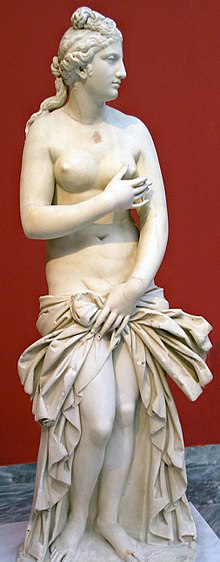
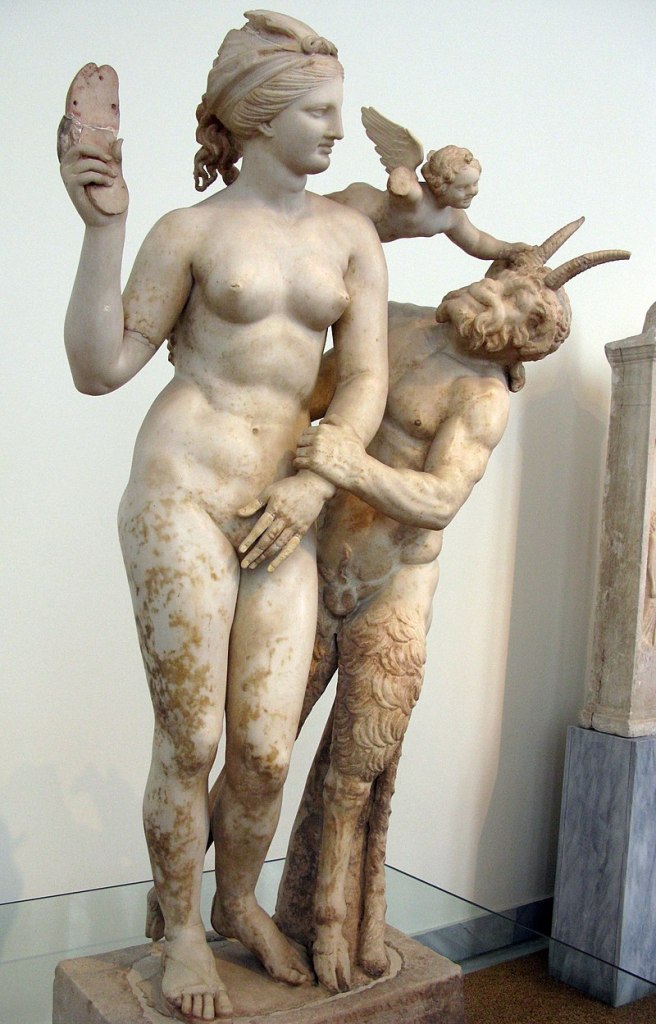
Aphrodite, the revered goddess of love, beauty, pleasure, and procreation in ancient Greek mythology, captivated hearts with her unparalleled grace and allure. Often depicted as a stunning woman adorned with elegance, she was frequently accompanied by the winged godling Eros, symbolizing the power of desire and attraction.
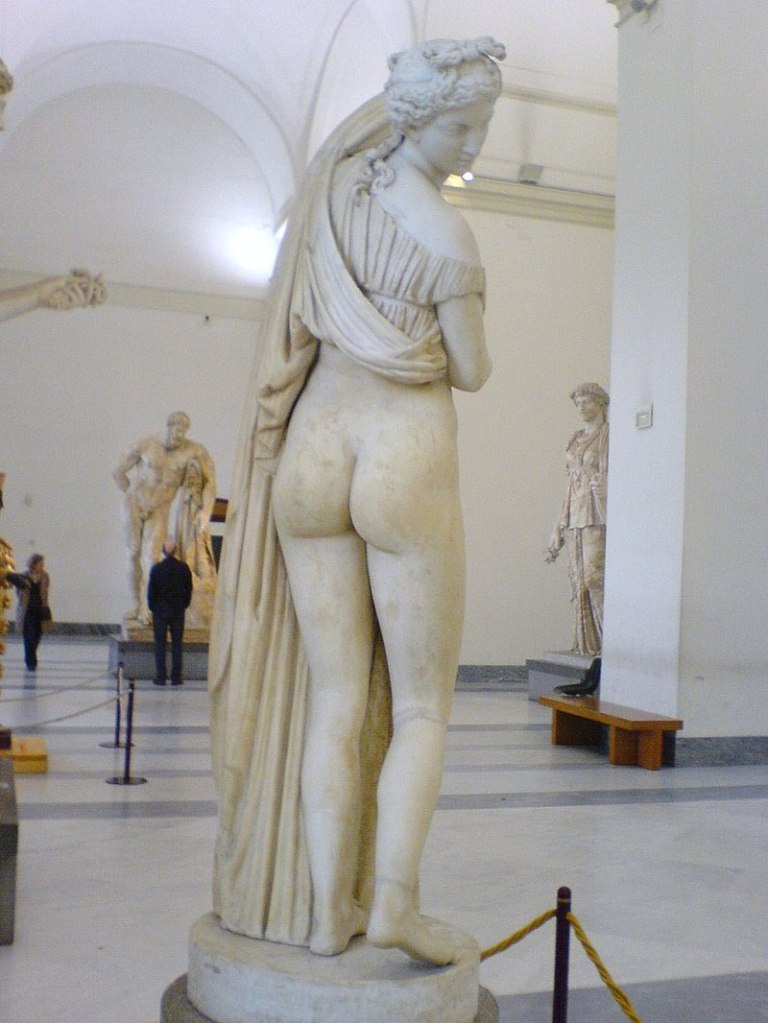
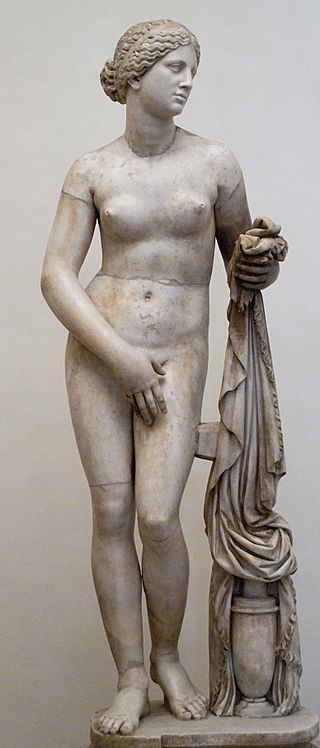
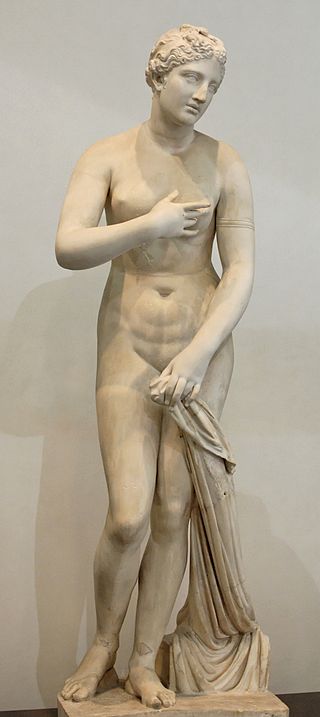
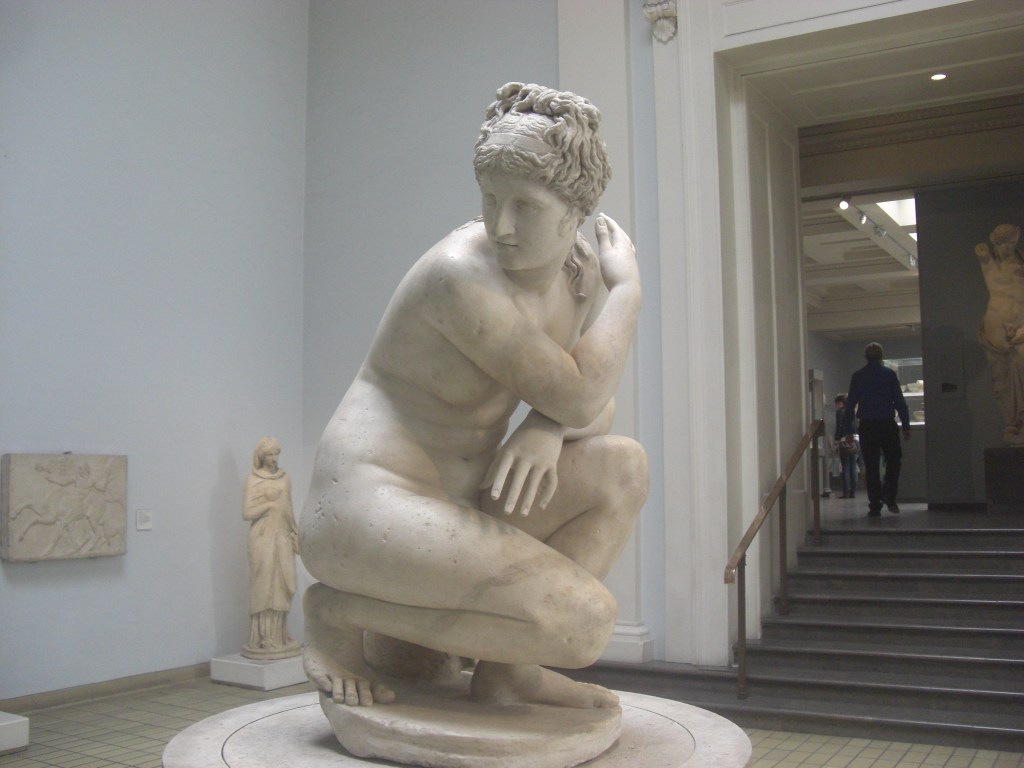
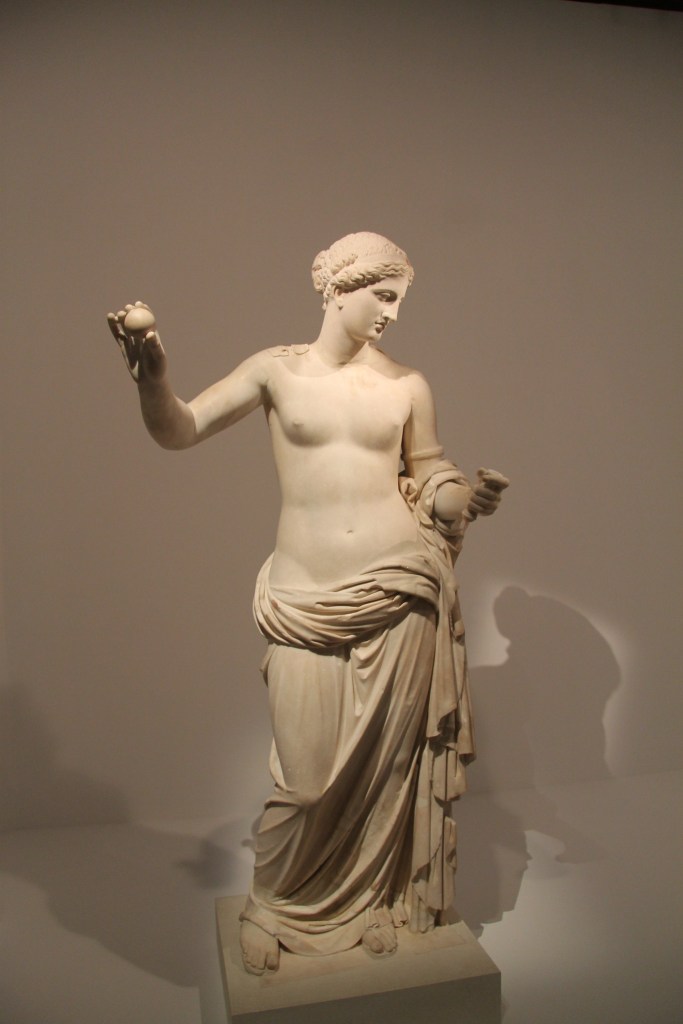
Her sacred symbols included the graceful dove, the tempting apple, the delicate scallop shell, and the reflective mirror, each representing facets of her divine influence. In classical sculpture and mesmerizing frescoes, Aphrodite was typically portrayed in her natural form, embodying timeless beauty and sensuality through her nudity, captivating all who beheld her image.
Residence: Mount Olympus
Symbols: Dolphin, Rose, Scallop Shell, Myrtle, Dove, Sparrow, Girdle, Mirror, Pearl and Swan
Parents: Uranus‘ genitals or Zeus and Dione
Siblings: The Titans, the Cyclops, the Meliae, the Furies, the Giants and the Hecatoncheires
or Aeacus, Angelos, Apollo, Ares, Artemis, Athena, Dionysus, Ilithyia, Enyo, Eris, Ersa, Hebe, Helen of Troy, Hephaestus, Heracles, Hermes, Minos, Pandia, Persephone, Perseus, Rhadamanthus, the Graces, the Horae, the Litae, the Muses and the Moirae
Consort: Hephaestus, Ares, Hermes, Poseidon, Dionysus, Anchises and Adonis
Children: With Ares: Eros, Phobus, Deimus, Harmonia, Pothus, Anterus, Himerus
With Hermes: Hermaphroditus
With Poseidon: Rhodos, Eryx
With Dionysus: Peitho, The Graces, Priapus
With Anchises: Aeneas
Roman equivalent: Venus
Birth
According to the prominent Greek poet Hesiod’s work “Theogony,” the captivating goddess Aphrodite emerged from a most extraordinary genesis. In this rendition, the Titan Cronus, driven by fate, severed the genitals of Uranus, his father, casting them into the vast expanse of the sea. From this surreal act, a miraculous transformation occurred as the foam from Uranus’ severed genitals mingled with the sea’s embrace.

Out of this ethereal union arose Aphrodite, her name itself reflecting her origin as the “foam-arisen” goddess. As Hesiod vividly describes, “the genitals were carried over the sea a long time, and white foam arose from the immortal flesh; with it a girl grew,” signifying the divine birth of the goddess of love and beauty.
Marriage
In Greek mythology, Hephaestus, the skilled blacksmith of the gods, once devised a cunning plan to secure the hand of Aphrodite in marriage. Crafty and resourceful, he fashioned an exquisite golden throne for his mother Hera, the queen of the gods. Little did she know that this throne held a secret enchantment. When Hera sat upon it, she found herself ensnared, unable to rise from its gleaming surface. Hephaestus, seizing this opportune moment, made a bold demand: in exchange for her release, he insisted that Hera consent to his marriage to Aphrodite, the goddess of beauty.
Despite the initial deception, Hephaestus found himself delighted to be wedded to Aphrodite, envisioning a life of happiness and bliss. As a testament to his affection, he dedicated his craftsmanship to forging exquisite jewelry and adornments for his beloved wife. However, his joy was short-lived, as Aphrodite’s heart remained fickle and wandering. Despite her vows, she indulged in numerous affairs, including a passionate liaison with Ares, the god of war, causing heartache and sorrow for Hephaestus, the devoted husband.
Attendants
In the retinue of Aphrodite, the goddess of love and beauty, Eros, the mischievous god of lust and desire, was a constant companion, his presence symbolizing the passion and ardor associated with Aphrodite’s domain. Alongside Eros, Aphrodite was attended by a trio of graceful goddesses known as the Charites, daughters of Zeus and Eurynome: Aglaea, representing Splendor; Euphrosyne, embodying Good Cheer; and Thalia, the epitome of Abundance. These Charites adorned Aphrodite’s entourage with their charm and grace.

Another set of attendants in Aphrodite’s divine retinue were the Horae, daughters of Zeus and Themis, who personified order and harmony: Eunomia, the guardian of Good Order; Dike, the embodiment of Justice; and Eirene, the symbol of Peace. With their presence, Aphrodite’s realm was enveloped in a sense of balance and tranquility.
Furthermore, Aphrodite was sometimes accompanied by her daughter Harmonia, born of her union with Ares, the god of war, and Hebe, the daughter of Zeus and Hera.
Ares and Aphrodite
In a tale of divine intrigue and retribution, the sun-god Helius caught sight of Ares and Aphrodite engaged in a clandestine liaison within the halls of Hephaestus, Aphrodite’s husband. Outraged by this betrayal, Helius promptly informed Hephaestus of the illicit affair. Seeking vengeance, Hephaestus devised a cunning plan to expose the adulterous couple.
Crafting a finely-woven and nearly invisible net, Hephaestus laid a trap to ensnare Ares and Aphrodite during their private rendezvous. When the opportune moment arrived, the net was sprung, ensnaring the two lovers in an intimate embrace, much to their dismay.

Unsatisfied with merely catching them in the act, Hephaestus invited the other Olympian gods and goddesses to witness the humiliation of Ares and Aphrodite. While the goddesses declined out of modesty, the male gods eagerly attended the spectacle. Some admired Aphrodite’s beauty, while others expressed envy towards Ares, yet all present indulged in mockery at the expense of the hapless couple.
Once released from their embarrassing predicament, Ares retreated to his homeland of Thrace in disgrace, while Aphrodite sought refuge in Paphos, seeking solace amidst the whispers of divine gossip.
Anchises
In a tale reflecting the capricious nature of divine affairs, Zeus once grew displeased with Aphrodite’s penchant for ensnaring mortal hearts in love. Seeking to teach her a lesson, he orchestrated a peculiar punishment: he caused Aphrodite herself to fall deeply in love with Anchises, a handsome mortal shepherd dwelling in the foothills beneath Mount Ida near the city of Troy.

Appearing before Anchises in mortal guise, Aphrodite swiftly captivated him with her charms. Yet, in a moment of revelation, she shed her mortal guise and revealed her true divine form, causing Anchises to tremble with fear. Sensing his distress, Aphrodite assuaged his concerns and pledged to bear him a son of remarkable destiny.
In a prophetic vision, Aphrodite foretold the birth of their son, Aeneas, destined to become a demigod of great renown. She revealed that the nymphs of the wilderness would nurture him for five formative years before his fateful journey to Troy, where he would emerge as a nobleman, mirroring the stature of his illustrious father. Thus, Aphrodite’s union with Anchises heralded the birth of a legendary hero whose destiny would shape the course of history.
Adonis
Adonis, the tragic figure of Greek mythology, was born from the tangled web of divine intrigue and mortal desire. His story begins with his mother, Myrrha, who, cursed by Aphrodite with an insatiable longing for her own father, King Cinyras of Cyprus, faced exile after her secret liaison resulted in pregnancy. Transformed into a myrrh tree yet miraculously giving birth, Myrrha bore Adonis into the world.
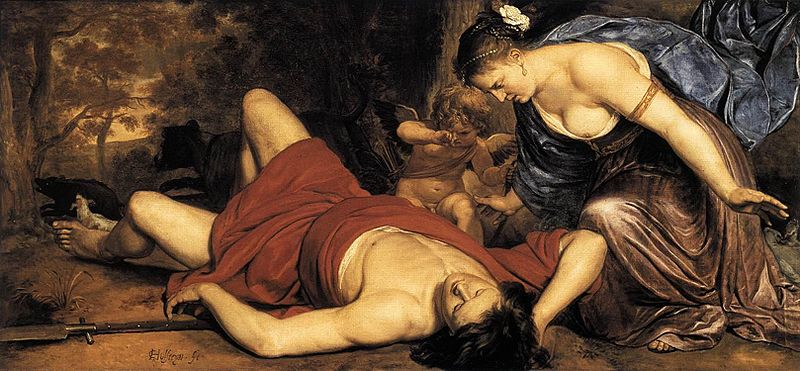
Aphrodite, discovering the infant Adonis, whisked him away to the underworld, where he was nurtured by Persephone. Upon his return to the surface, Adonis blossomed into a figure of striking beauty, sparking a fierce custody battle between Aphrodite and Persephone. Zeus, the arbiter of divine disputes, decreed a compromise: Adonis would divide his time equally between the two goddesses and choose where to spend his final portion.
Opting to dwell with Aphrodite, Adonis found himself ensnared in a tale of tragic fate. While hunting one day, he fell victim to a ferocious wild boar, succumbing to mortal wounds in the arms of his divine lover. Some versions attribute the boar’s attack to Ares, consumed by jealousy over Aphrodite’s affection for another. Thus, Adonis met his untimely demise, a poignant reminder of the ephemeral nature of mortal beauty and the relentless grip of destiny in the realm of the gods.
Hippomenes and Atalanta
In the enduring myth of Atalanta and Hippomenes, Aphrodite, ever the orchestrator of desire, intervenes to aid the lovestruck youth in his quest for the hand of the swift-footed maiden. Armed with three golden apples from the mythical Garden of the Hesperides, bestowed upon him by the goddess of love herself, Hippomenes enters the race against Atalanta, knowing that victory lies not in speed alone.

As the race unfolds, Hippomenes heeds Aphrodite’s counsel, strategically casting the golden apples in Atalanta’s path. Mesmerized by their radiant allure, the maiden pauses to collect each precious fruit, unwittingly yielding precious moments to her suitor. In this pivotal moment, Hippomenes seizes the opportunity to surge ahead, ultimately claiming victory in the race and Atalanta’s heart.
Yet, in his jubilation, Hippomenes forgets the debt owed to Aphrodite for her crucial aid. In her divine displeasure, the goddess enacts her retribution upon the couple, igniting within them an uncontrollable passion that leads to their indiscretion within the sacred confines of Cybele’s temple. Their act of sacrilege invites the wrath of the offended deity, who punishes them by transforming them into lions—a poignant reminder of the consequences of hubris and the capricious nature of divine favor.
Pygmalion
In the tale of Pygmalion, a skilled sculptor from Cyprus, his disillusionment with mortal women led him to devote himself entirely to his craft. Crafting a statue of unparalleled beauty in the likeness of Aphrodite, Pygmalion’s reverence for the goddess imbued his creation with an otherworldly allure. So enamored was he with his masterpiece that he fervently prayed to Aphrodite, beseeching her to grant life to the ivory figure he had fashioned.

Moved by his devotion and touched by his artistry, Aphrodite heeded Pygmalion’s plea, bestowing upon the statue the gift of life. Transformed into a living, breathing woman, the once-immobile figure now embodied the essence of beauty and grace. Overwhelmed with joy and gratitude, Pygmalion embraced his beloved creation, now endowed with flesh and blood, as his cherished wife.
Their union bore fruit in the form of a son, whom they named Paphos, honoring the land from which Pygmalion hailed. Thus, from the union of an artist’s devotion and a goddess’s benevolence, the legacy of Pygmalion and his immortal love endured, shaping both the mythic landscape of Cyprus and the enduring power of love’s transformative touch.
The Women of Lemnos
The tale of Lemnos recounts the consequences of defying the will of Aphrodite, the goddess of love and desire. Angered by the women of the island’s refusal to honor her with sacrifices, Aphrodite inflicted upon them a foul stench, driving their husbands away and leading them to seek solace in the arms of Thracian slave-girls.
Enraged by their husbands’ infidelity and emboldened by their plight, the women of Lemnos rose up in rebellion, exacting a brutal vengeance upon the entire male population of the island, as well as the Thracian slaves who had usurped their place. Their act of retribution left Lemnos devoid of men and plunged the island into desolation.
However, with the arrival of Jason and his crew of Argonauts, guided by the hand of fate and the favor of Aphrodite, the island’s fortunes began to shift. Under the goddess’s approving gaze, Jason and his men mingled with the women of Lemnos, sowing the seeds of new life and restoring vitality to the once-barren land.
Thus, through the intercession of Aphrodite and the actions of those touched by her divine influence, Lemnos was granted a second chance at prosperity and unity. From that day forth, the women of Lemnos learned the importance of honoring the gods, especially the goddess of love, ensuring that their island would never again fall from grace in the eyes of Aphrodite.
The Judgement of Paris
The marriage of Peleus and Thetis, a union of mortal and immortal, was a grand affair attended by gods and goddesses alike, each bearing lavish gifts to honor the occasion. Yet amidst the joyous celebration, one deity remained conspicuously absent: Eris, the goddess of discord, spurned by the hosts and barred from the festivities.
In her spiteful indignation, Eris sought retribution by hurling a golden apple inscribed with the word “To the most beautiful” into the midst of the gathering. Instantly, Aphrodite, Hera, and Athena laid claim to the coveted prize, each asserting her own unparalleled beauty as worthy of the golden apple.
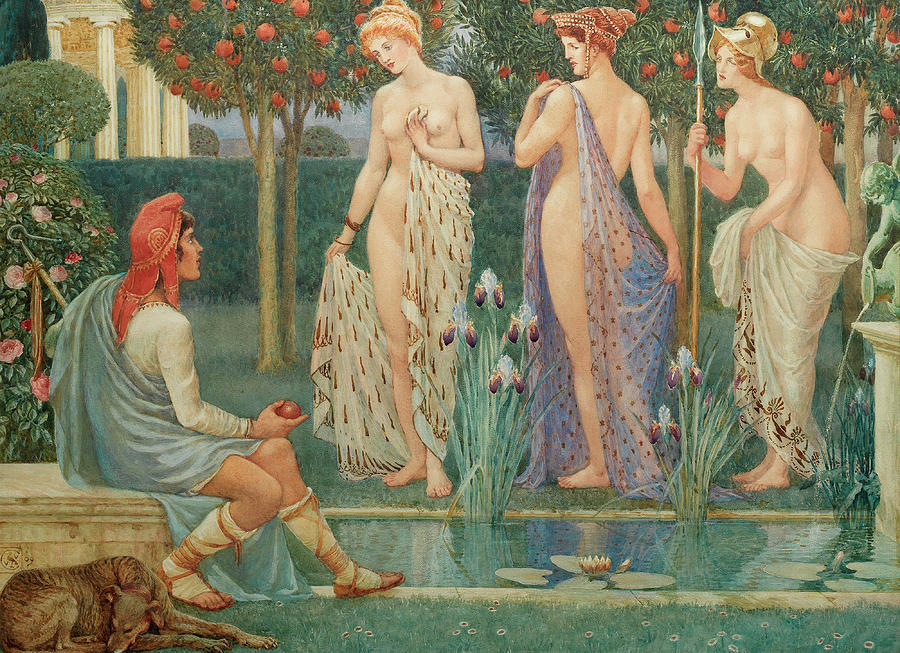
The dispute escalated into a bitter quarrel among the goddesses, with Zeus, reluctant to arbitrate among them, deferring the decision to Paris, a prince of Troy. Bathed in the divine radiance of Mount Ida, Paris found himself tasked with the monumental choice of selecting the most beautiful goddess.
As the goddesses vied for his favor, they offered tempting bribes to sway his judgment. Hera promised him dominion over Asia, Athena offered wisdom and renown in battle, while Aphrodite tantalized him with the prospect of possessing the most enchanting mortal woman: Helen of Sparta.
Captivated by Aphrodite’s promise, Paris bestowed upon her the golden apple, thereby sealing his fate and igniting the flames of conflict that would engulf Troy in the flames of war. Thus, through the discord sown by Eris and the fateful choice of Paris, the legendary saga of the Trojan War was set into motion, a testament to the potent interplay of divine whims and mortal ambitions.
Art




 Digital Maps of the Ancient World