Hephaestus
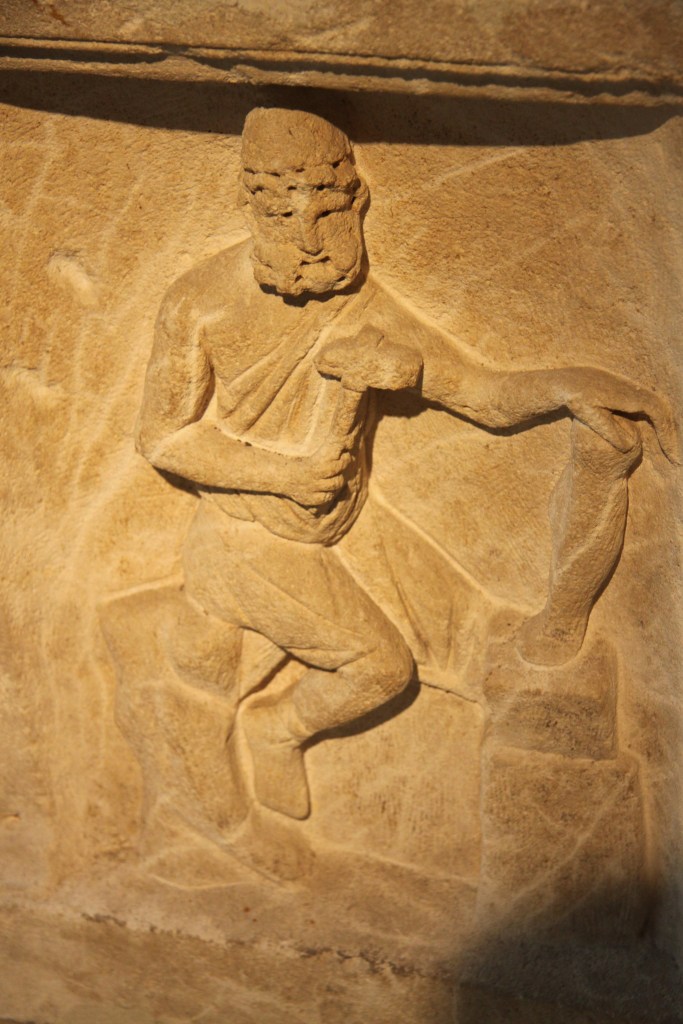
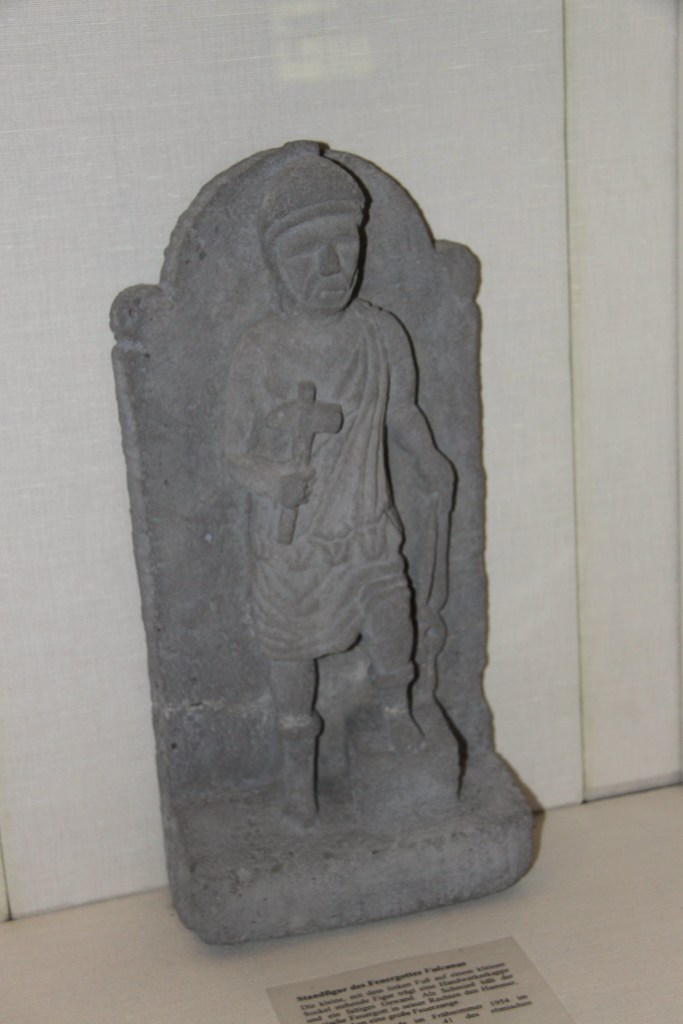
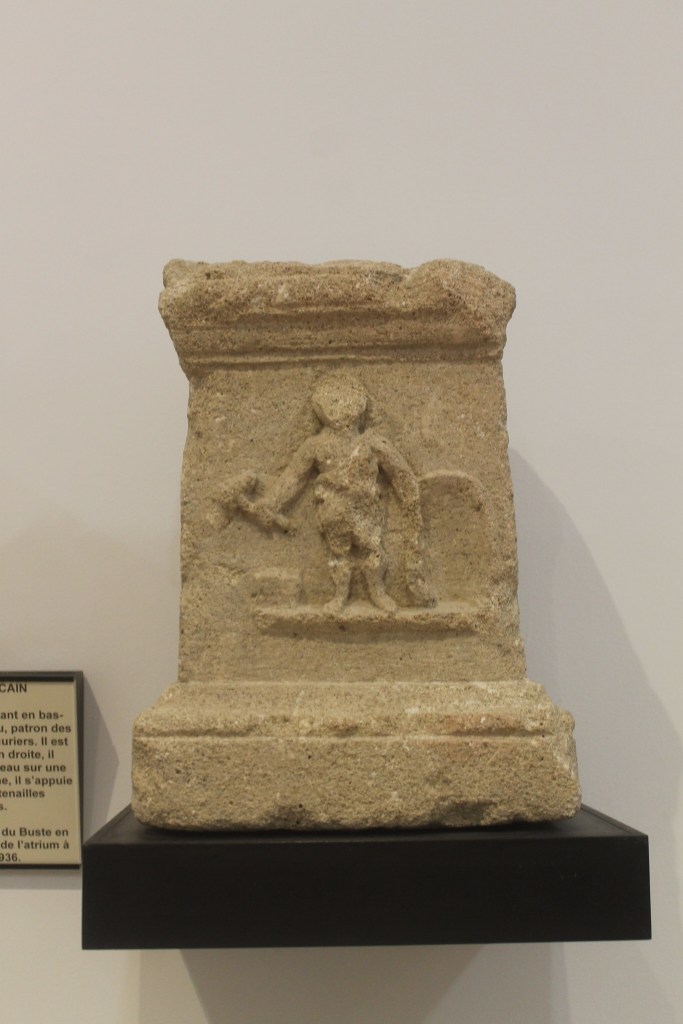
Hephaestus was the god of fire and the forge in Greek mythology. He played a crucial role in crafting the weapons and armor of the gods, and he was often depicted, with his iconic tools of a blacksmith. Despite his physical deformity, he was highly skilled in metalworking and was revered by craftsmen and artisans.
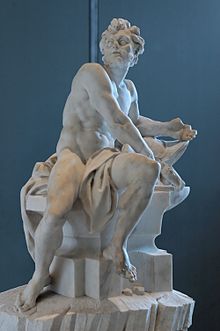
Residence: Mount Olympus
Symbols: Hammer, anvil, tongs and volcano
Parents: Zeus and Hera
Consort: Aphrodite and Aglaea
Siblings: Aeacus, Angelos, Aphrodite, Apollo, Ares, Artemis, Athena, Dionysus, Ilithyia, Enyo, Eris, Ersa, Hebe, Helen of Troy, Heracles, Hermes, Minos, Pandia, Persephone, Perseus, Rhadamanthus, the Graces, the Horae, the Litae, the Muses and the Moirae
Children: Thalia, Eucleia, Eupheme, Philophrosyne, Cabeiri and Euthenia
Roman equivalent: Vulcan
Birth
As a baby, Hephaestus was thrown from Mount Olympus by Hera due to his physical deformity. He landed in the sea and was rescued by Thetis, who cared for him on the island of Lemnos. There, he learned the art of blacksmithing and craftsmanship, becoming a master of his trade despite his limp. This experience shaped Hephaestus into the skilled and industrious god of fire and the forge that he was known to be.

The Blacksmith
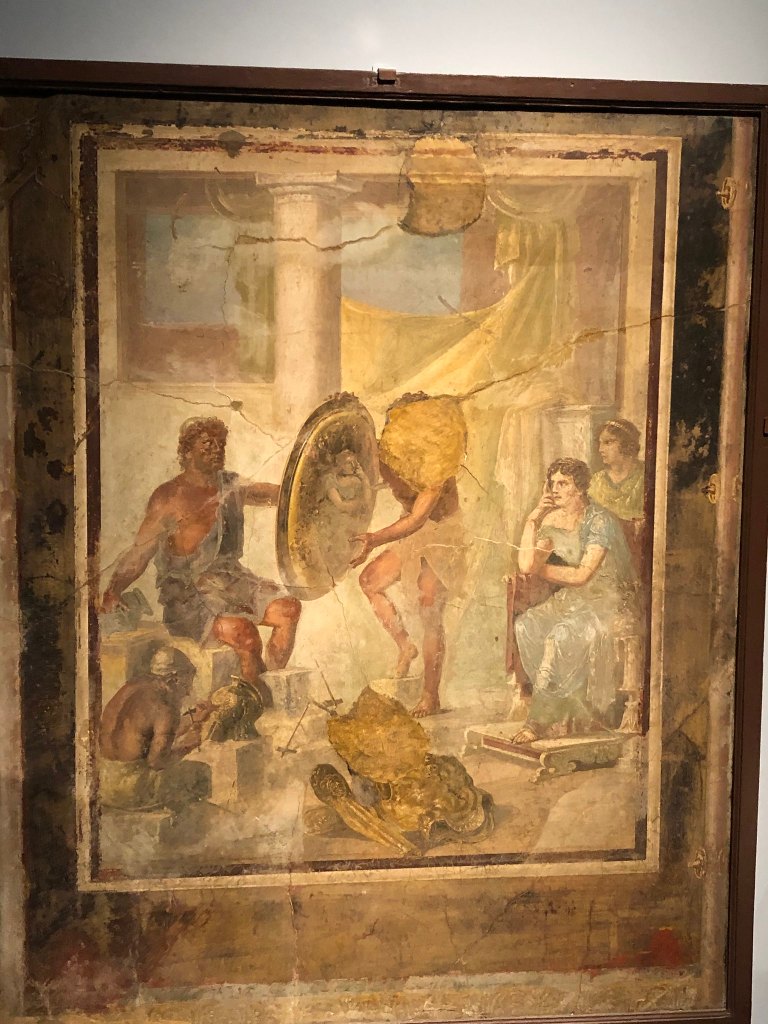
Hephaestus was renowned for his skillful craftsmanship and his workshop on Mount Olympus was the envy of the gods. He created a multitude of legendary items and artifacts for various deities and heroes in Greek mythology.
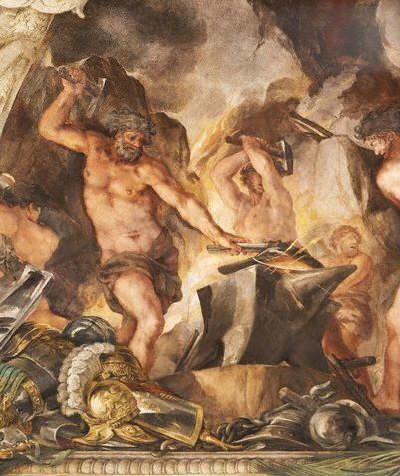
Some of his notable creations include:
- Hermes’ winged helmet (petasos) and sandals (talaria).
- The Aegis breastplate, a symbol of Zeus’ power and authority.
- Aphrodite’s famed girdle (cestus), which bestowed irresistible allure upon its wearer.
- Agamemnon’s staff of office, a symbol of his leadership.
- Achilles’ armor, including his shield, helmet, and greaves.
- Diomedes’ cuirass, providing protection in battle.
- Heracles’ bronze clappers, used to frighten away the Stymphalian Birds.
- Helios’ chariot, which he rode across the sky each day.
- The shoulder of Pelops, crafted of gleaming ivory to replace his lost shoulder.
- Eros’ bow and arrows, used to inspire love and desire.
In some accounts, Hephaestus worked alongside the Cyclopes, particularly Brontes, Steropes, and Pyracmon, who assisted him in his forge, contributing to the creation of these magnificent works of art and power.
Ares and Aphrodite
The Sun-god Helius, as the ever-watchful deity who sees all things, was the one to first witness the affair between Ares and Aphrodite. His report to Hephaestus set in motion the chain of events that led to the trapping of the adulterous couple in Hephaestus’ finely-crafted net.

Hephaestus’ revenge was both cunning and effective, as the nearly invisible net served to expose Ares and Aphrodite’s transgression to the amusement of the other gods. The male deities, in particular, took delight in mocking the pair, commenting on Aphrodite’s beauty and expressing a desire to trade places with Ares, showcasing the rivalry and jealousy that often permeated the relationships among the gods.
Ultimately, the embarrassment and shame of being exposed led Ares to retreat to his homeland of Thrace, while Aphrodite sought solace in Paphos. This tale serves as a cautionary reminder of the consequences of deceit and infidelity, even among the divine beings of Mount Olympus.
Athena and Erichthonius
In this narrative, Athena, the goddess of wisdom and warfare, sought weapons from Hephaestus, the god of fire and craftsmanship. However, Hephaestus’s desire for Athena led him to attempt to assault her in his workshop. Athena, determined to maintain her virginity, fled from Hephaestus, but he pursued her relentlessly.
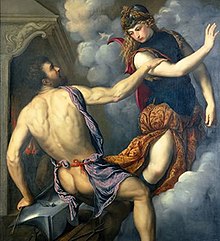
During the struggle, Hephaestus’s seed fell on Athena’s thigh, and in her disgust, she wiped it away with a scrap of wool and flung it to the earth. From this seed, Erichthonius was born, a figure of great significance in Athenian mythology. Athena, recognizing the importance of the child, decided to raise him in secret.
Erichthonius would go on to become a legendary king of Athens, credited with the establishment of various cultural and religious practices in the city. His birth from Athena’s thigh symbolizes his close connection to the goddess and his role in the foundation of Athens.
Art


 Digital Maps of the Ancient World